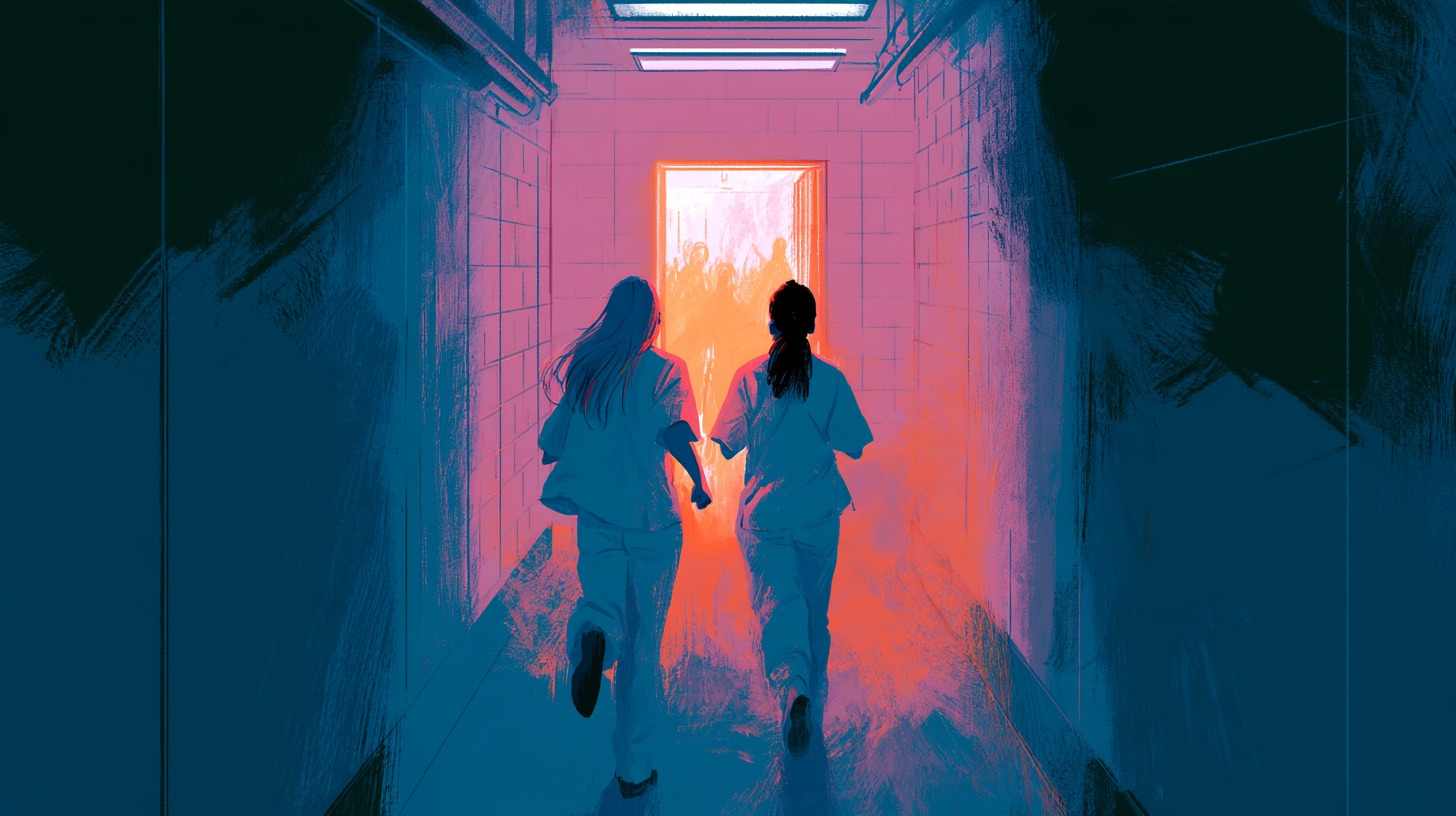
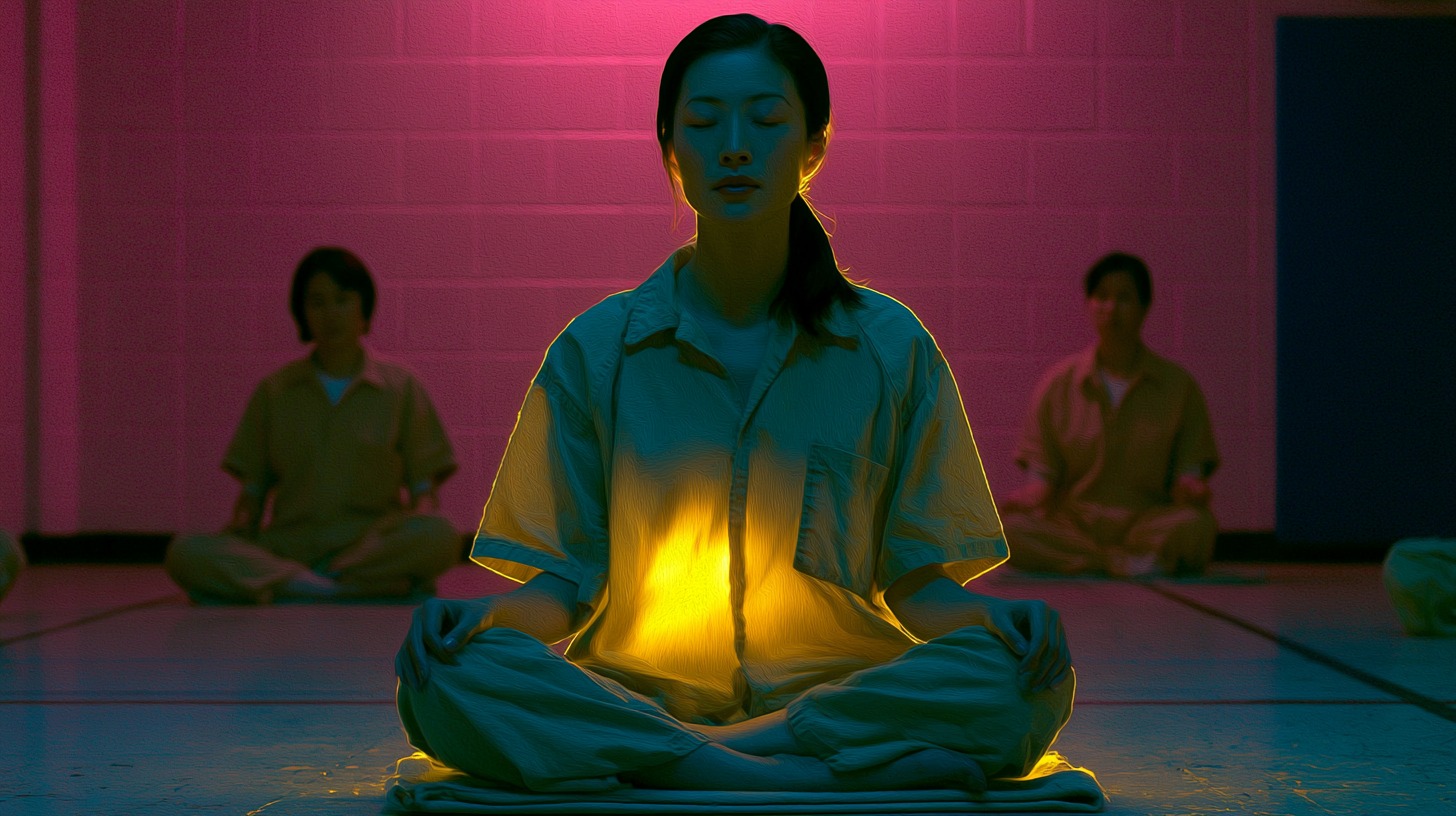
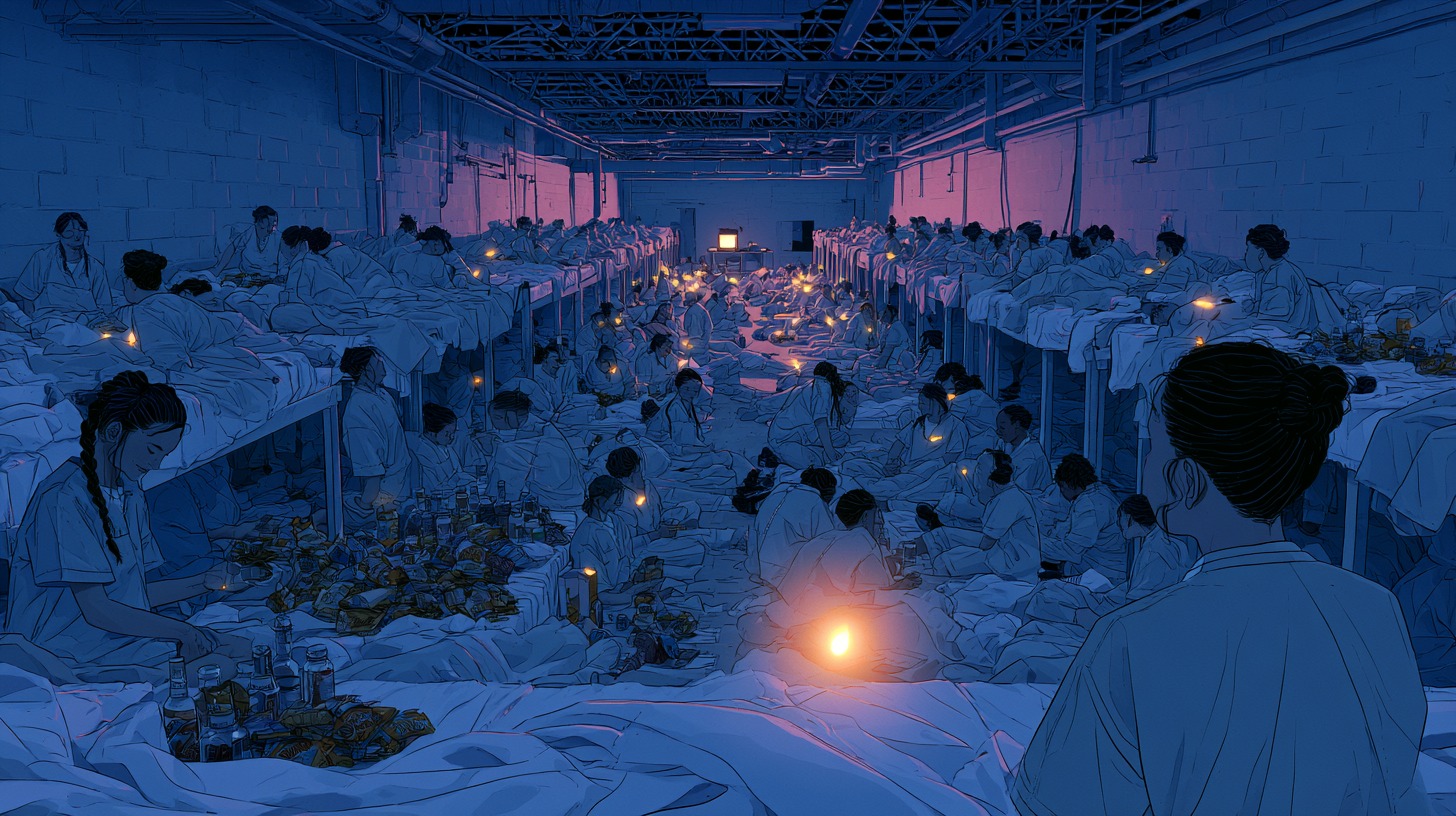
A month previously,there had been a fight in the dorm.Rach and I heard shouting and ran in from the gym.
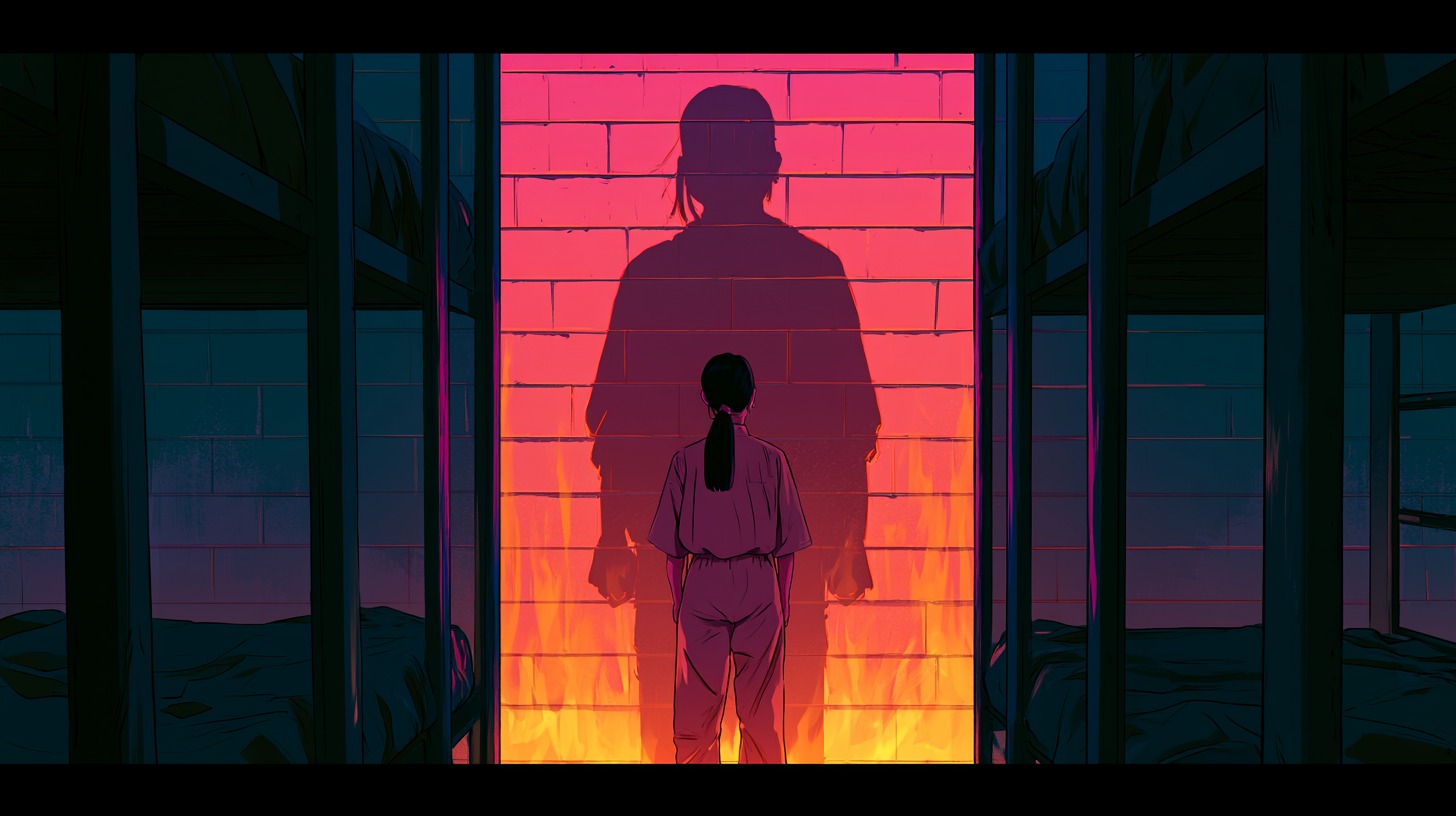
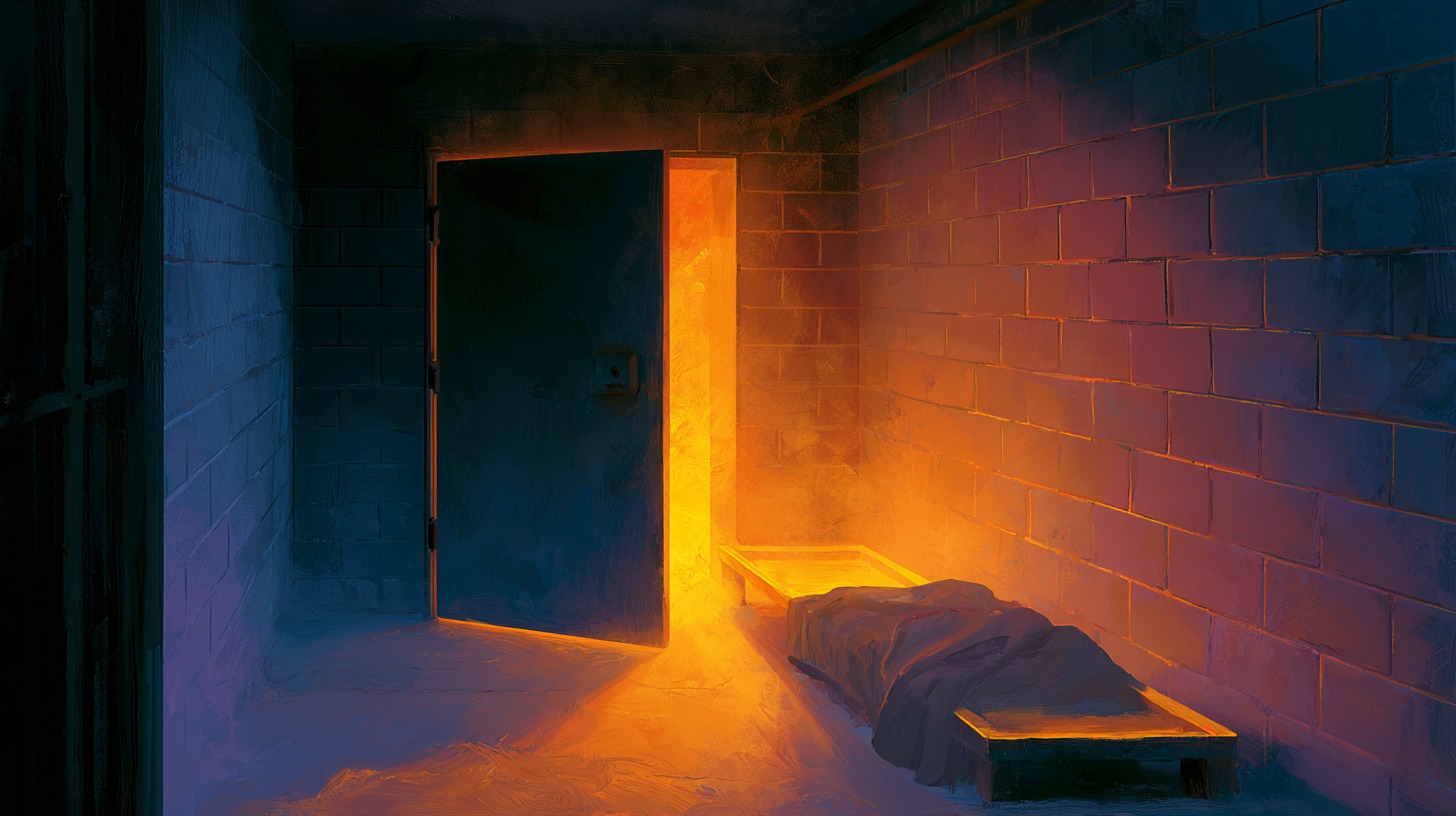
Officers stood in the aisle. Janiya was being led out. Yilan, too.Each off to their own individual cells in the SHU.
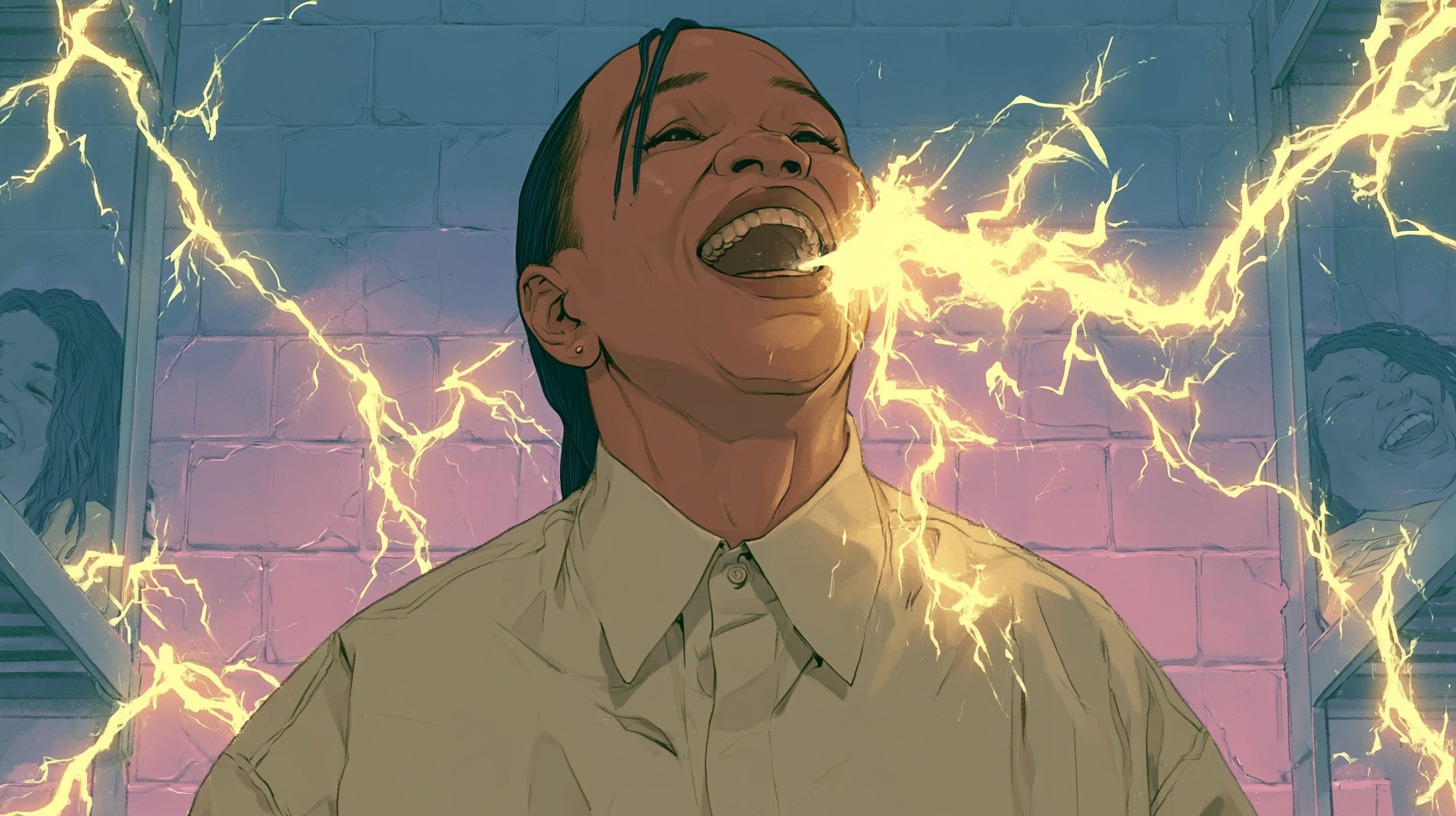
Things constantly shift in here, butthis was a voltage drop.It felt like someone had hit the stun gun on the unit.
Janiya was our circulation.Not a gentle heart—more a smack-talker who could start something and still keep the blood moving.
Yilan was a different fixture:our collective heartbreak turned to heat,the cartoon cloud with steam out the ears. “I won’t start it, but I’ll finish it,” her posture said. At first, the quiet felt like relief.
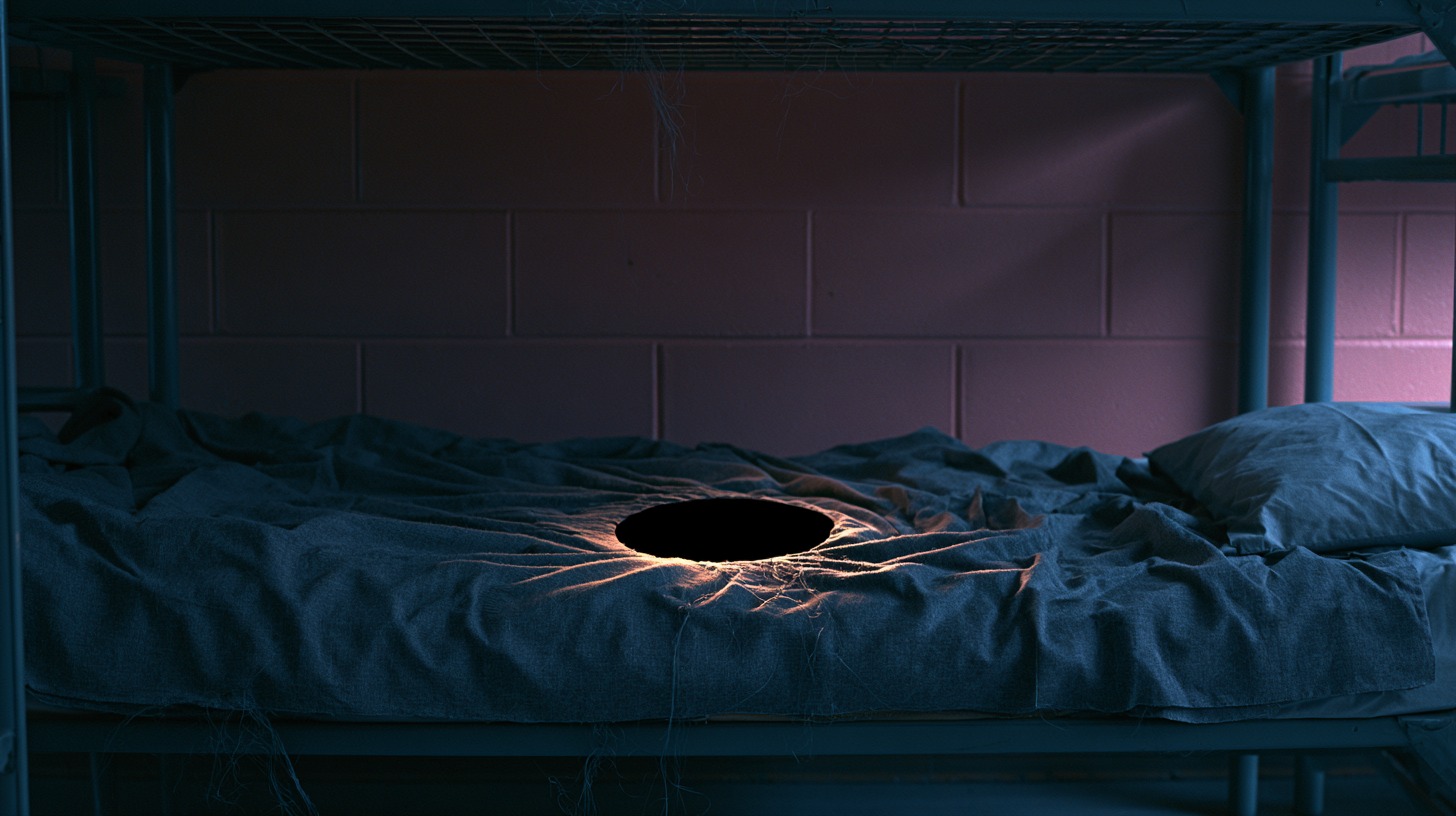
Then the absence opened a hole.You don’t know what a person holds up until it’s not held.
Nevaeh—who used to be driven bonkers by Janiya—asked after her the most.“She grows on you,”she’d say, or, “She’s an acquired taste,” softening the edge each time.
It was her way of marking a change. Now they’re back, fresh out of thirty days in solitary confinement, andYilan has questions.
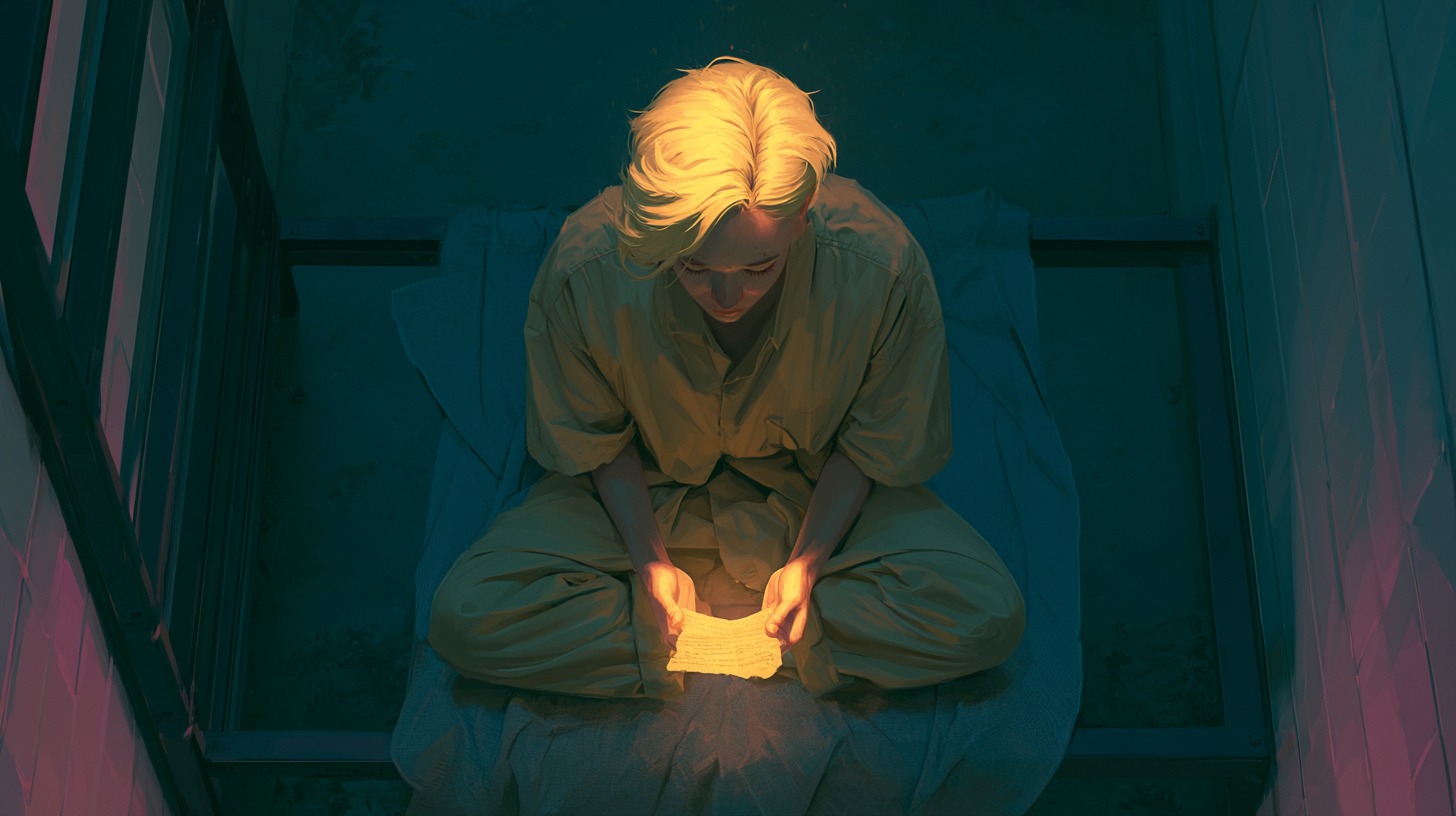
She was the one who’d suggested we start the meditation class, after her last trip to SHU.As if she’d known there was something she’d learn for her next round.
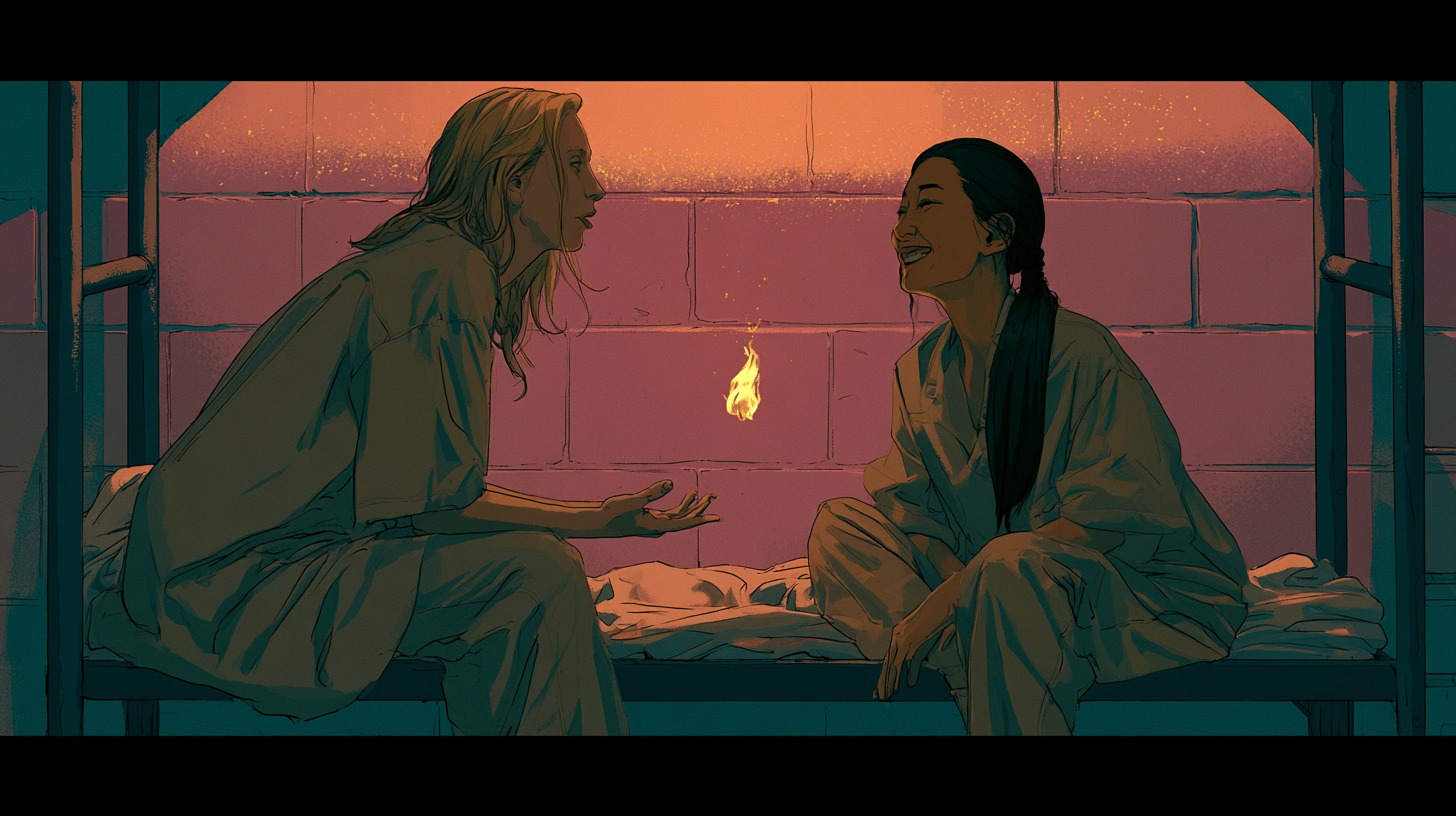
Rach brings her over to my bunk. She remembers me saying in meditation class that anyone could talk to me about “this stuff” anytime.“I wasn’t there and I wasn’t here,”she says, still standing as if still floating between the two worlds. “They turn off the lights in SHU.
It gets quiet.I’d wait for lights-out, because that’s when it would happen.Is this crazy?” “It’s not crazy,” I say. That’s all the permission she needs. She’s been holding it in.
Her eyes keep flicking between mine—please tell me I’m not crazy—and the wall, like she’s tuning to a frequency where the memory is still playing.
“I’m always scared of what people think,” she says. “And I’m always angry.I’ve been angry my whole life.I didn’t know why.
Now I do. Now I’m not angry.Because of what I saw.”
She’s breathless, half laughing. “Now I get why you say meditation isn’t a religion. There’s something there. No one can tell you different. What was that phrase?” “Ehipassiko,” I say.“See for yourself.”“Yes.
That. You don’t have to believe—you really see for yourself.” She searches for words. “There’s no…‘me’ the way I thought. Everything I thought I was…I’m not.And I’m happy.
I didn’t need anything. I didn’t even need to eat. Is that crazy?” “It’s not,” I say. “Sometimes, when the mind goes very quiet, people feel fed by the world itself—like the air is nourishing.It’s rare, but it happens.”
“Yes! People keep saying I changed in SHU, but I can’t explain it. If someone else came back and said these same things to me, I’d think they were nuts. But I know what I saw. I feel like I can’t be mad anymore.I don’t need anything. I have everything.
I don’t have to take your word for it. I didn’t before.But now I know for myself.”She’s glowing, innocence braided with certainty, her eyes bright but soft.
Looking into them feels like looking out at the ocean.
“I’m not even mad at Janiya. I want her to see it too. I used to want more stuff.Now I think people just don’t know.”
“It’s the game with hidden rules,”I say. “Once you spot them, you can tell who knows and who doesn’t.” She nods.
“You don’t have to be sad or mad, because you don’t have to be here,” she says, tapping the room—meaning you don’t have to live only at the surface level of this place whenthere’s sky available.
“I get what free means.
In SHU, I kept hearing you in my head from class, talking about us being ‘unfuckwithable.’ I thought you were crazy then. Now I get it. They could lock the door, turn off the lights, take everything—andthey still couldn’t touch this.”
“That’s why I say freedom is possible in any condition,” I tell her. “But I need to say this part, because it’s important:You found something precious. Protect it.
It will guide you, but you have to listen. It will ask you to be brave where you used to be scared, to be kind to people you don’t like, to let others think what they think—because now you know who you are.”She nods, a satisfied grin. “Yes.”
“No one can take this from you,”I say, “but you can lose sight of it if you don’t care for it. That’s why I keep a daily promise to myself.”
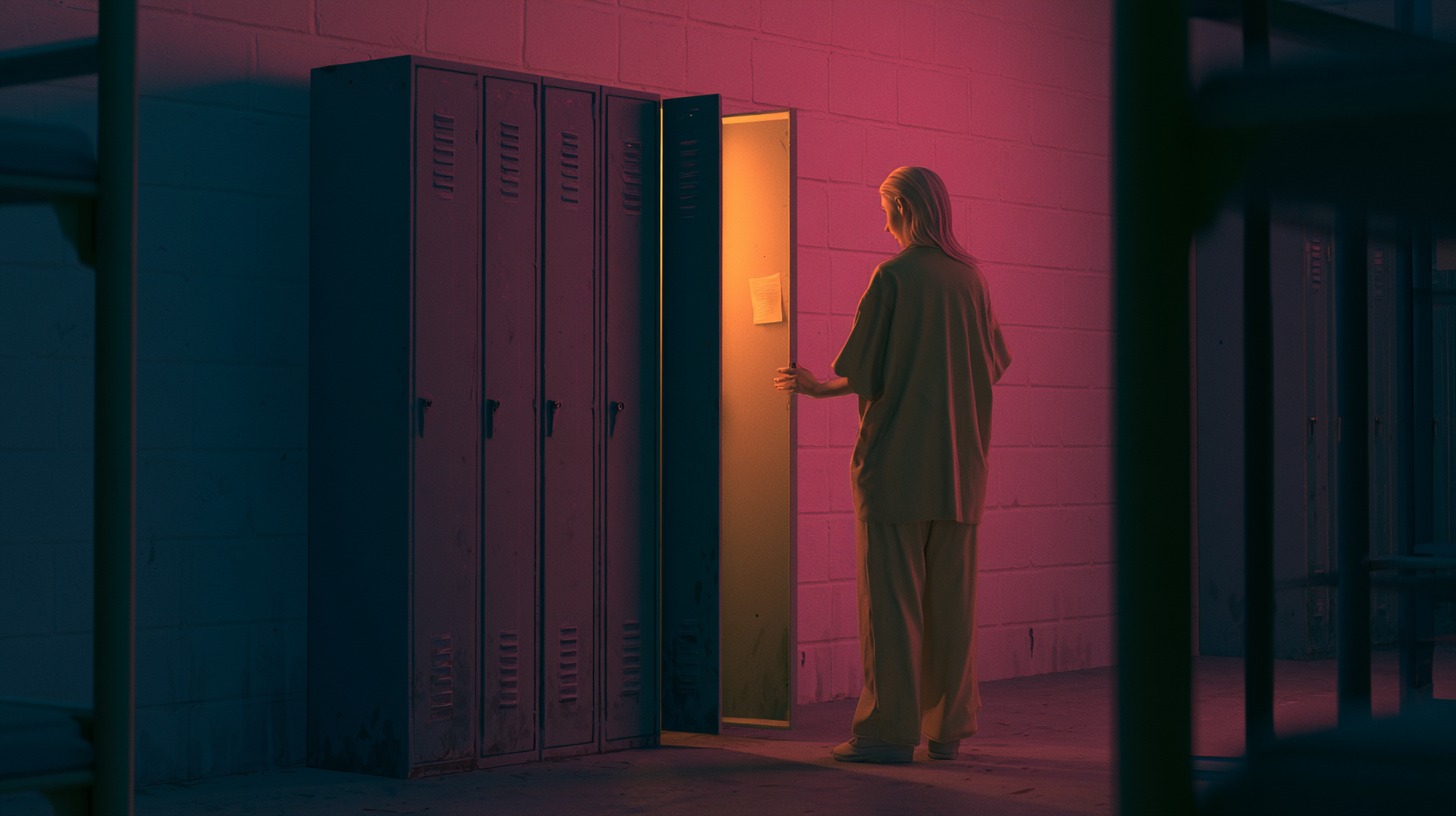
I open my locker and pull out the vows taped inside, ones I learned long ago at the Zen Center. And I’ve kept them, my simple commitments to keep helping, to keep clearing confusion, to keep learning, to keep going.I read them quietly.
She listens like someone warming her hands at a fire.
Beings are numberless; I vow to save them. Delusions are inexhaustible; I vow to end them.Dharma gates are boundless; I vow to enter them.The Buddha Way is unsurpassable; I vow to become it. “You said that in class,” she says. “I thought it was crazy.
I was terrified of SHU. Everyone is.Isolation.
You kept talking aboutturning everything they use against us into something for us,about that being the way to be unfuckwithable.
You told Carla that SHU could be heaven. That nothing is the way it seems. I thought you were out of your mind. You kept saying it’s where we can finally meet ourselves. I didn’t want that. But I get it now. You talk about flying.SHU is where you can take off.”
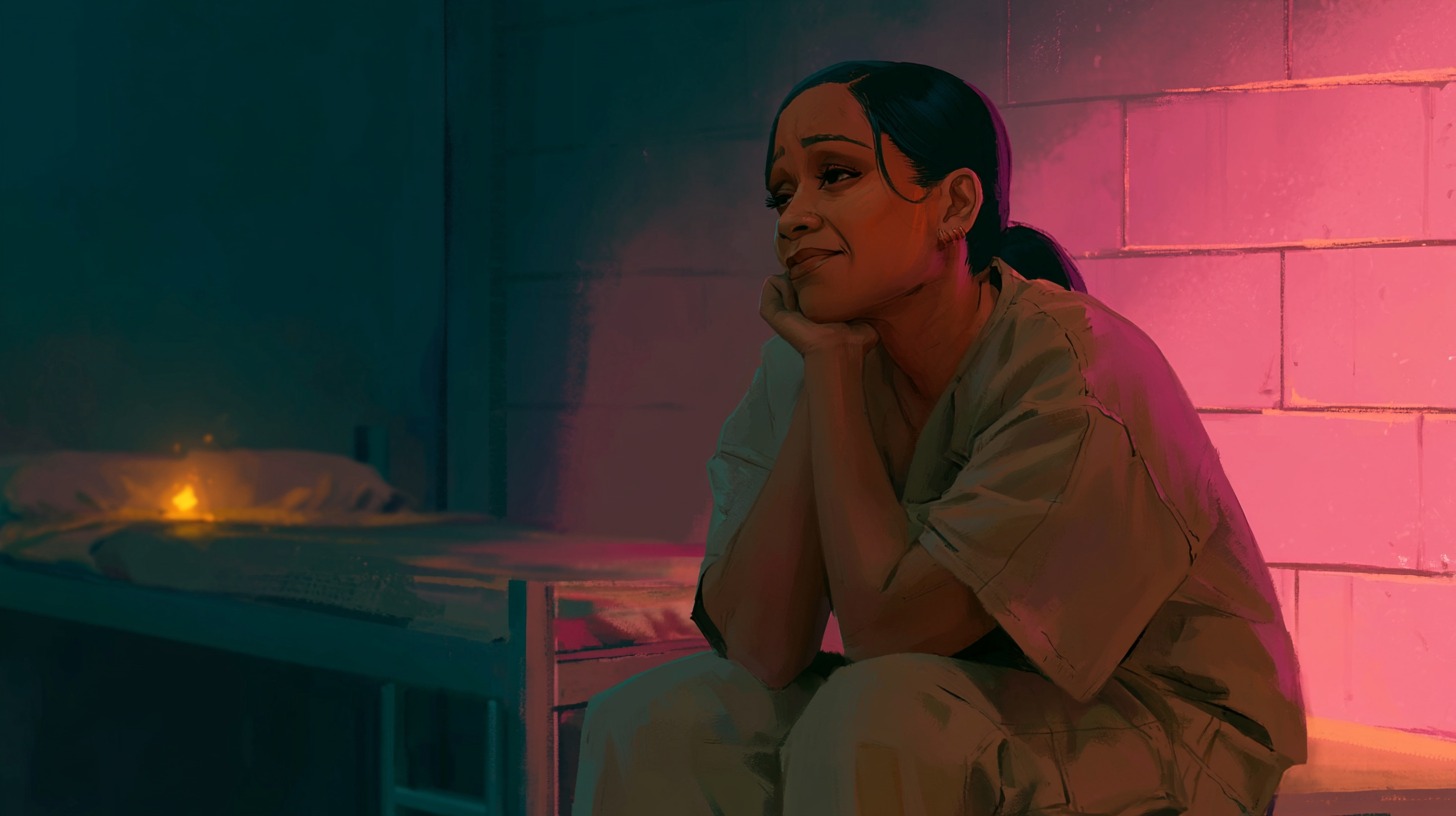
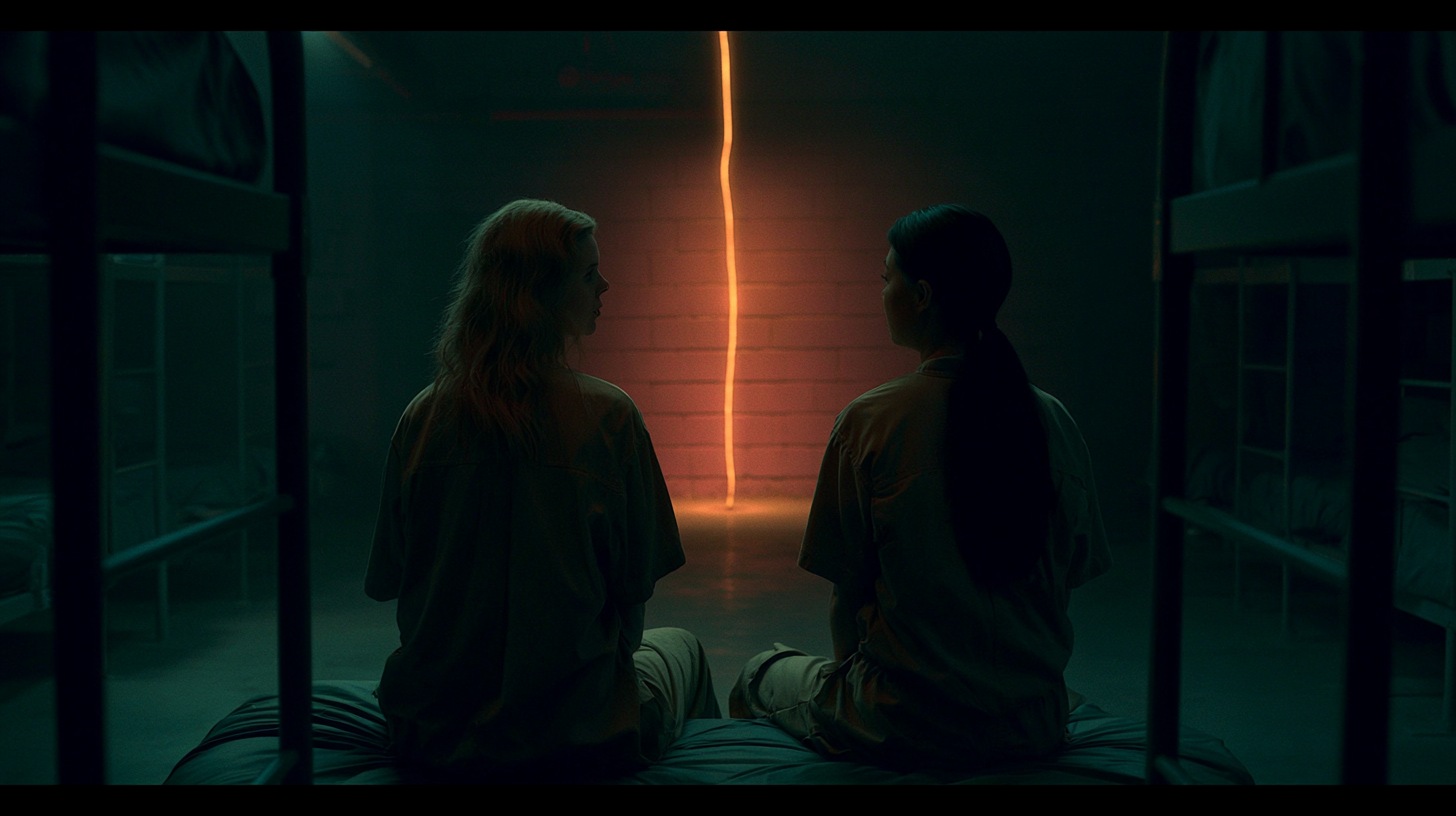
“Exactly.” We sit on my bunk and watch the wall for a while,letting the silence between us do its work.
The day after I learned I’d been indicted, I stood ina field of yellow flowers in Mongolia,one of the flowers tucked behind my ear.
Sitting on my bunk with Yilan, in this prison in Brooklyn,I feel dropped back into that location.
The words of the divination reading from the head monk I’d had that evening echo in my ear: “It will be difficult butyou will be born into supreme happiness.”
We sit there,letting a little of that happiness drip back into the room.
Officer Flannery walks into the dorm. “Snickers for Dakina?” he asks. Mari asks when Dakina’s coming back from SHU. He shrugs. “Not sure she is.Seems to like it in there by herself.”
Yilan and I exchange a look and smile. We know what it’s like to find calm in the last place anyone expects.May she fly to the Supreme Happiness that knows no opposite.