Chapter 35
Stay in the Discomfort
In the early stages of addiction recovery, there’s a moment when you first decide to get sober. Then, further down that path, you decide to really live recovery. And then, if you keep going, there’s a point you decide you’ll never let yourself slide into complacency again. That’s what I’m confronting now, in a new form of practice: the feeling of being on fire, not because life is hard, but because I don’t want my practice to depend on hardship. If my drive only comes from difficulty, what happens when things ease up? I’ll drift, grow lazy, lose the very clarity I’ve fought to gain. When I got sober, I had a great program. I went to meetings every day, worked the Steps, stayed connected.
Chapter 35 passage 2
I want that same devotion now—not just enough practice to get by, but enough to keep opening all the doors that life offers. That’s what I love about the way they taught at the Zen Center I used to go to: It’s not a one-and-done experience. It’s lifelong. You keep learning how to live. At the same time, I can feel the grooves of all the years I’ve already practiced. I don’t want to discount that. My mind rarely veers far now, rarely takes an off-ramp. I’m grateful for that steadiness. You know those times when doubt or anxiety sweep in like bad weather? I used to have no shelter for that. I’d just stand there in the storm, naked, waiting it out, unsure when it would end.
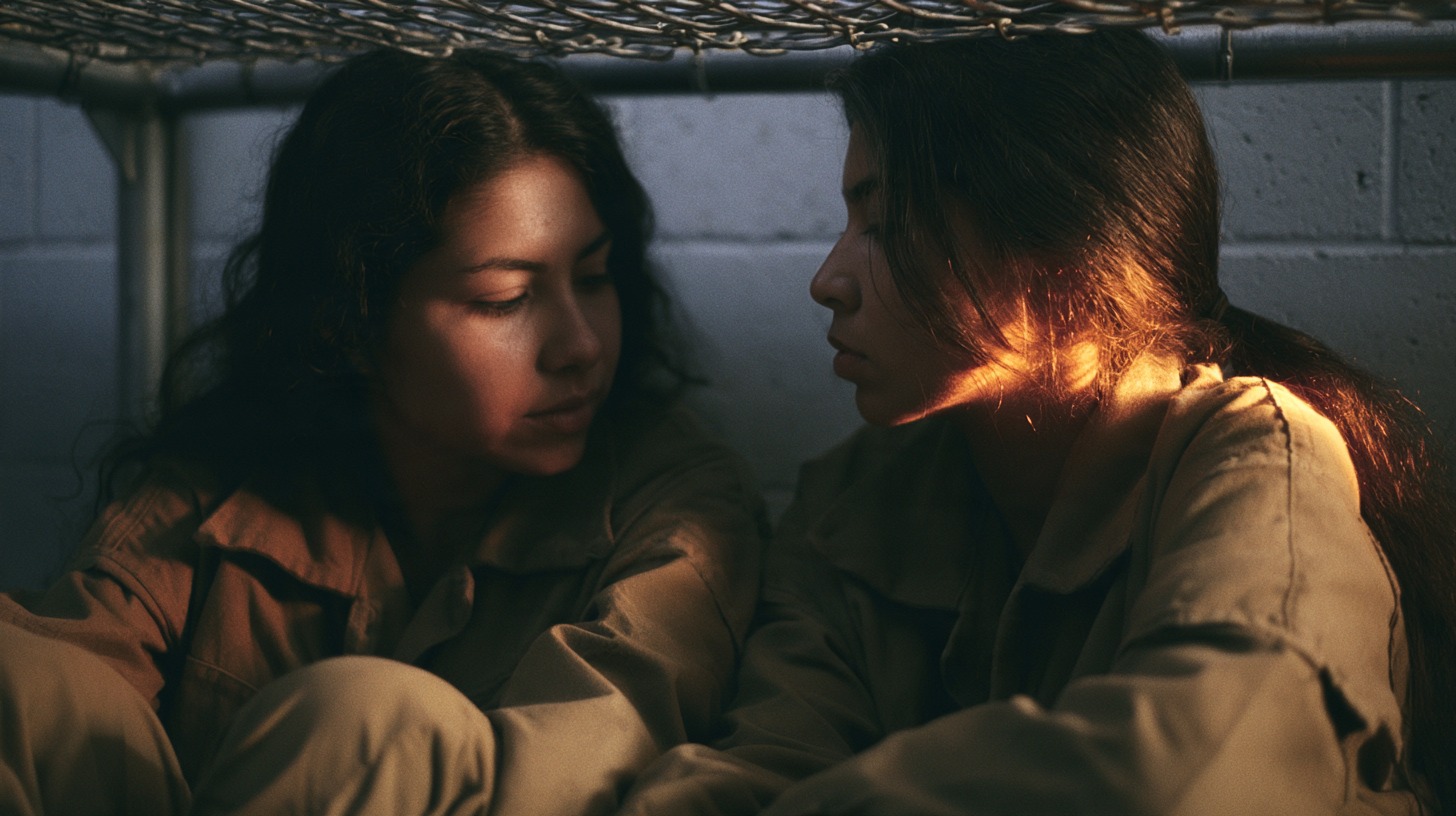
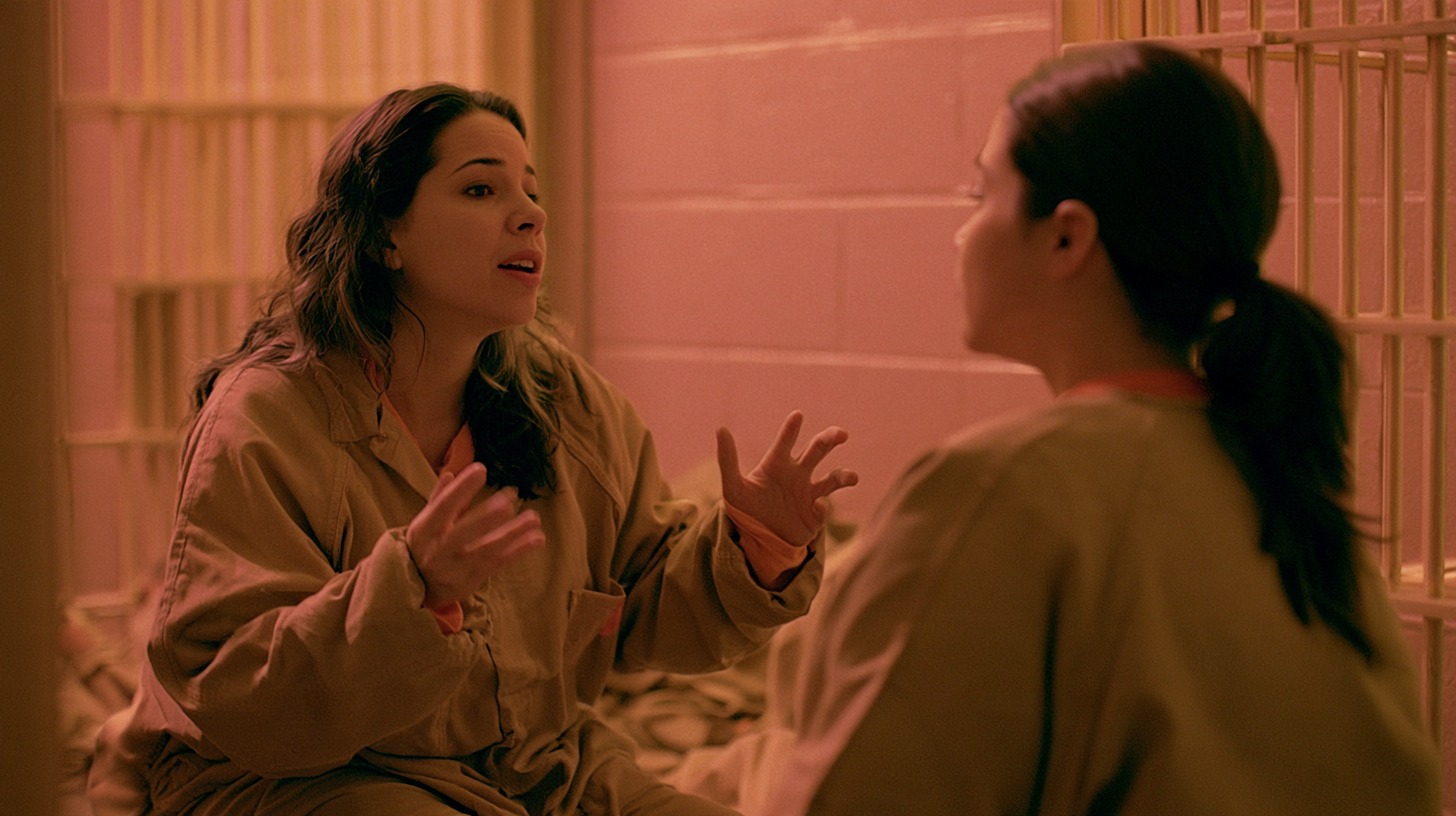
This morning, a few of those old clouds rolled in. The kind that feel like emotional sewage backing up. But this time, I didn’t fix, compare, or resist. I just let it be there. And now, what’s left is a simple urge to cry—not for a reason, just as release. A woman here told me she can’t cry inside because the others would think she’s weak. “They’d love it,” she said, “to see me lose it.” I told her I saw it differently—that we’d all be glad to hold her, the way she’s held us. She shed a few tears. It made me think of something I once read and later taught: Women can’t enter their involuntary—the state where the body’s natural responses take over, beyond control or performance—unless they feel safe.
Laughing or tears or orgasm—they’re all a kind of emotional exhale, a surrender of the nervous system. Crying is just another form of letting go. So the real question is: How do you release in a place designed to keep you pent up? This place is full of provocations—noise, cold, chaos, deprivation. In this video game, these are the obstacles. How do I find peace here, when all the usual tools for health are stripped away? This morning, I told Rach one of my mental tricks for when things look bleak. When I wake up and remember where I am, when I feel the weight of contending with the cold, the food that messes up digestion, the howls of Dakina in the night, the constant noise of the TVs and fan and women talking, the lack of sunlight, when I think, What do I do here?, I remind myself of the cave yogis.
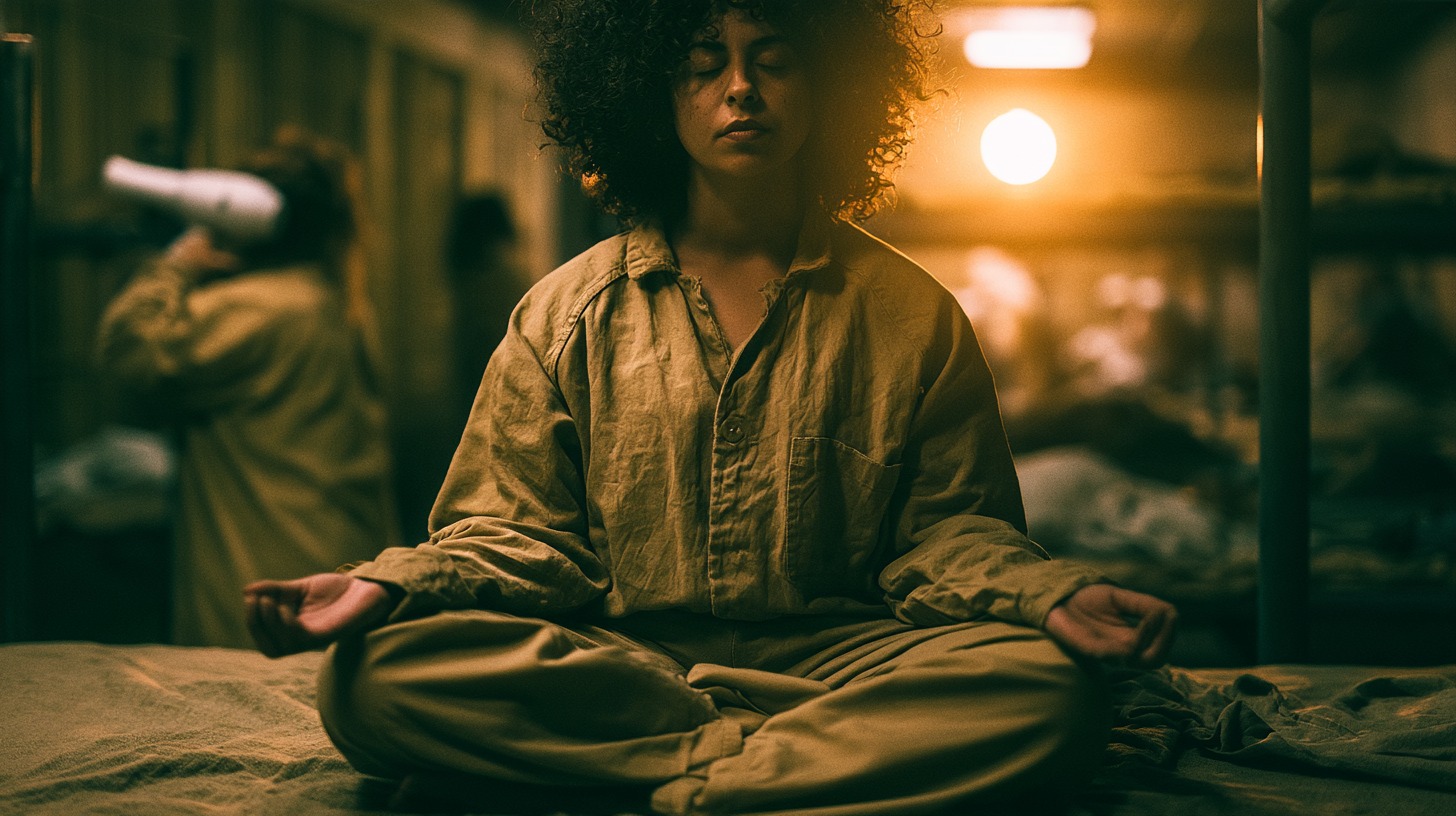
Those ancient meditators lived in freezing mountains with even less than I have, and yet they were said to be the happiest people in the world. The only time I suffer here is when I compare myself to “the outside”—to comfort, to freedom, to normal life. When I remember the cave yogis, I realize: This is the same practice. Withdrawal from comfort. Withdrawal from distraction. It’s not because I’m in prison—it’s what I’ve been trying to do all along. Nothing I lack here could bring me closer to peace. The work is simply to meet these conditions as they are. Even if Janiya is blow-drying her hair two feet from me while I meditate for forty minutes, that’s the practice.
It’s not the obstacle; it’s the arena. I talk to Luciana, all full of purpose and plans as she’s getting ready to be released. “I have a big calling,” she says. “Something important to do in the world.” Miss Wu says the same—that she’s meant to be a spiritual leader. I told Luciana I’m happy to be lifting this place up in small ways. She looked at me, wide-eyed. “But you know so much. You can do so much. The world will see.” She had a whole vision for how I could rebuild my reputation, reclaim my platform, prove my worth. But the truth is, I don’t need to prove anything anymore. I’m free from the illusion that “big” is better than “this.” Yes, I’ve practiced for decades. I know what I know. But that’s exactly why I don’t need anyone else to recognize it. That kind of knowing frees you from the madness of needing validation—from doing the acrobatics people do to be seen as legitimate. Now, I can just do what’s in front of me. Some days that means expanding on my vision of prison as a monastery. Other days it means scrubbing yoga mats. The sobriety I’ve kept isn’t just about abstaining from substances. It’s also about abstaining from spiritual materialism—from the compulsion to put on the show of enlightened superiority. That freedom releases me from both fame and infamy. There’s a quiet relaxation in my soul lately, like I’ve finally landed in a plane of calm intention.
I think of the older teachers I admired, the ones who had stopped striving. They’d seen everything and so had nothing to chase, nothing to prove. But when something needed to be done, they moved with precision and grace. That’s the place I’m finding. The absence of striving, but also the absence of resistance to being used by life. Sometimes life still looks impossibly messy. I get overwhelmed. ‘I can’t possibly handle all this,’ I think, as I visualize images of deities with a thousand arms because there’s too much to do with only two. And it’s true. I can’t. But I can do the one simple thing in front of me. Sometimes that’s lying flat on my bunk, doing a breathing meditation to clear out the static.
Chapter 35 passage 8
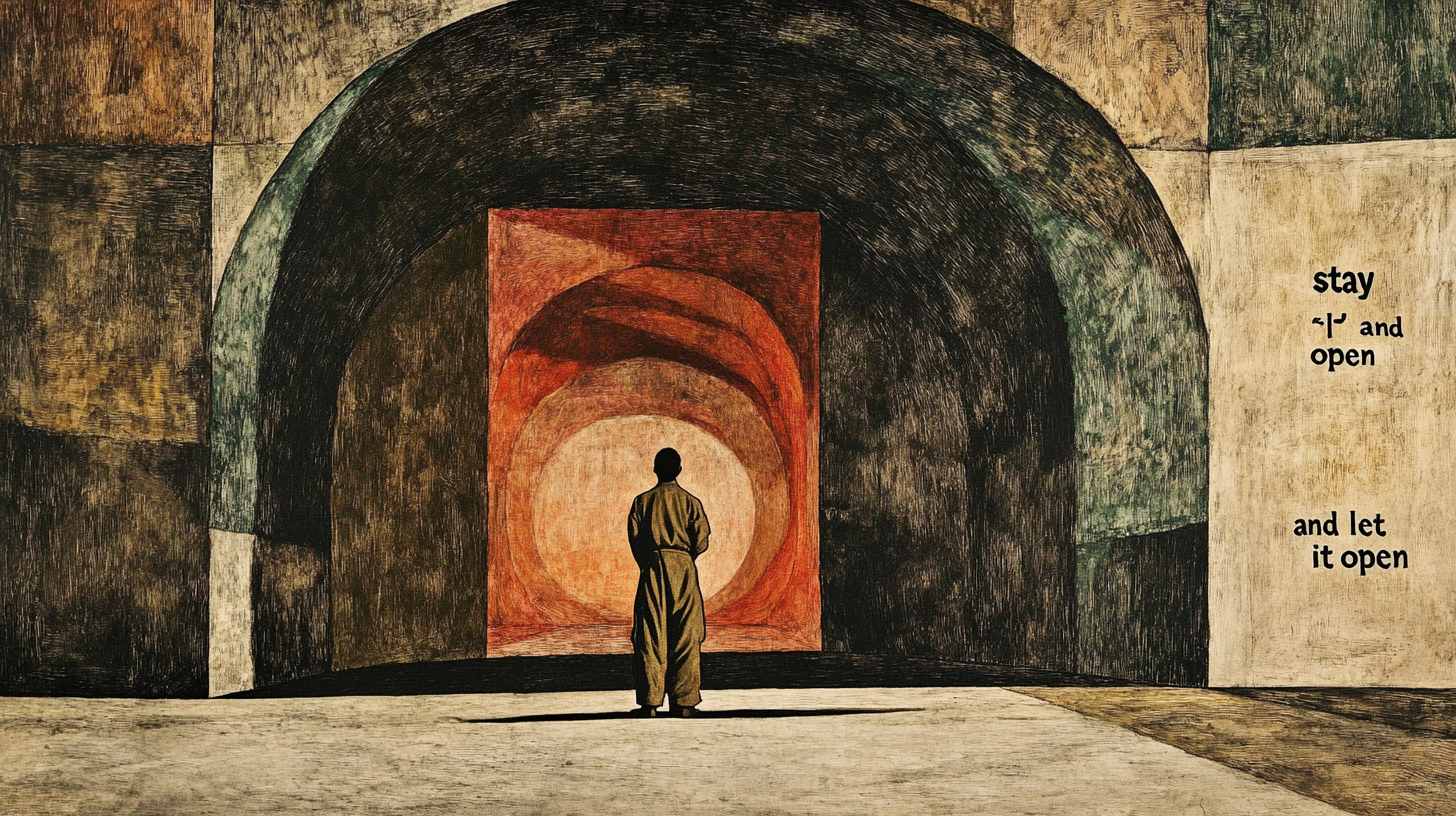
This morning, I had what I can only describe as a collision with clarity—the kind of quiet inner light that makes everything still. For a moment, I felt like a child being gathered home. Maybe that’s all this practice really asks: Stay. Stay in the discomfort. Stay when you want to run. Stay in the pose, in the cold, in the noise. Stay—and let it open.