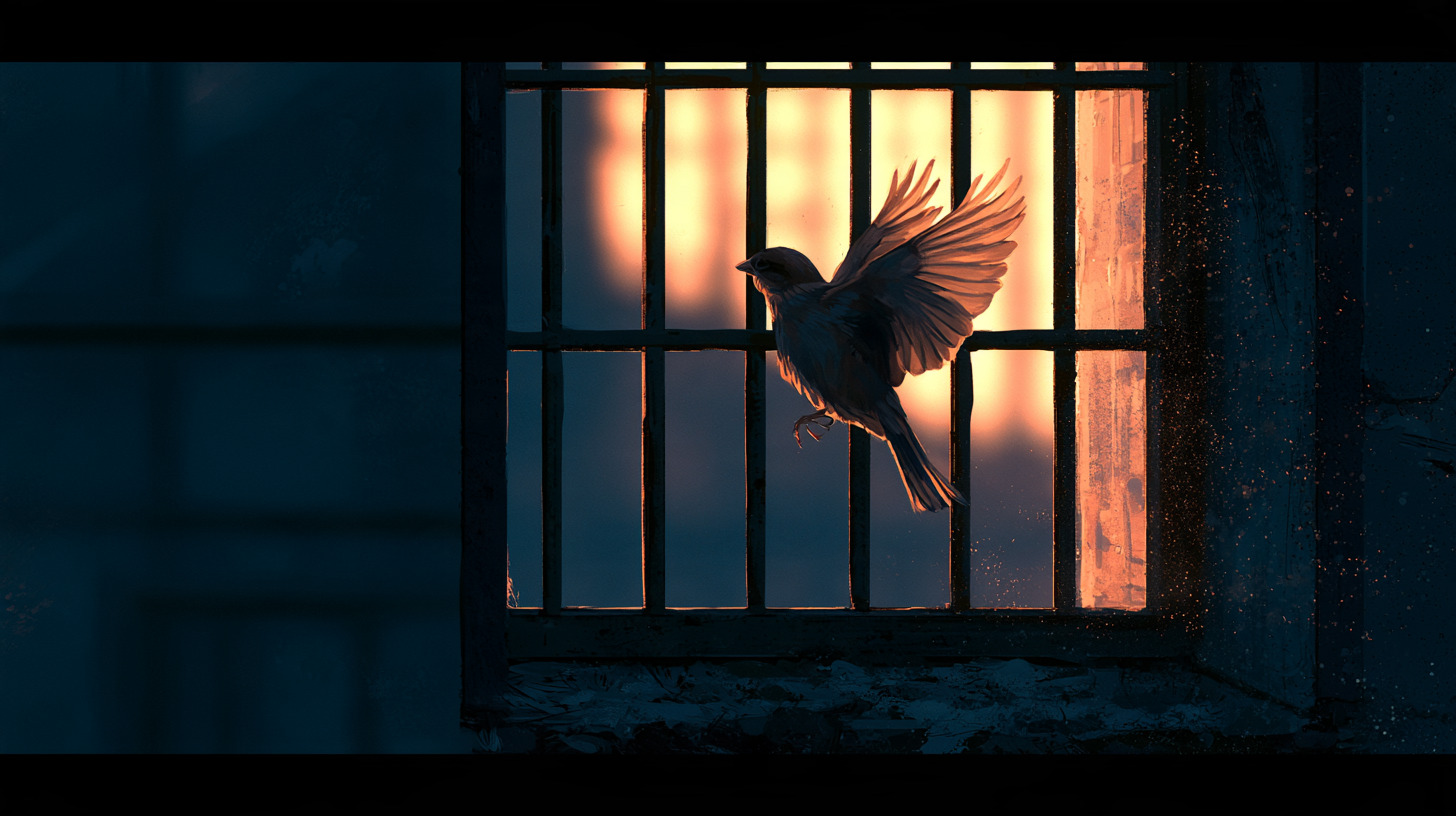
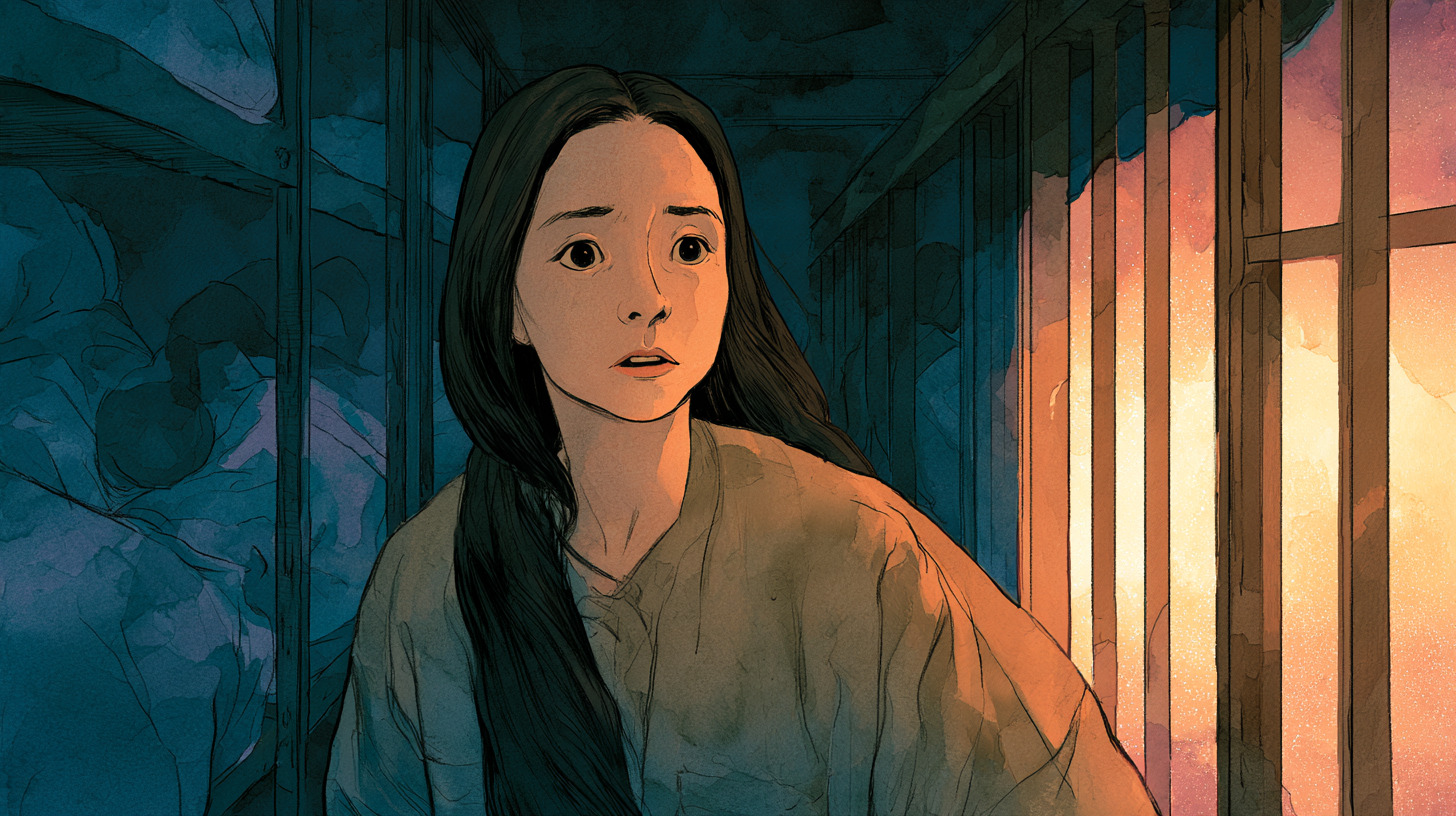
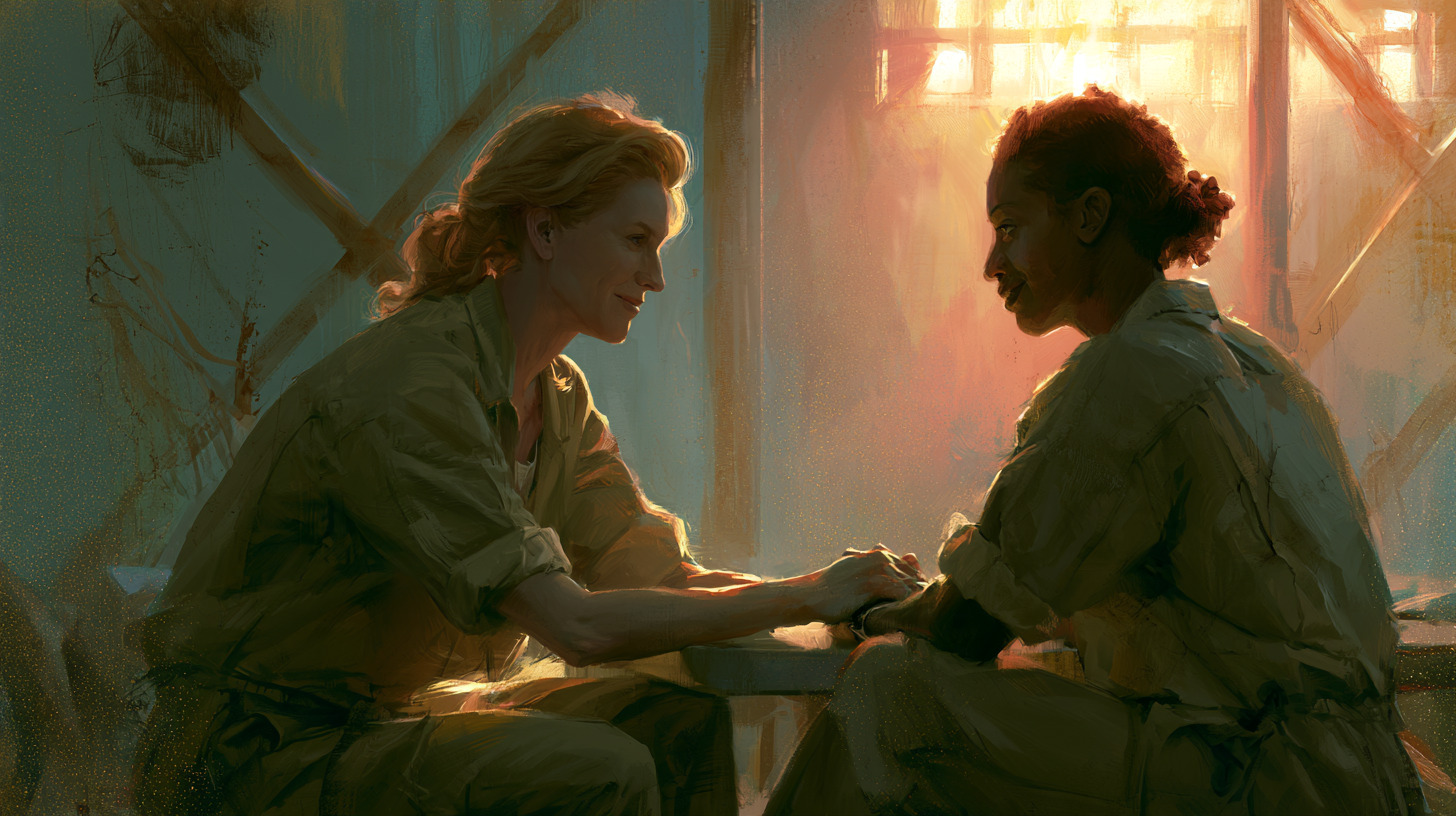
A bird got into the dorm before sunrise, which in the language of prison superstition means“somebody’s going home.”It shouldn’t happen.
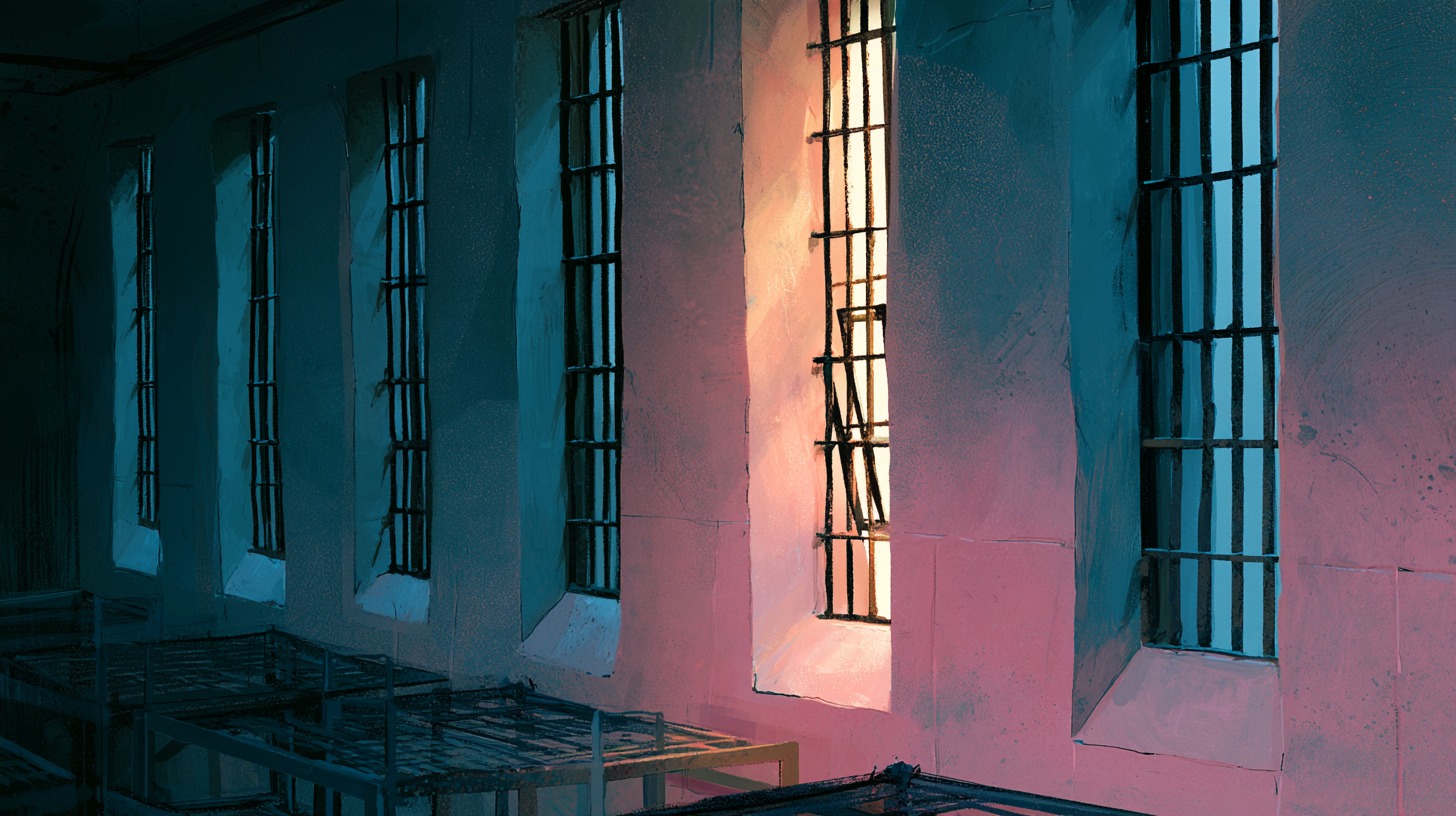
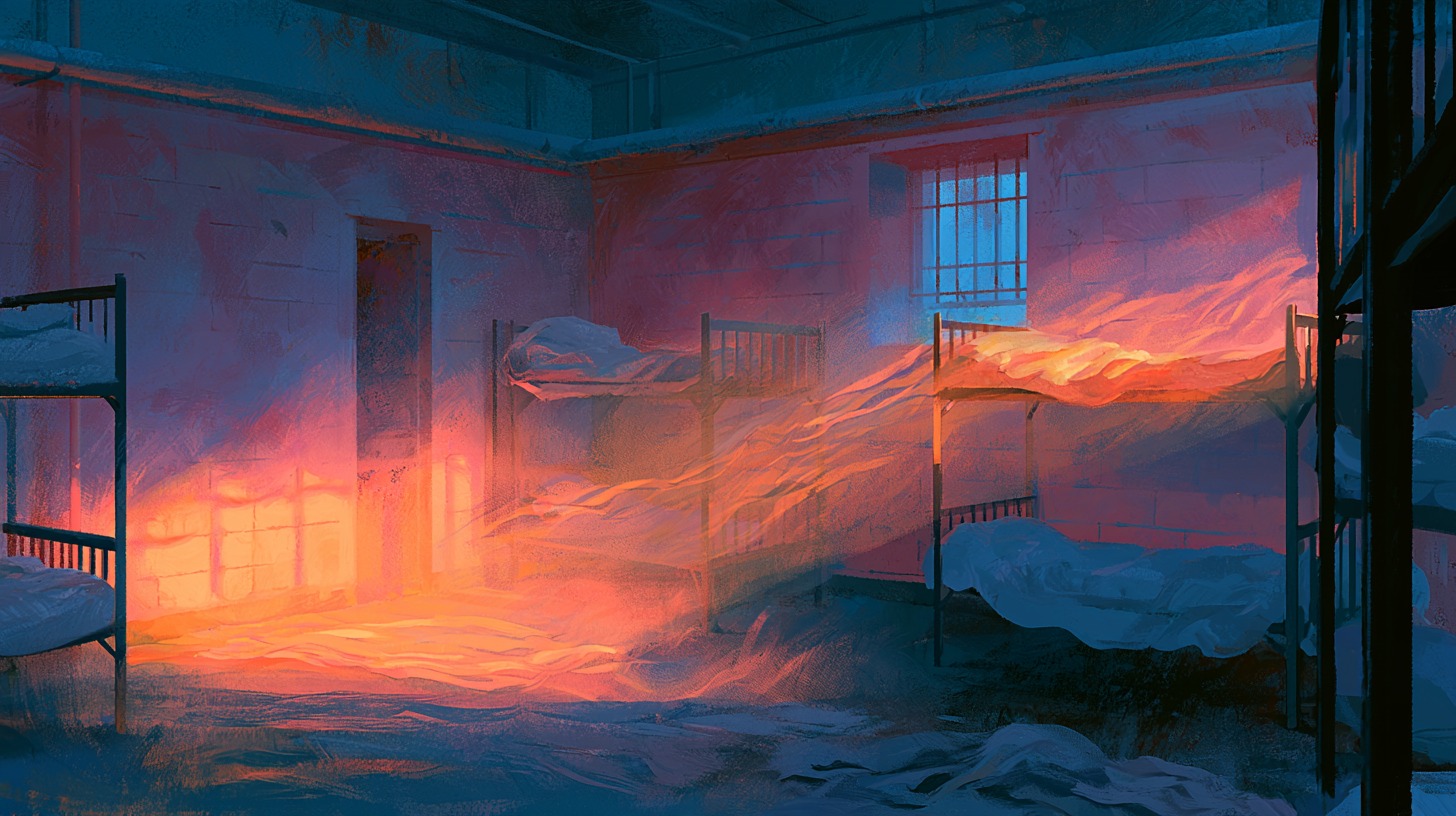
Of all the windows in the dorm, only two open, one an inch, the other just a few inches, andthey all have tight metal grates.
And still somehow,a sparrow managed to enter.Most of the women are not from places with much nature.
So there was some shrieking as the bird circled overhead.Luciana was up, getting ready for an early court appearance.
Release was possible, not promised. She told us her parents had stayed up all night praying at home.Rach and I joined in the prayers,sitting up in our bunks in the near-dark, repeating mantras.
Out of the narrow window slat by her bed, a single warm city light burned,bright as an autumn moon.
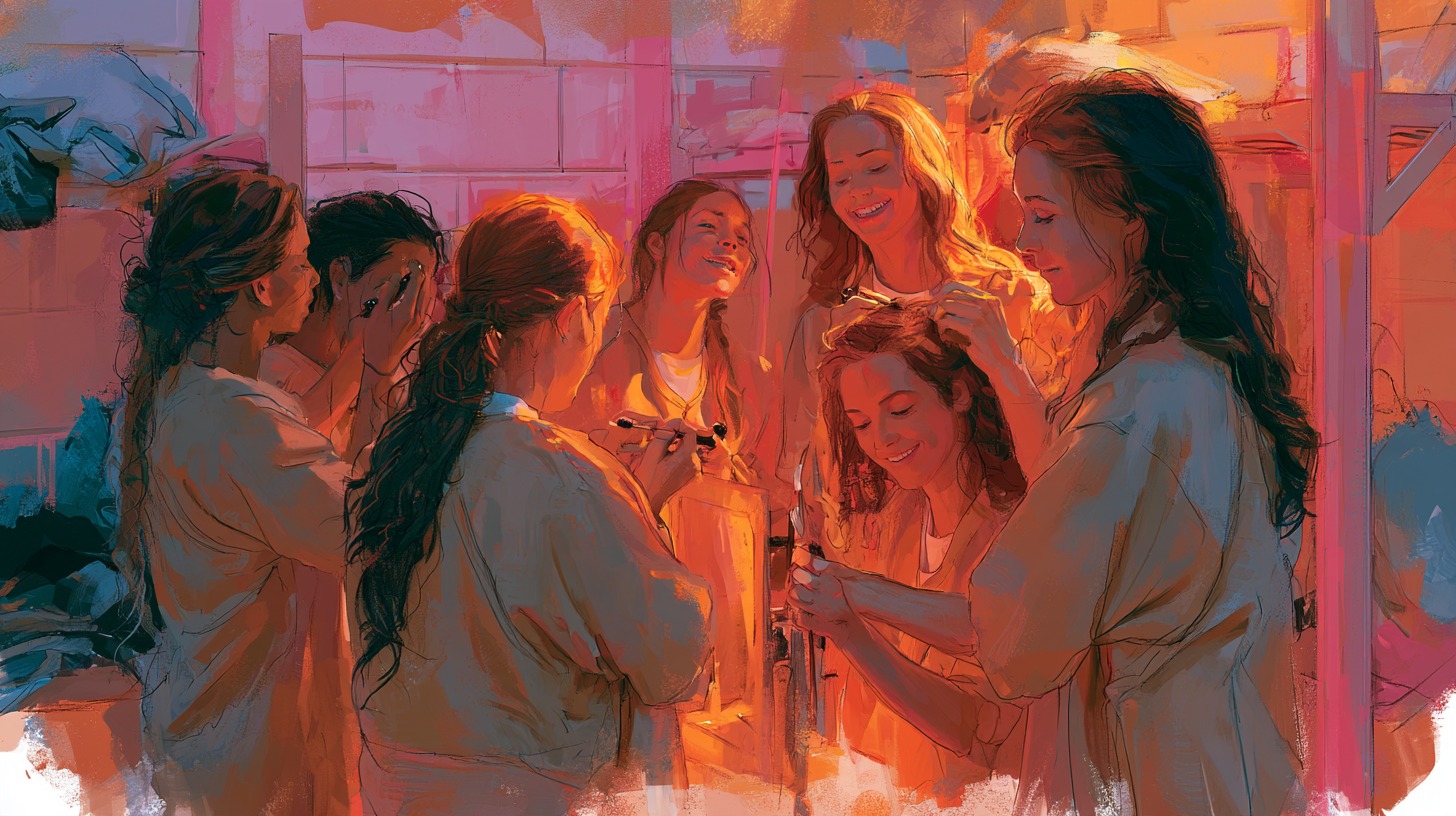
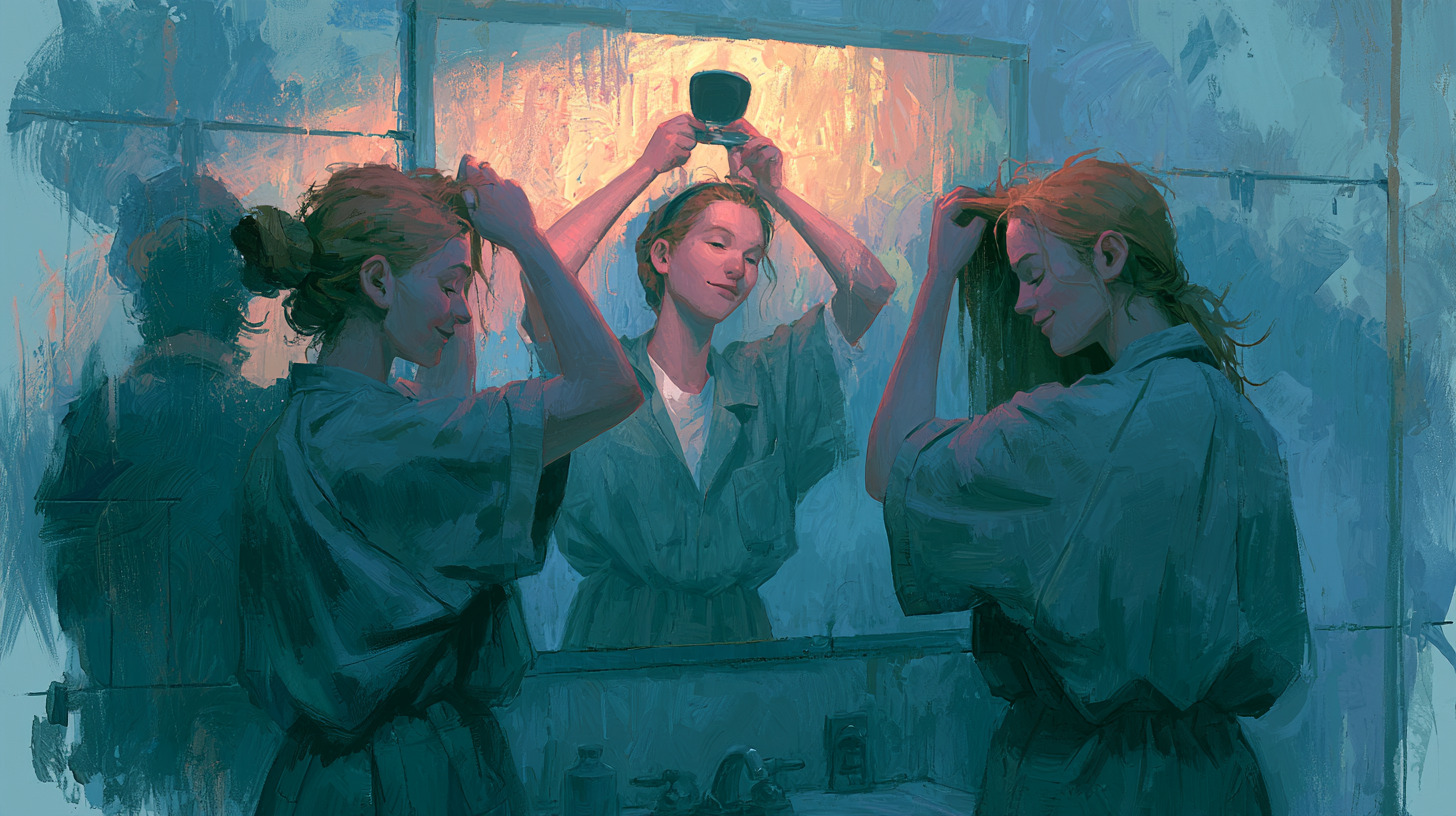
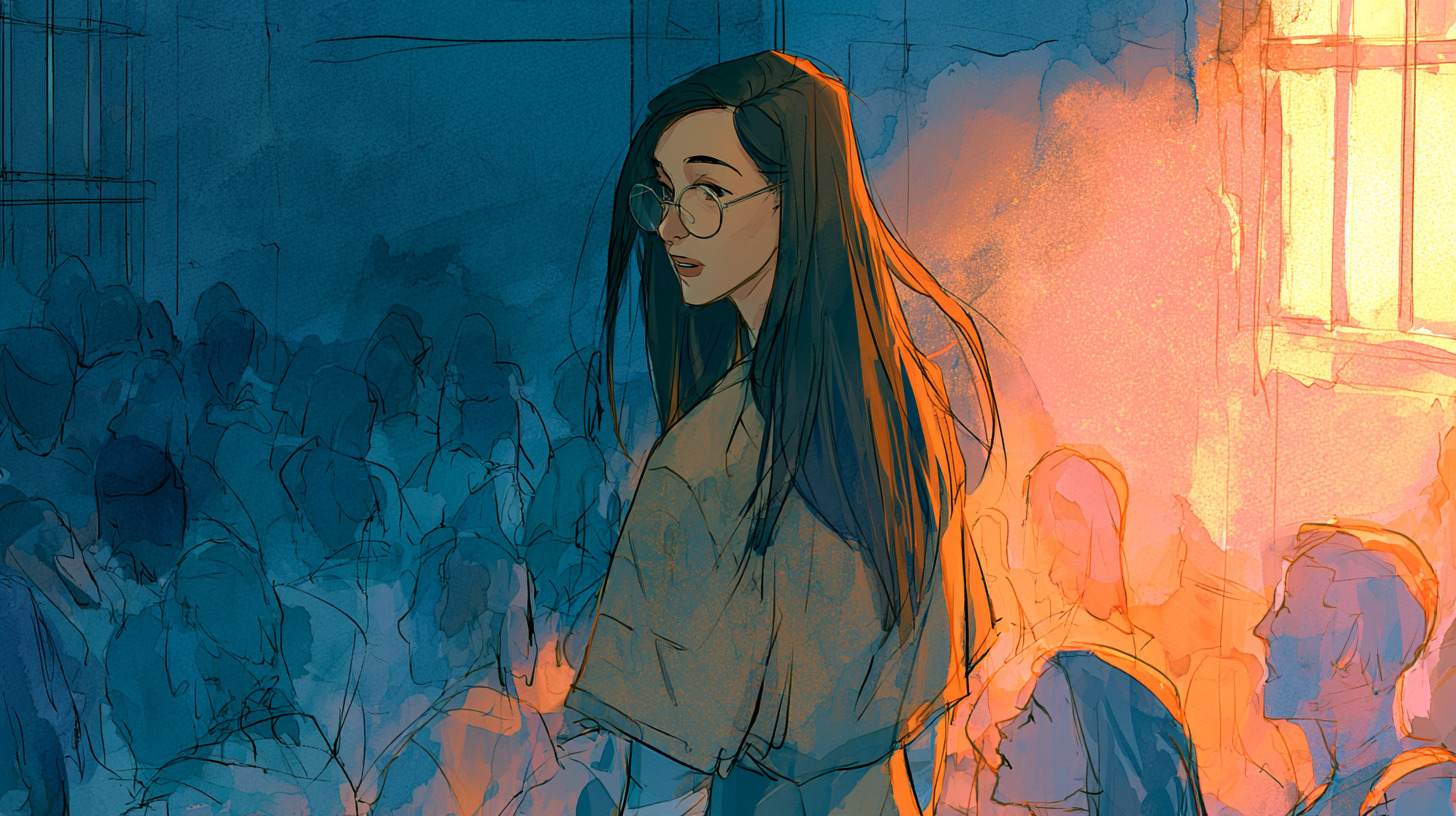
Later that afternoon,the room hums like a backstage dressing roomas everyone prepares for visitation day, trading mascara, smoothing hair, giving last-minute pep talks.
Rosa’s late, which meansthree women are doing her hairwhile she balances a compact mirror and wonders aloud how her six-year-old became a diva.
We all try not to smile.News in here gathers more than it arrives.
First a ripple—looks, whispers—thena swell you can feel under your feet.Sometimes it breaks clean into joy. Sometimes it drags you under.
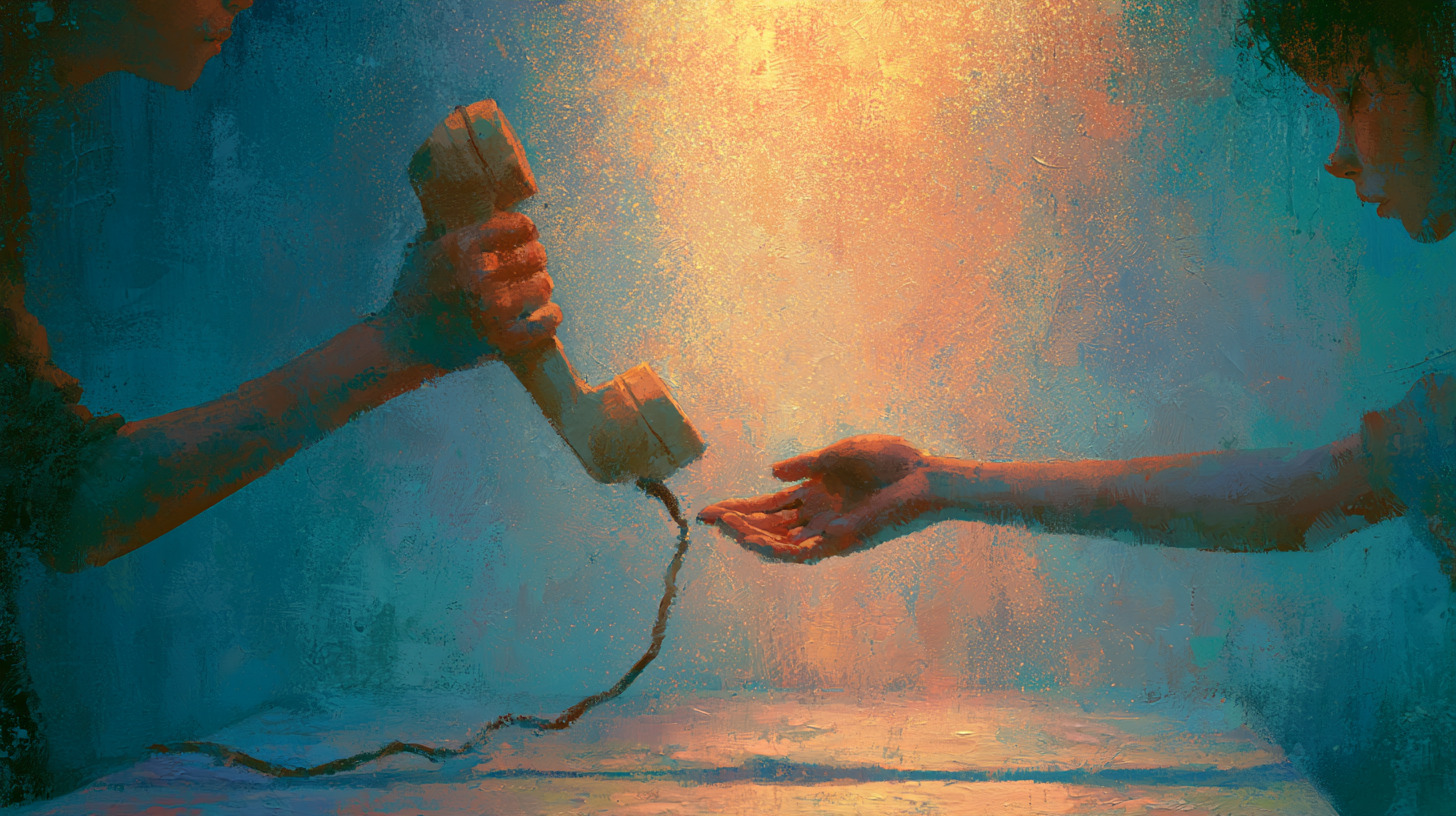
You learn to stand in the swell without bracing.Across the room, I spot Rach on the phone.
She listens, then hands it to Claire. When I reach her, Rach whispers, “It’s Luciana.”The swell lifts a little higher.Hearing the news is always a big wave crashing down.
Emotions I never anticipated having because I never imagined that I would be in prison,developing relationships with other inmates.
The tiny tug of feeling how I’m going to miss her. The sense that the dorm is nowshifting like a kaleidoscope.
Collisions of hope and fearthroughout. Hearing a woman is going home, celebrating, and then having her return at 7 p.m.
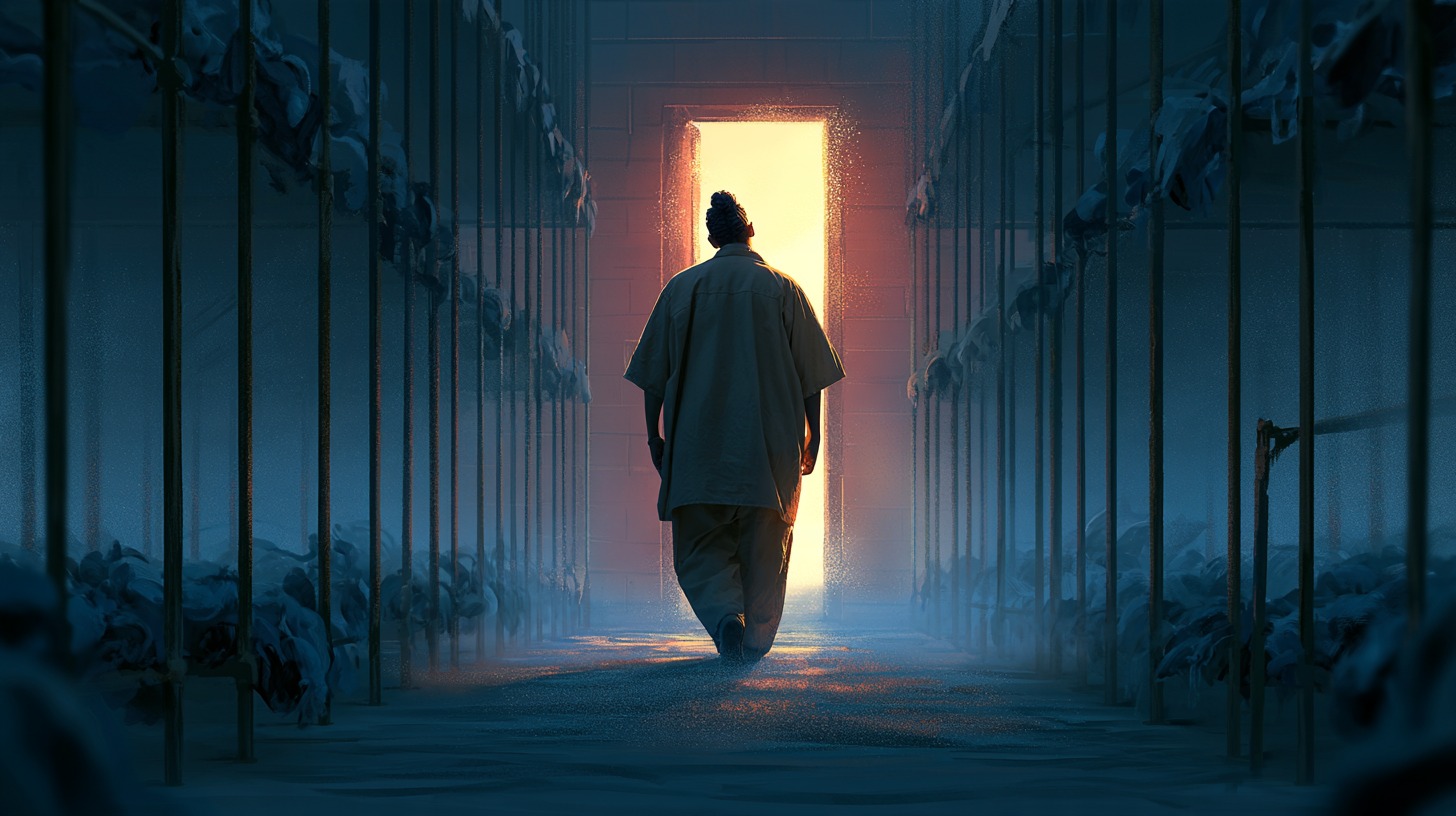
exhausted from having been put in shackles and made the big trip, only to be denied. Time thins. “Luci?” I say into the receiver as Claire hands it to me.“I’m going home,”she says.
I want to pour every reminder into the line—live what you learned, stay in the depths of who you are—
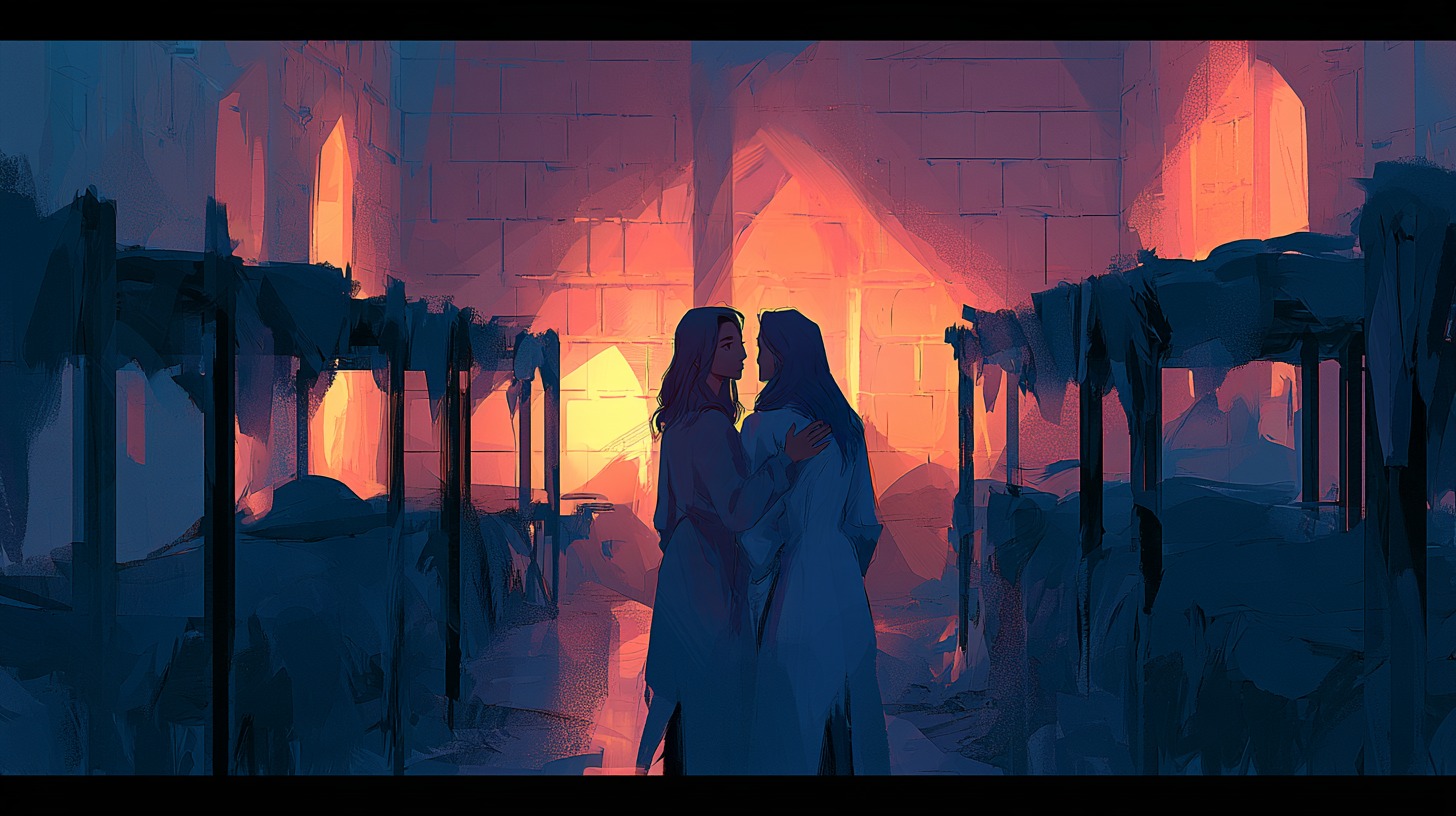
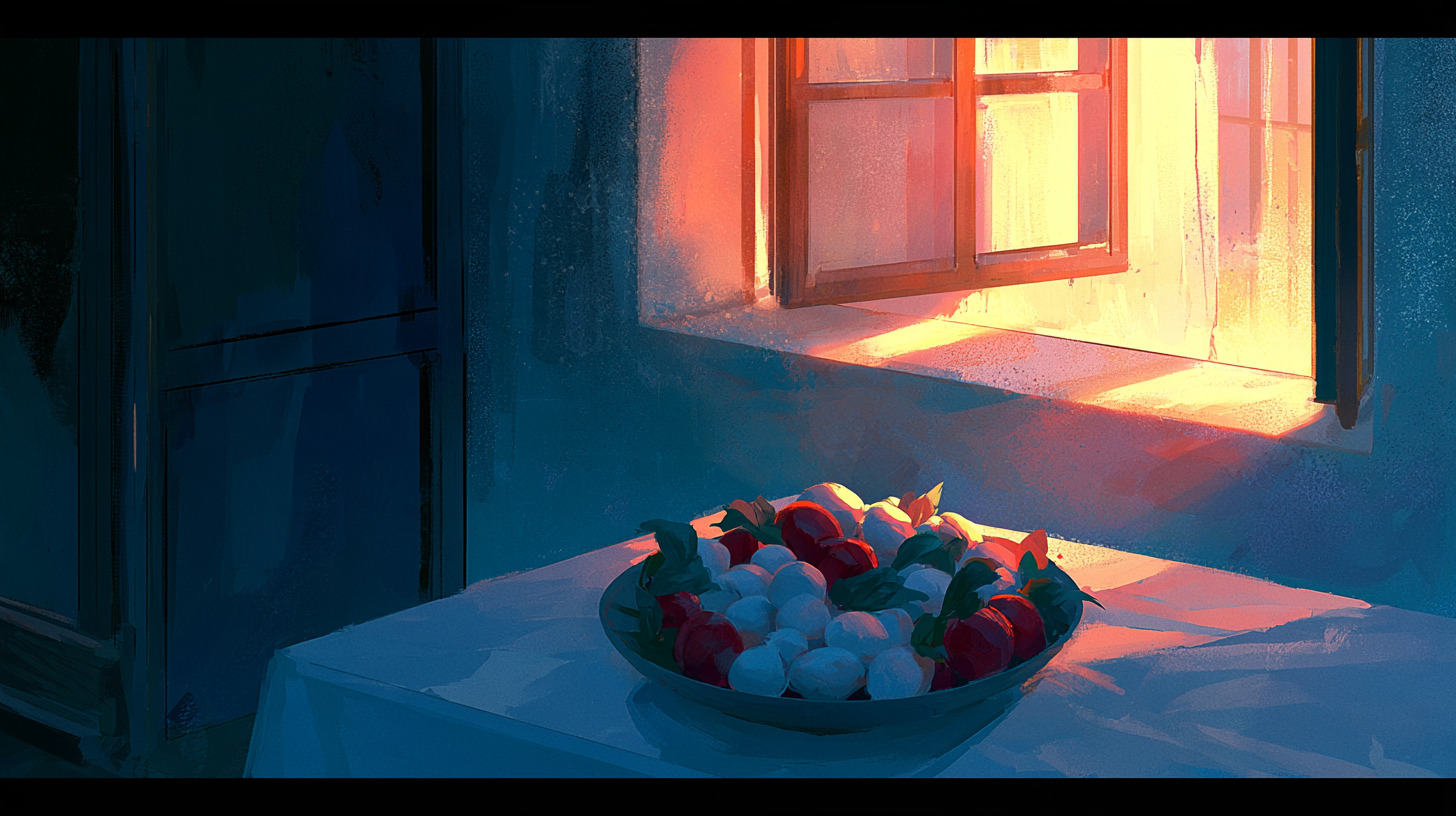
but she belongs to her people now, soon to be breathing first-night-out air and being servedmozzarella, basil, and tomato.“I love you,” I tell her.
“Go be with your family.” I ask Rach if we can tell the unit. In here,silence breeds stories, and stories breed trouble.
She nods, turns, andlifts her voice for the first time since we arrived.“Everyone!” The room never goes quiet, but it softens.
“I just spoke to Luciana. She’s gone home.”Faces flip like a shuffled deck—joy, envy, relief, fear.
It’s as if a tree we all leaned on got pulled up while we were out;the ground still trembles where the roots were.
That’s the crest. Then comes the undertow: the practical, hungry questions like“Who gets her bunk?”already tugging at ankles.
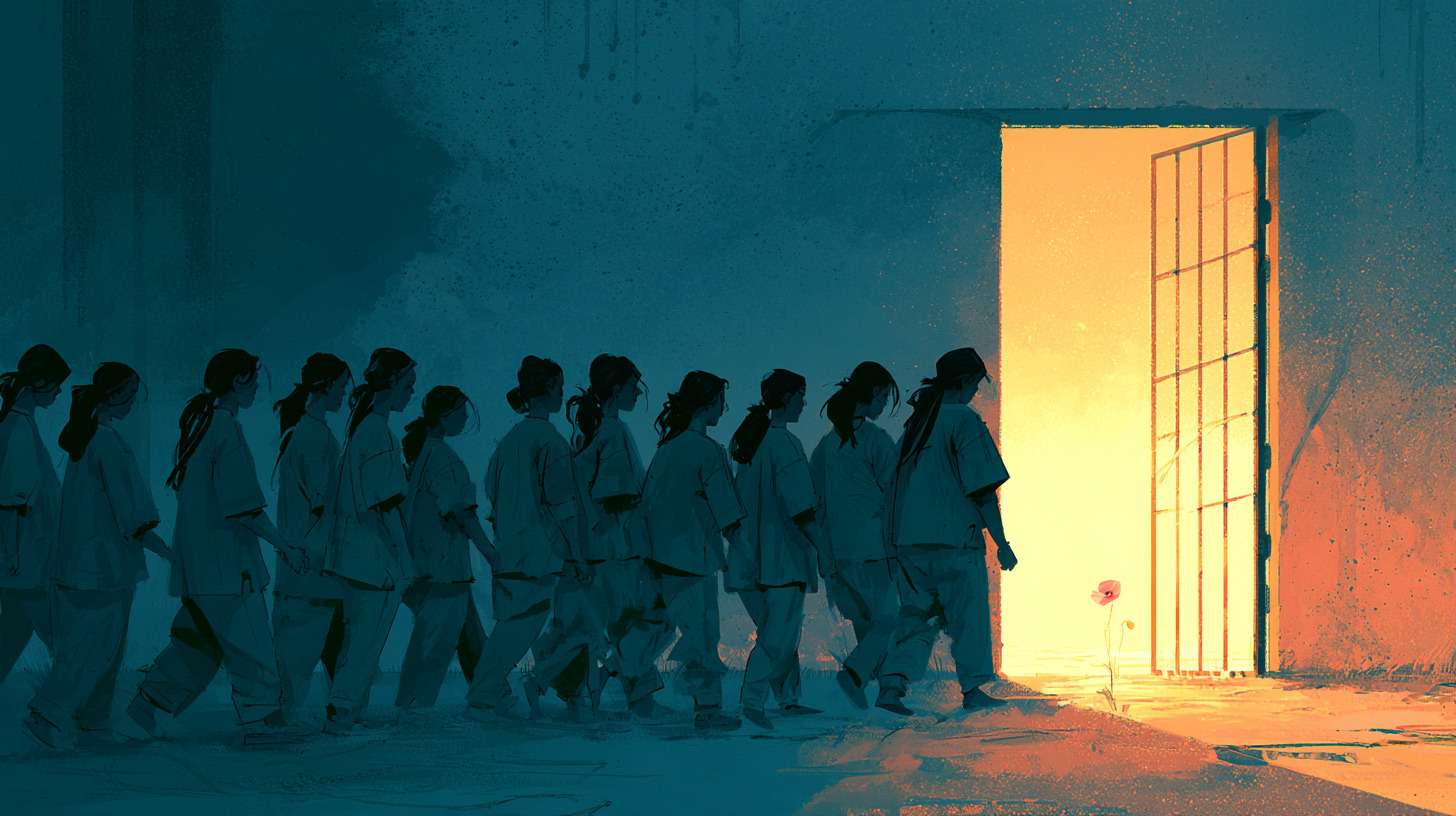
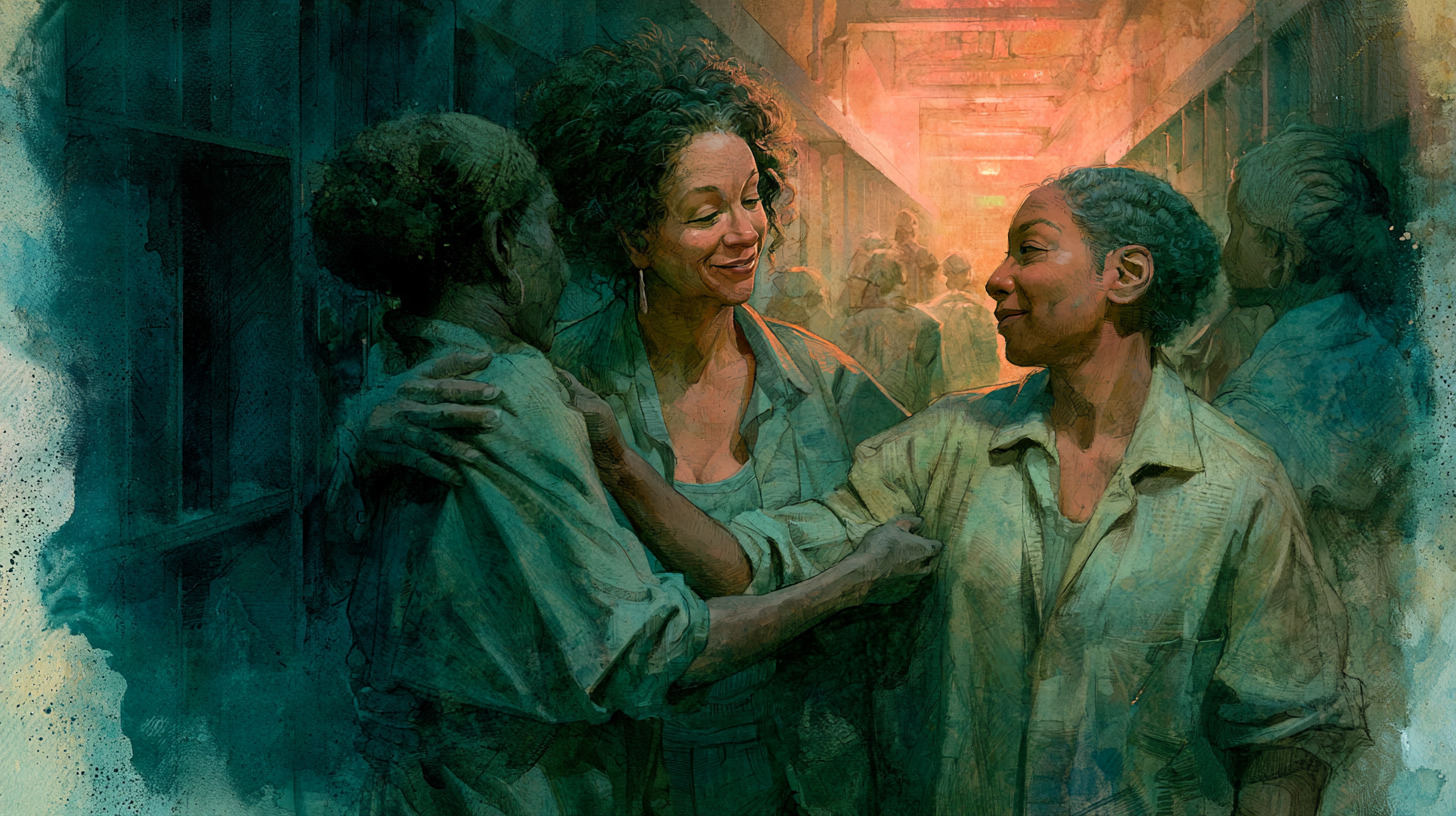
A CO starts calling last names from the gate. Visitation. Two currents at once:one woman going out into the world,the rest of us walking toward the small world downstairs.
We line up. The dorm exhales, then inhales again. I smooth my shirt and follow the tide to the visiting room. The visiting room isdim and bright at the same time.
Emmett rounds the cornerlike a headlamp in a caveand hugs me like a soldier in a train station.
I remind him—softly, again—that this isn’t the place for grand gestures. In here, visible warmth gets youtrimmed like a tall poppy.
You learn to draw it all into the interior andremain beige like your uniformon the exterior. We sit and swap stories: Royal, Nevaeh, our “marathon training” on the track.
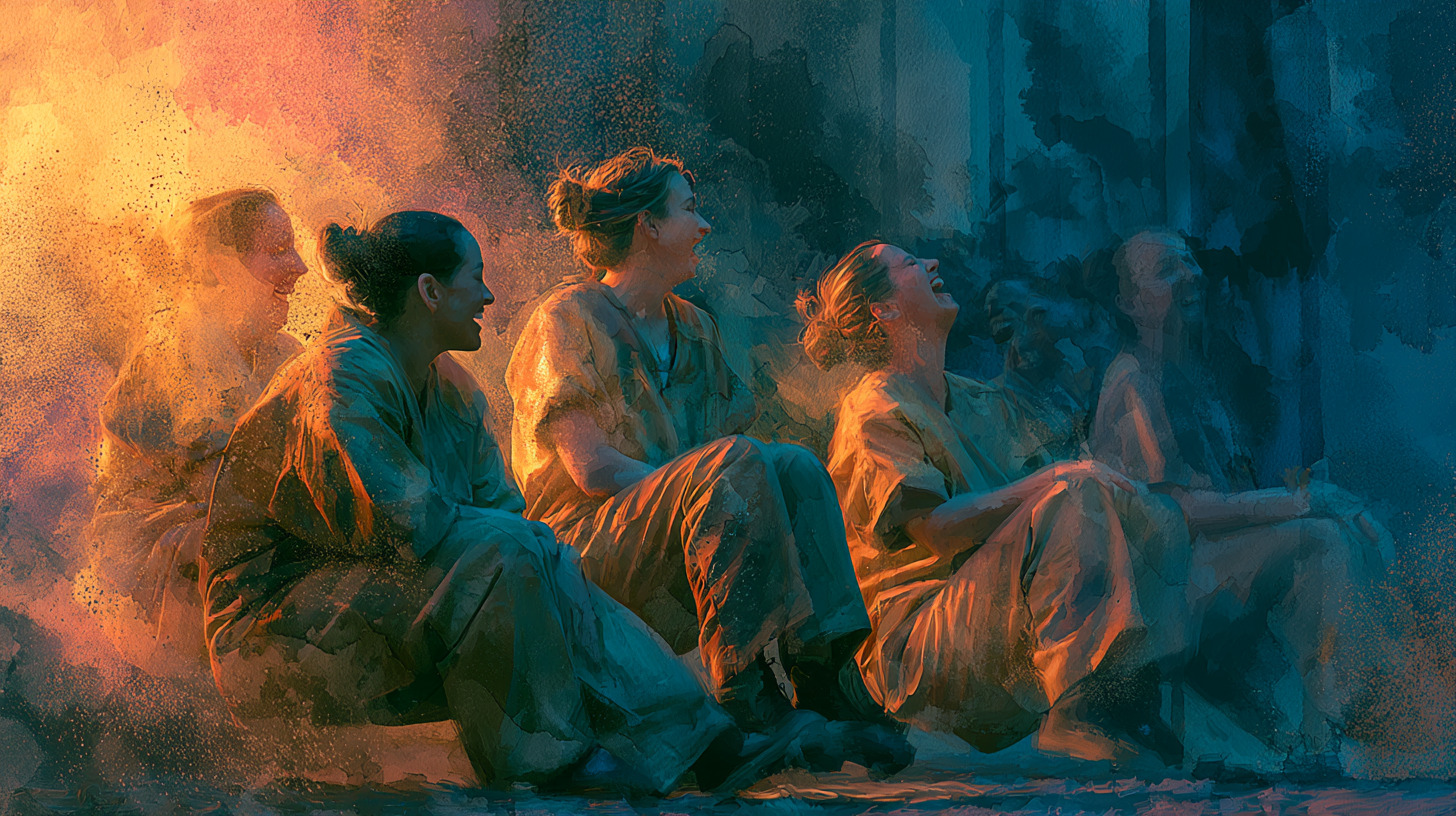
We laugh andthe laughter lifts us into collective flightwhere we are out of this environment for an hour, but in that space, it is an eternity.
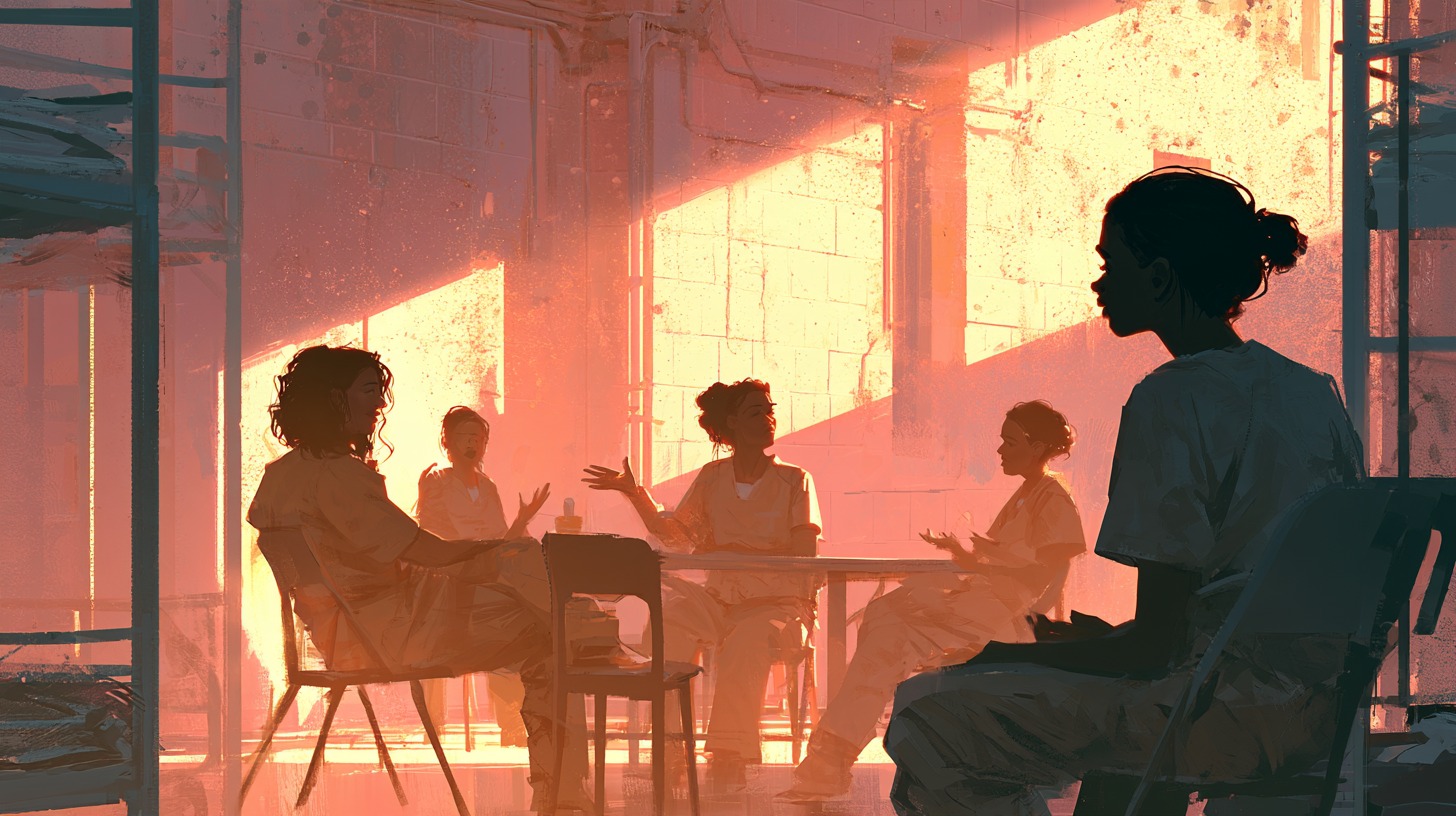
Later, back upstairs, the dormswirls like a street scene in a musical— newsboys, chairs scraping, everybody narrating.
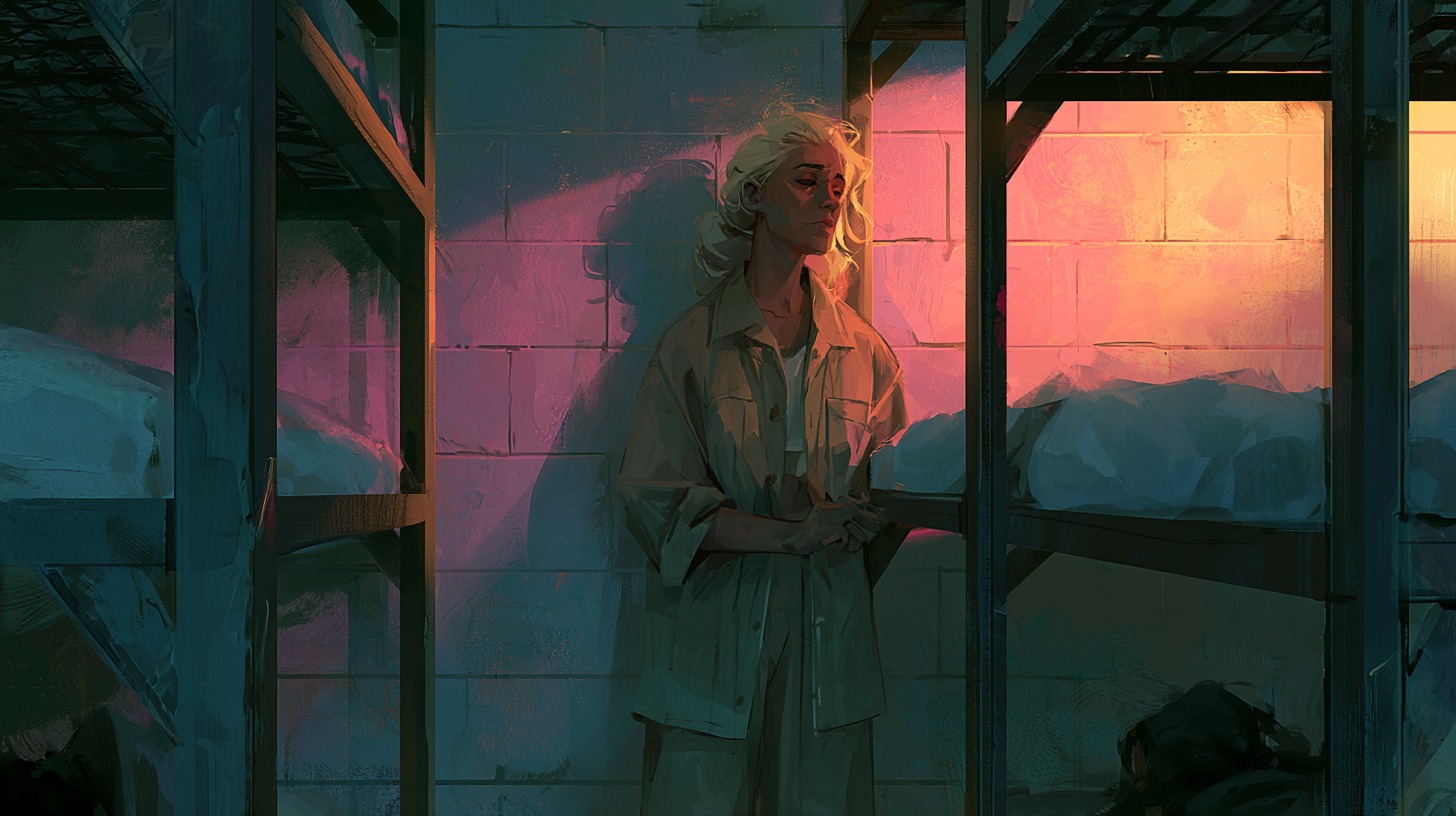
Row One—“Religion Row”—rearranges: I move into Luci’s old bunk against the wall; Rach slides in next to me.
Nevaeh jokes she’s nowsandwiched between Christians and Buddhists.(She does ministry calls on the unit phone; I hear her telling women to try ten minutes of meditation a day.
Our little practice is sneaking into her repertoire.) “You know there are Jewish Buddhists—‘JewBu,’” I say. “You’re on your way to being a Crew-Bu.” She gives methe big laugh, the contagious one.
Right then, and I feel her before I see her,Jingyi comes over, eyes wide.
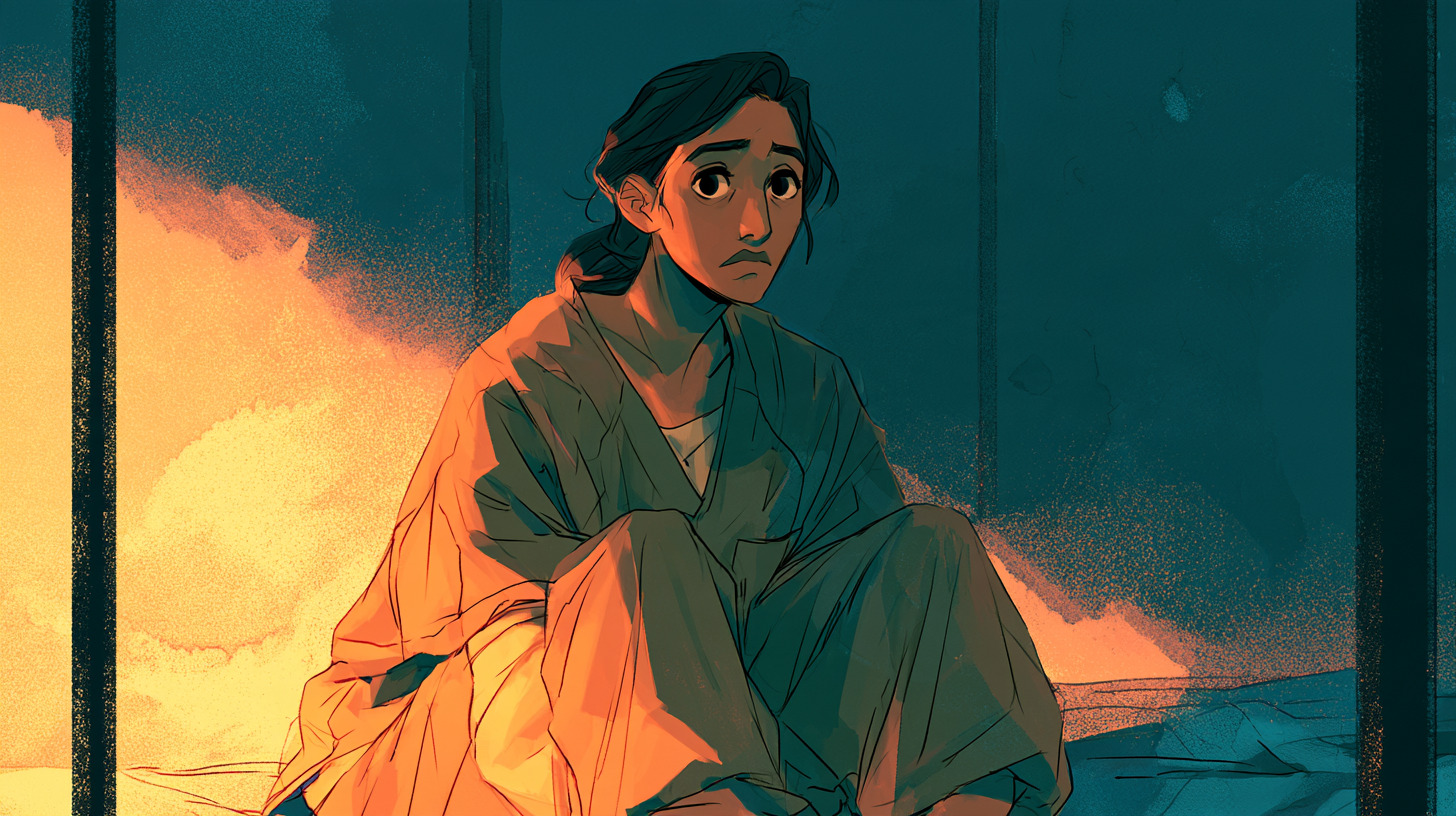
“Dakina…she’s been a little wild. Is it my fault? I’m worried they’ll take her to SHU.” Yesterday she’d taken a break from talking to Dakina,overwhelmed by the chaos.
“I don’t think it’s anyone’s fault,” I say.“Her flight is just a bit more turbulent.
She’sa reflection of the dorm.Luciana left, things feel a little less steady.
If you want to reflect, do it—butfeel remorse for six seconds,see what there is to see, and let it go.
Anything longer justfeeds the ego’s need to be the villain,the victim, and the savior.” She scrunches her nose.
I explain: We fixate on a single thread in the fabric so we can feel in control.The giant open sky of realityis scarier than our tiny story of blame.
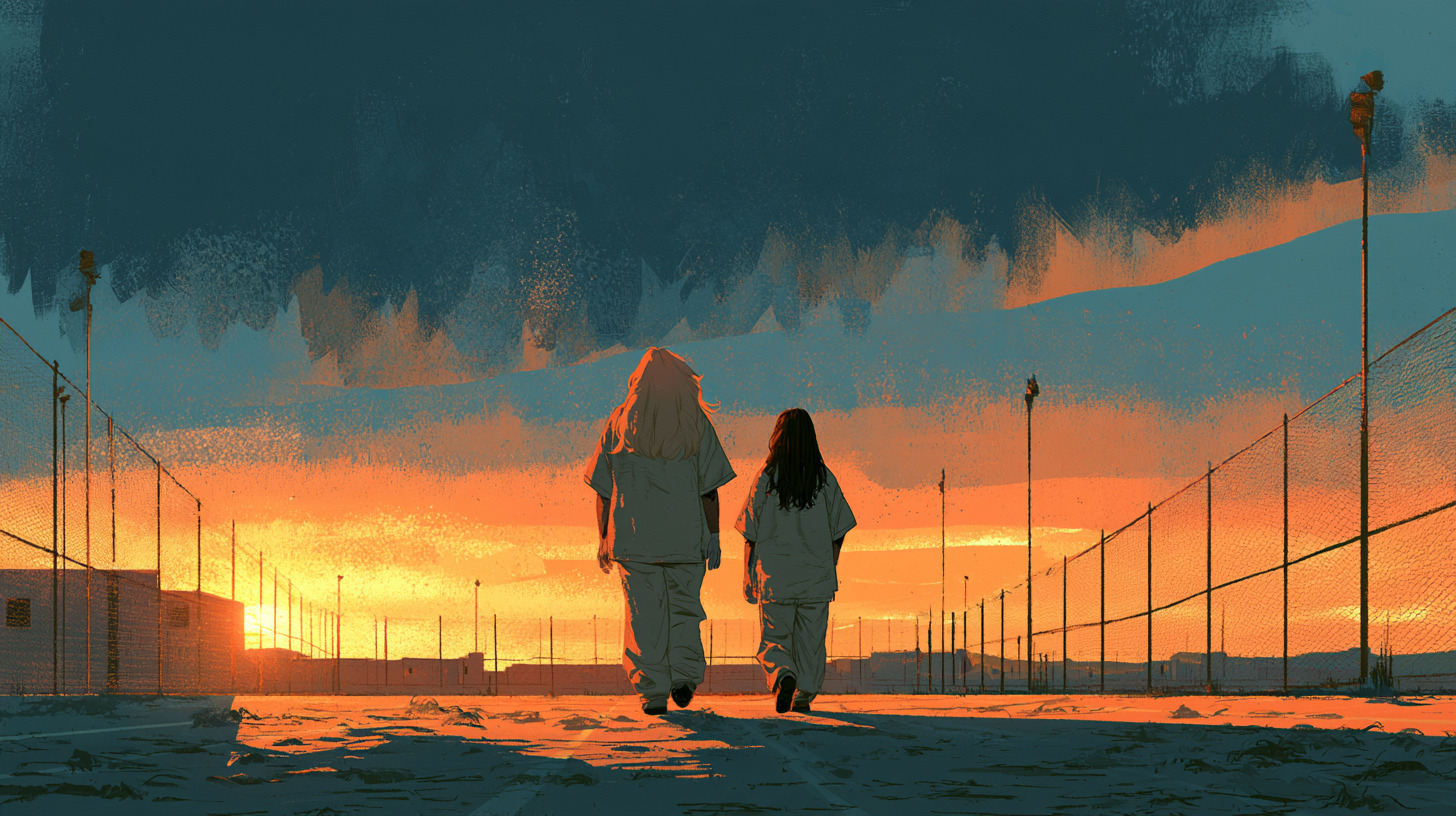
In here, that fixation is a sport.I know we need a stabilizing force. Rach and I go walk the track, my mind churning.
We are on lap two hundred sixty when I realize,it will be Miriam.
I think back to how at first, I hadn’t been sure about her. She had such big energy and was loud. But, time and again,she’d stood up in places others hadn’t.
Telling the women to stop cheering when Dakina was taken out,putting her foot downwhen women were getting up to something she knew would be no good.
Right after the first meditation class, Miriam pulled me aside.“I don’t do that,”she said.
“I’ll explain later. But I respect what you did. Half the unit was actually quiet. Keep going.”Praise from someone honorable hits different.
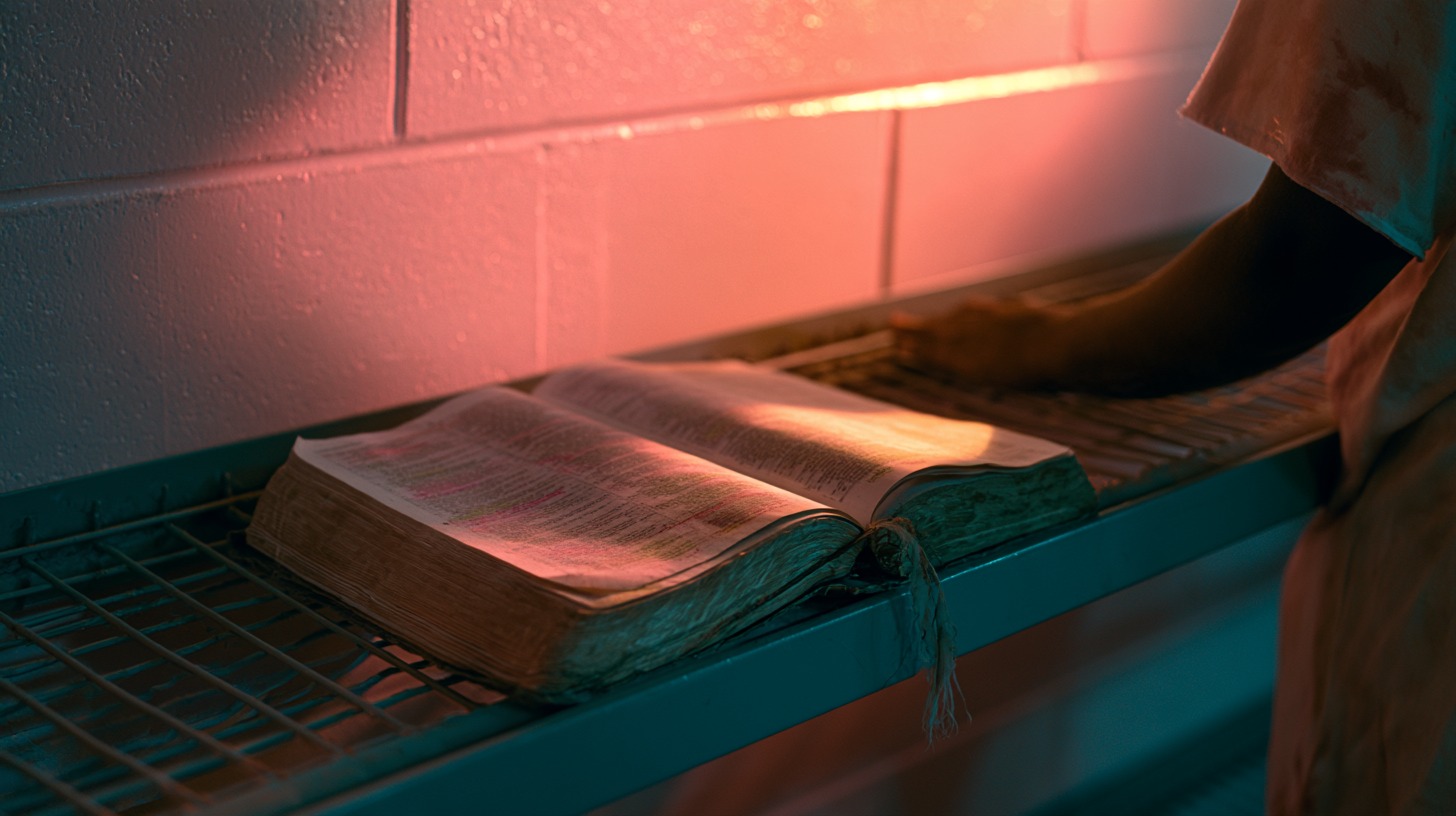
A couple weeks later she had come to me again, quiet,Bible-underlining Evelisse in tow.
“Would you be willing to meditate with us but not with everyone else?” Evelisse was looking at me with thosebig eyes, pure warmth.
I picked up on what Miriam was saying: Some people are almosttoo pure for the world.“She is having experiences she wants to understand.
But not with everyone else, if you know what I mean.” “I know what you mean, just tell me when.” Turns out, Evelisse was havingexperiences that happen in the minds of advanced practitioners.
She didn’t think she was going crazy so much asshe worried that other people would think she was.
“You’re right,you are not going crazy,”I said, as was once said to me.
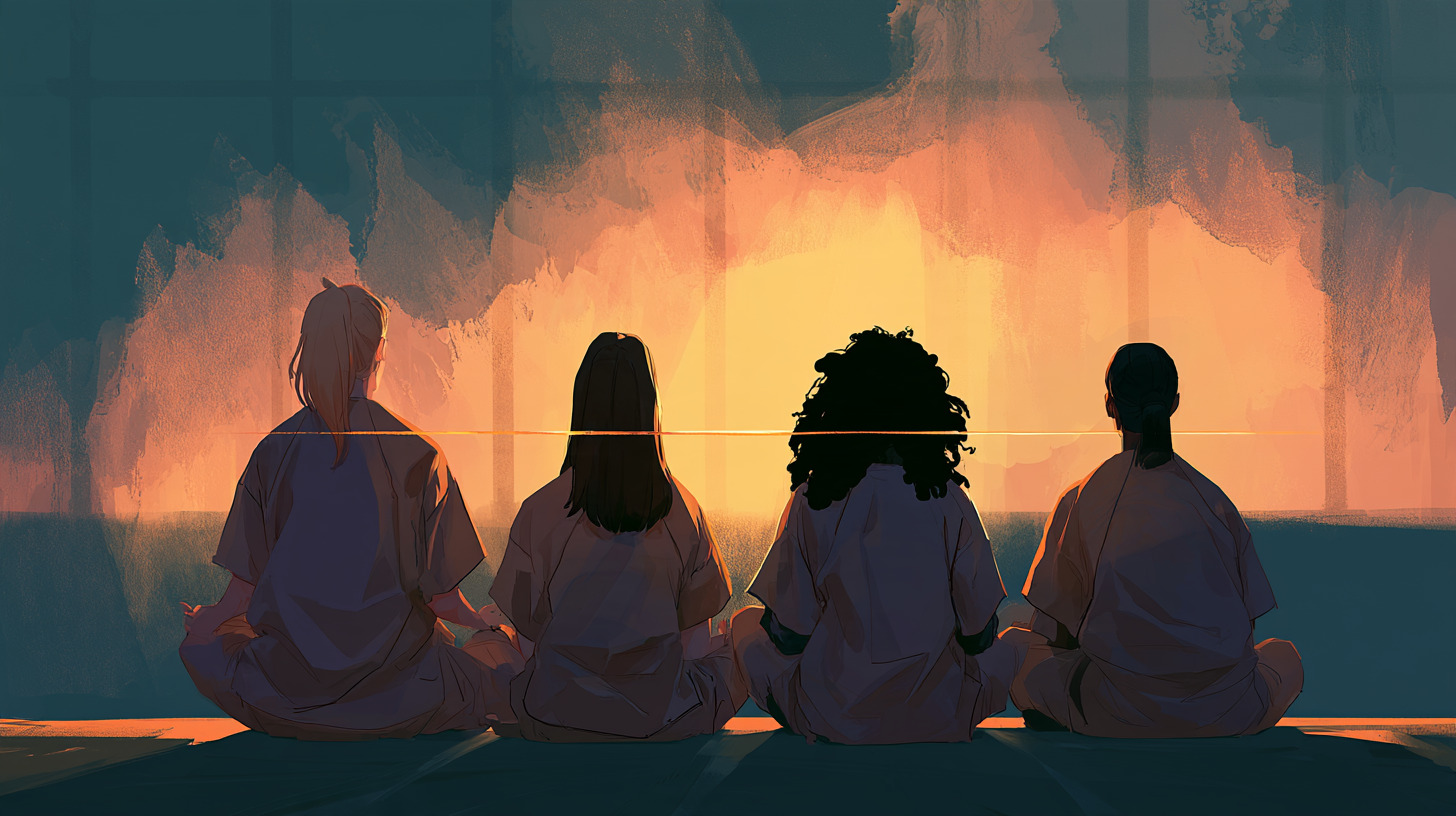
“You are going sane.” The next morning, the four of us sat in a row,as if one thread were running through us.
Now, with the dorm in some upheaval, I know I needed to say it plain: Miriam’s the stabilizer. The weight is real; she should knowshe won’t carry it alone.
Rach and I walk over to the table where she’s sitting with Evelisse.I want to tell her I know the weight is real,I want her to know she won’t carry it alone.
She looks up slowly, sun-warmed.“There are four reasons I back you,”I tell her.
“One:You shut down gossip without igniting more.Two: I saw you with your man—I know who you are under pressure.
Three: The day with Dakina,you stood against the room to do the right thing.
Four: You walk a clean line with the guards—no boot-licking, no avoidance. You see we’re all in the same boat, and you lead with—” “Respect?” she says. “Respect.I’ll put my chips on that number.
I may not look like it, but I have a lot of chips.” She doesn’t show her hand, butthe light in her eyes gives her away.She nods. I nod. Evelisse glows. Rach smiles.
It’s a new dawn, it’s a new dayin our little corner of the Metropolitan Dakini Convent.