The first rule of MDC is that there’s no one to explain the rules of MDC. Break them and the consequences are real— anything from discipline to a trip to SHU.The guards treat new questions like gnats.Most women aren’t exactly rule-obsessed, either.
They’ll violate a code, get scolded, apologize, and do it again. Their method is basically: “Mess around and see what happens.” There is a manual—faded type, written by whoever writes those Ikea guides that always leave you withextra screws.
It answers maybe forty percent of what you need.
The rest is like one of those ridiculous obstacle-course shows where you never know what is coming next: You’re climbing a rope net witha dog bone in your mouthwhile surprises launch at you from off-screen.
Ready? Go. That doesn’t include the “not a good idea” list your lawyer mentions after you’ve done the not-good-idea.Cue the 3 a.m. spiral:Did my attempt at being a good Samaritan look like I was trying to influence people? Add time to my sentence?
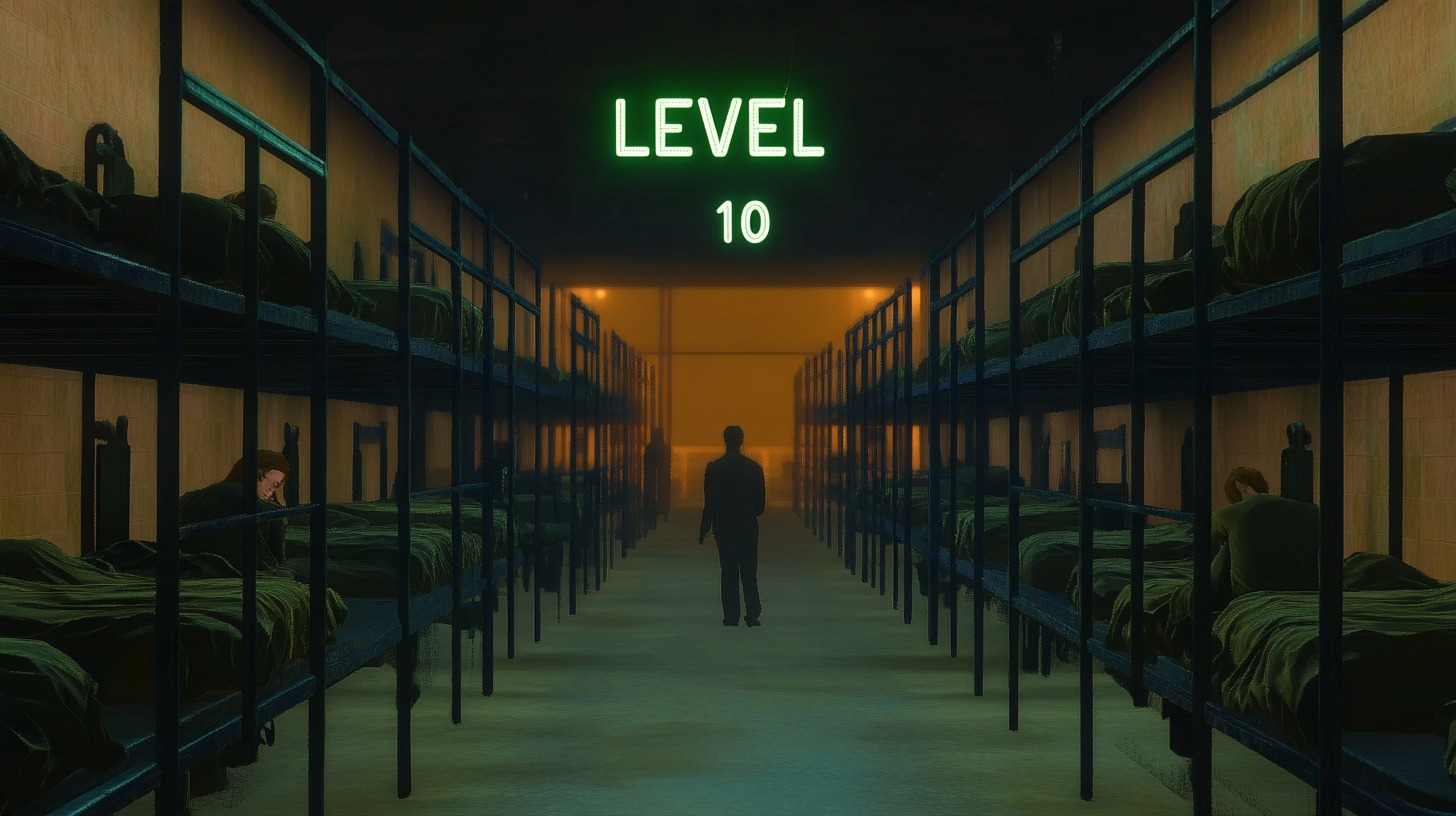
Meanwhile, I keep thinking aboutYe’s life-as-level-ten video-game analogy.
Sometimes I want to tell him I’ve found an even spicier level. He cancompare notes with Diddy two floors up.
There was an additional note in the morning howling I woke to, less volcanic than Dakina’s, morea loud, tearing whimper that carried across the dorm.
I follow it to the computers and find its source: a brand-new arrival. Carrie is with her—Carrie, who used to be deeply religious, used to be a counselor,used to be a lot of things,like so many of us in here.
The chaplain here recently reminded me,“You’re not here to be somebody.”It stung—and it helped. Another invitation to be known by how people feel around me, not by a title or a role.
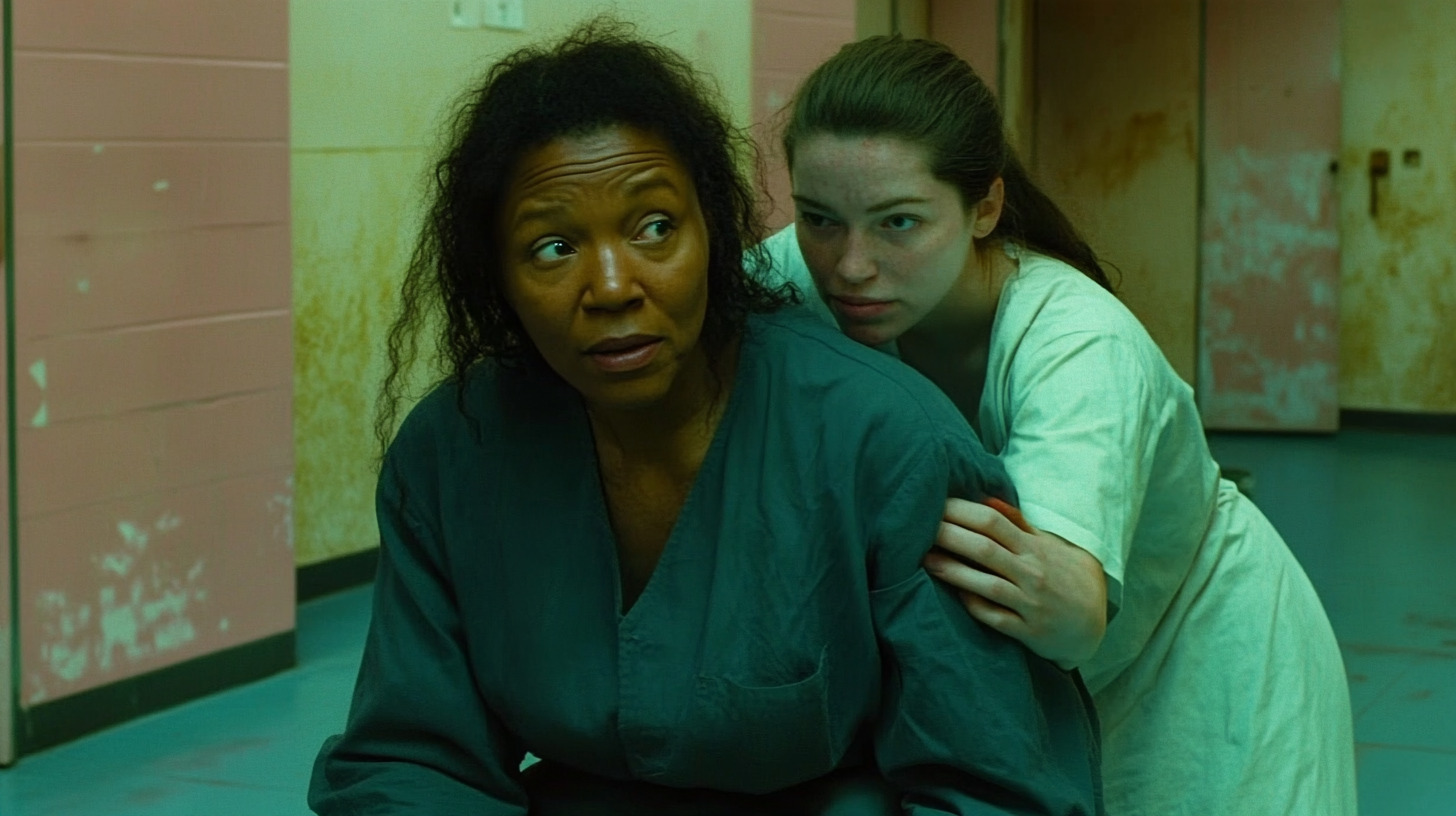
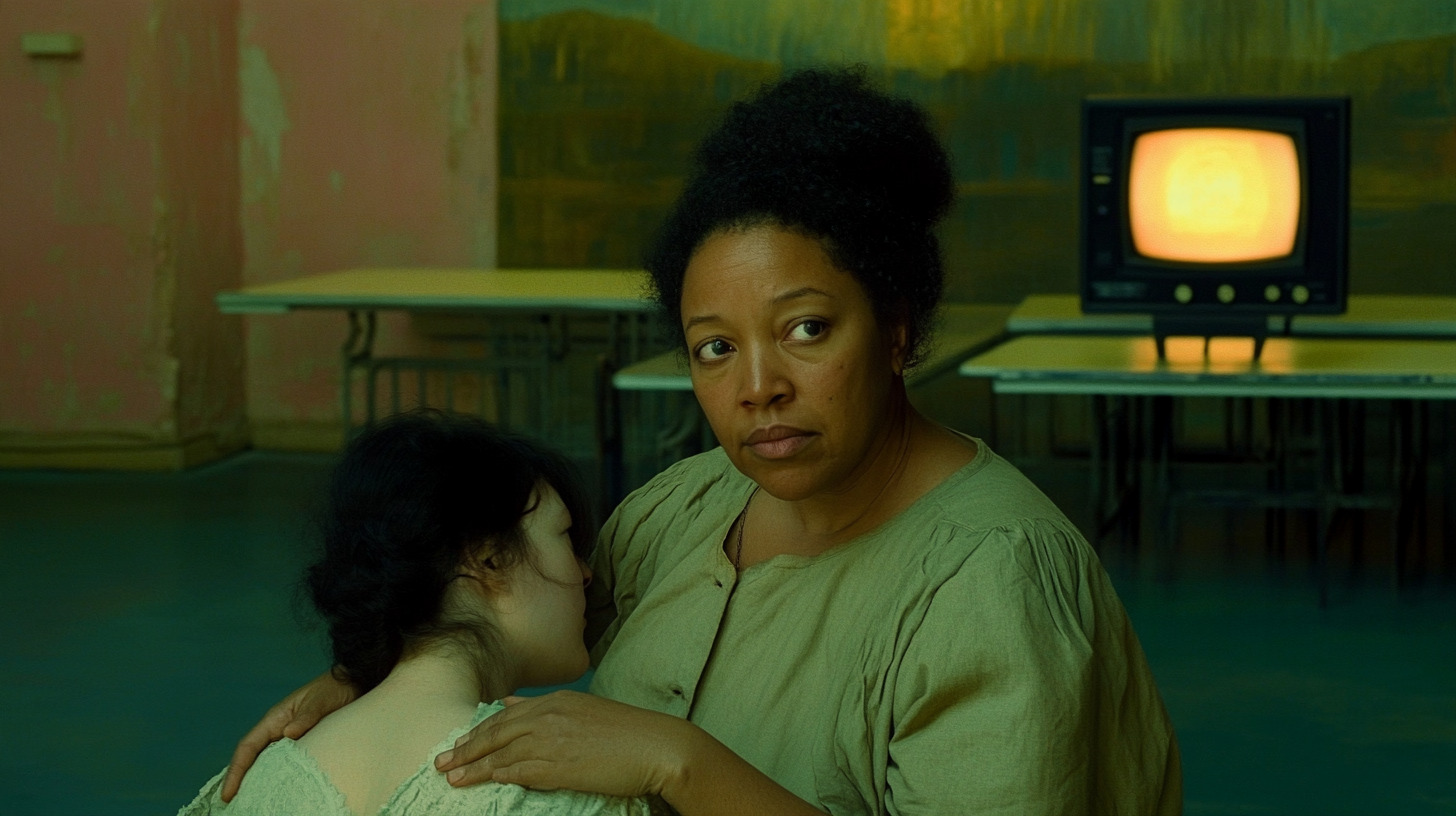
Picture a stock photo:a deeply distressed woman and a deeply steady helper.
In the photo, Carrie would be wearing a white coat with a look of deep concern and the patient would have the expression of a howling ghost. Here,they are both in tan uniforms.
The new woman’s face is a storm—tears, snot, panic. “They told me I was going to a mental institution. I can’t do this. I don’t process things.” It sounds practiced, like a line carved by years of being told her condition.
Carrie’s voice is a whisper you’d use with a skittish cat: “I know. It’s overwhelming. I understand.” The new woman begs to call her husband. It’s too early; no one’s in the office yet. “Right now you are okay.You are with us.
You are okay.” Carrie’s expertise comes from years in the field. I whisper to her thatshe is very good at what she does.I take over as Carrie walks toward the door to laundry.
I don’t think the woman registers who is here and who is not.
Because in a profound way, she is not. There is a merry-go-round of rumination and she is riding it. Even if there isa momentary light of recognition,it dims quickly and she is drawn back in.
I watch any hope of a presence that could cope with this moment fade. Then, as if a new shocking horror at where she was arose, she repeats. “I don’t know what’s happening. I don’t process things.Can I call my husband now?”Louder.
Tighter.“Are you safe right now?”I ask, trying to find her eyes. “This second— anything hurting you right now?” She shakes her head. “Okay. Just this moment, it’s you and me. And you’re okay in this moment.” A small nod.
That’s how you do it here:inch by inch, moment by moment.
Miriam clocks what’s happening and slides in. I head to the office to see if anyone’s arrived; she steers the woman to the TV tables,distracting her with what she likes to watch.
That’s also how we do it here. Over the sea of women drowning in exhaustion, meds, or the churn at the gate, there’s a quiet handful with a“we got this”mindset. We do what needs to be done.
We mop when the ice machine floods and ninety-nine percent ofthe dorm steps around the lake and the stench.
We answer screams at 3 a.m. in our shower slides.We make gentle suggestions before inspections—because these women do not like being told what to do, and they have ways of making your life unpleasant if they feel ordered.
Some are grateful. A few you do not cross. Miriam, because she’s a real leader, thanks us for helping even while she’s shouldering the same load. “Teamwork,” I say.“Makes the dream work,”Rach finishes the couplet.
Later in the day,the new woman drifts to our table like a ghost.“I can’t do this,” sobbing again, her face melting in front of us.
“I’m going to hurt myself.” You can hearthe echo of an old therapist saying:If you’re going to hurt yourself, you have to tell us.
I motion for Rach to get an officer. Some things you escalate immediately. Rach returns with the instructions to bring her to the office. They’ve called Miss Nelson, the therapist who runs the shame class—the kind of personwhose heart is too loud to ignore.
Later, at count, we’re one short. “She’s on suicide watch,” someone says—moved to SHU for monitoring. Pain is everywhere in here;it shapeshifts, and the tools here are limited.
It’s like trying to do surgery with a butter knife. No one here can save you. Those of us with surplus love pour and pour. It’s not enough. It’s what we have. Sowe use it. And we keep going.