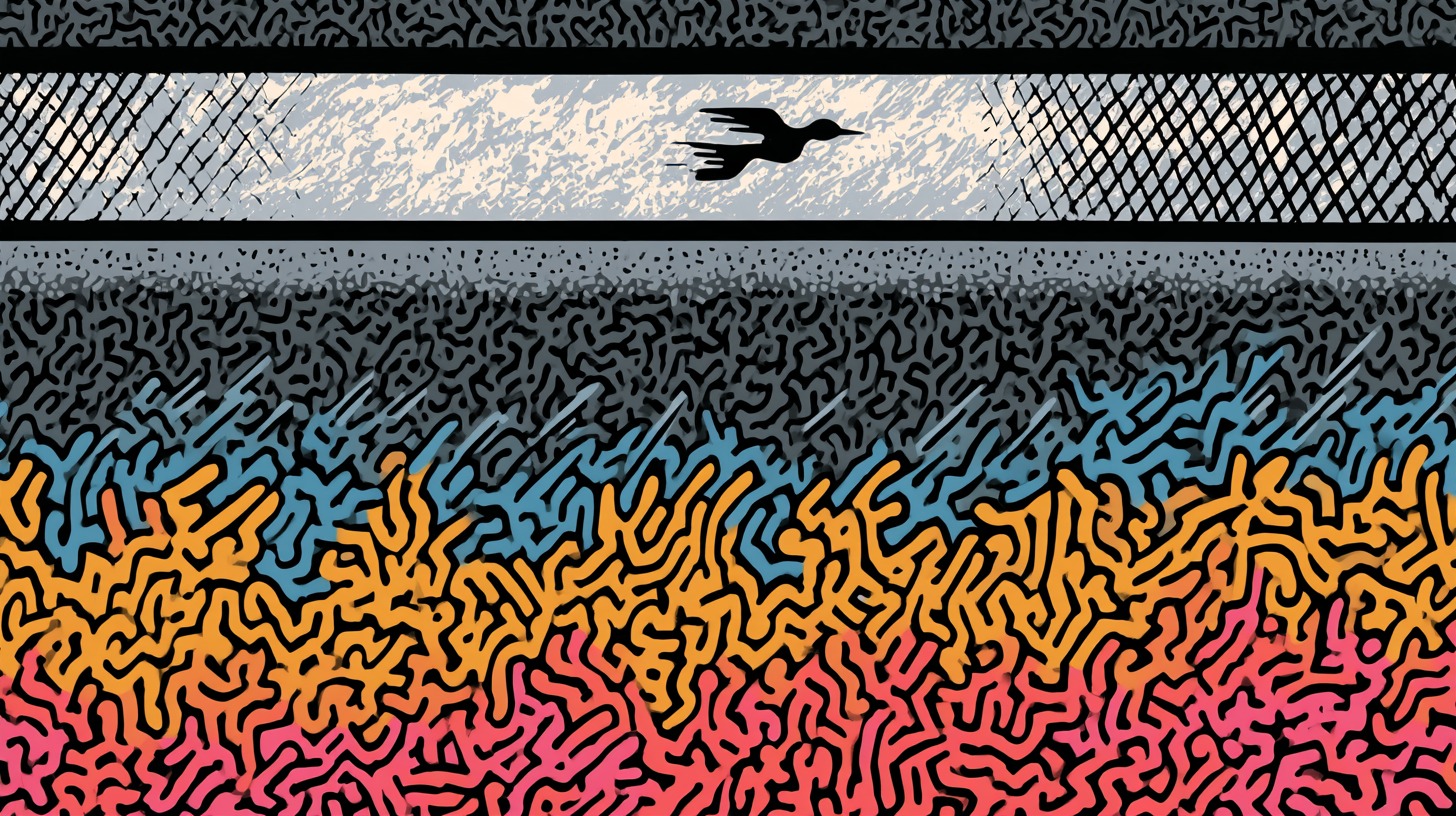
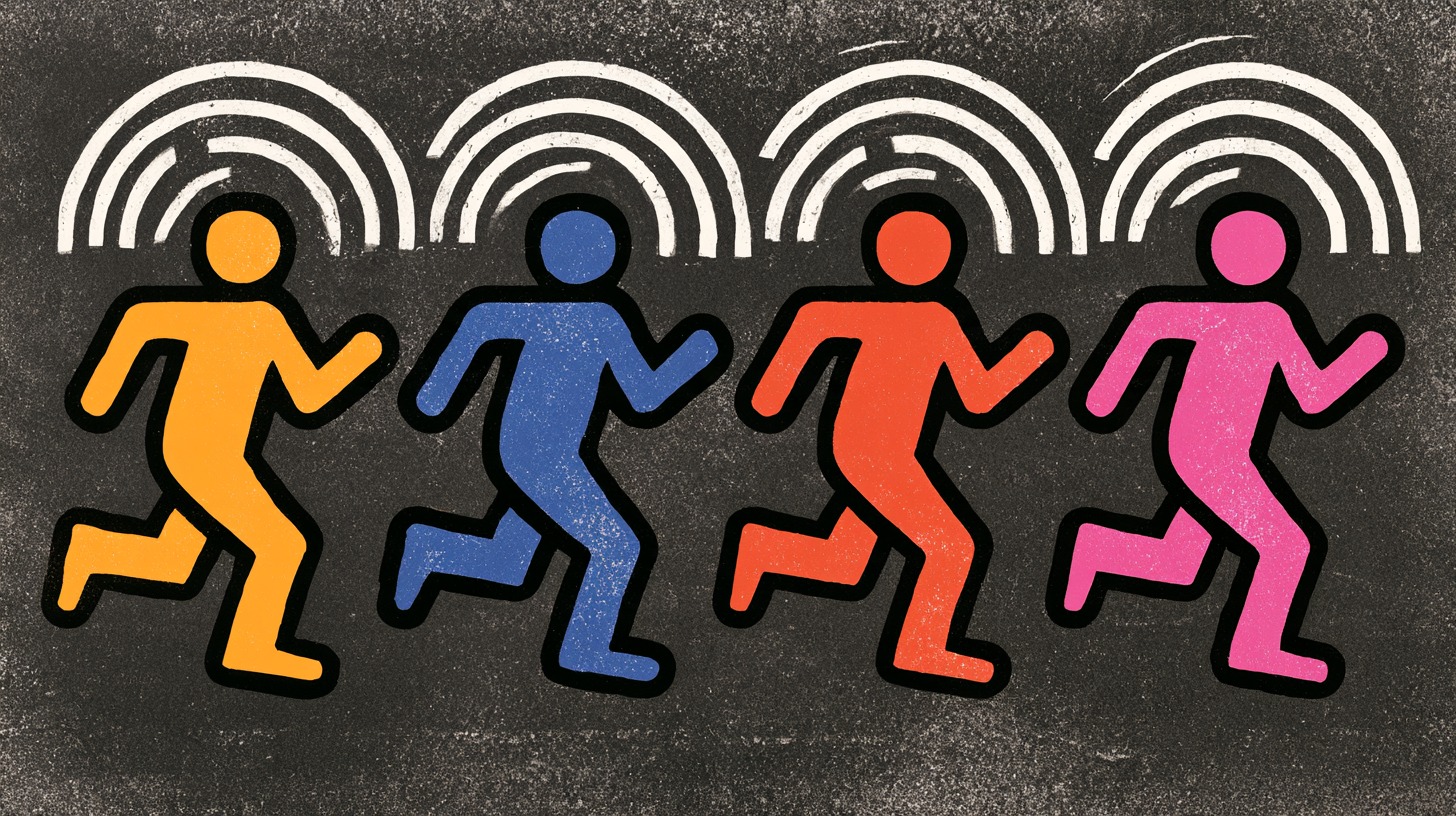
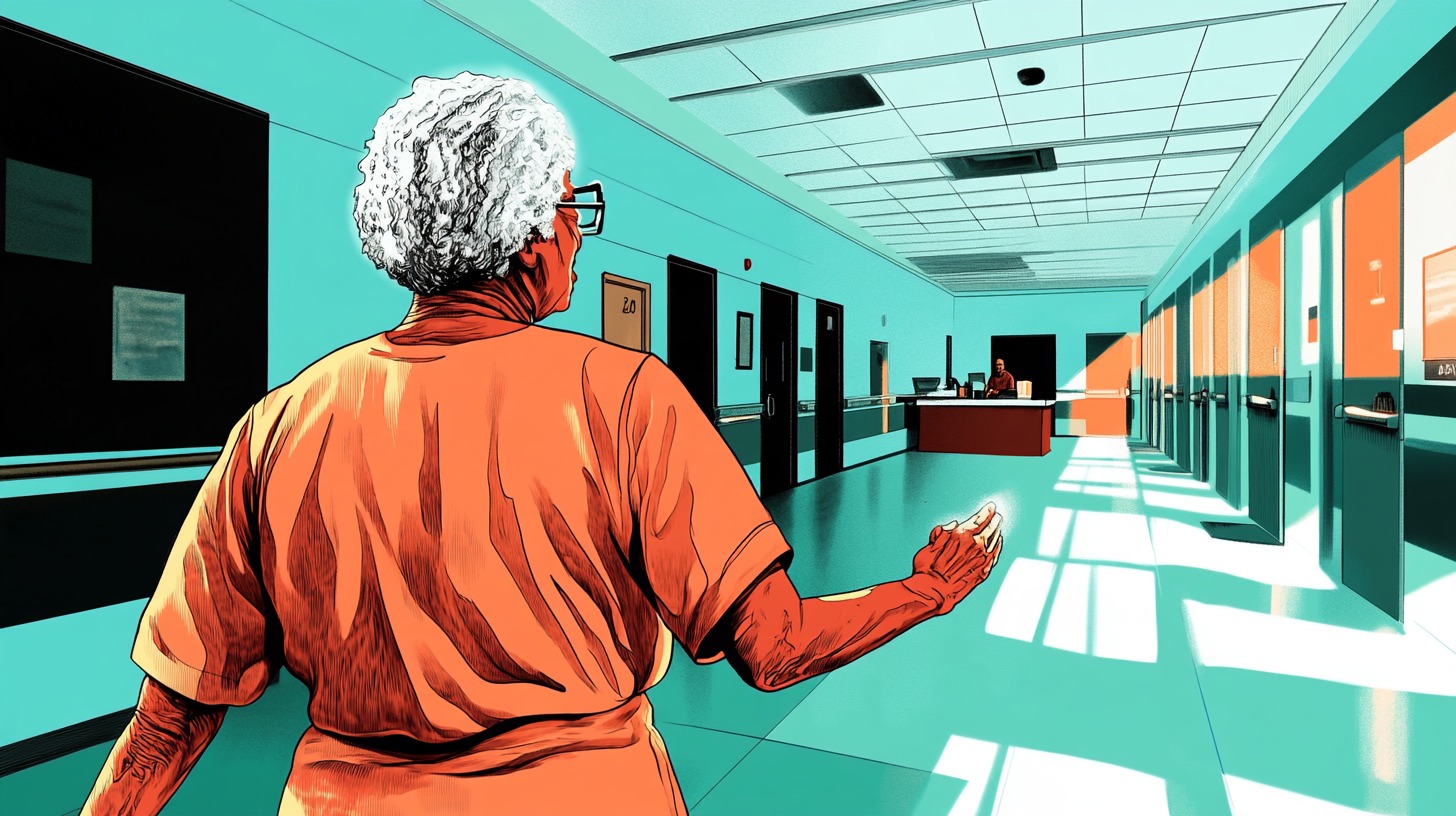
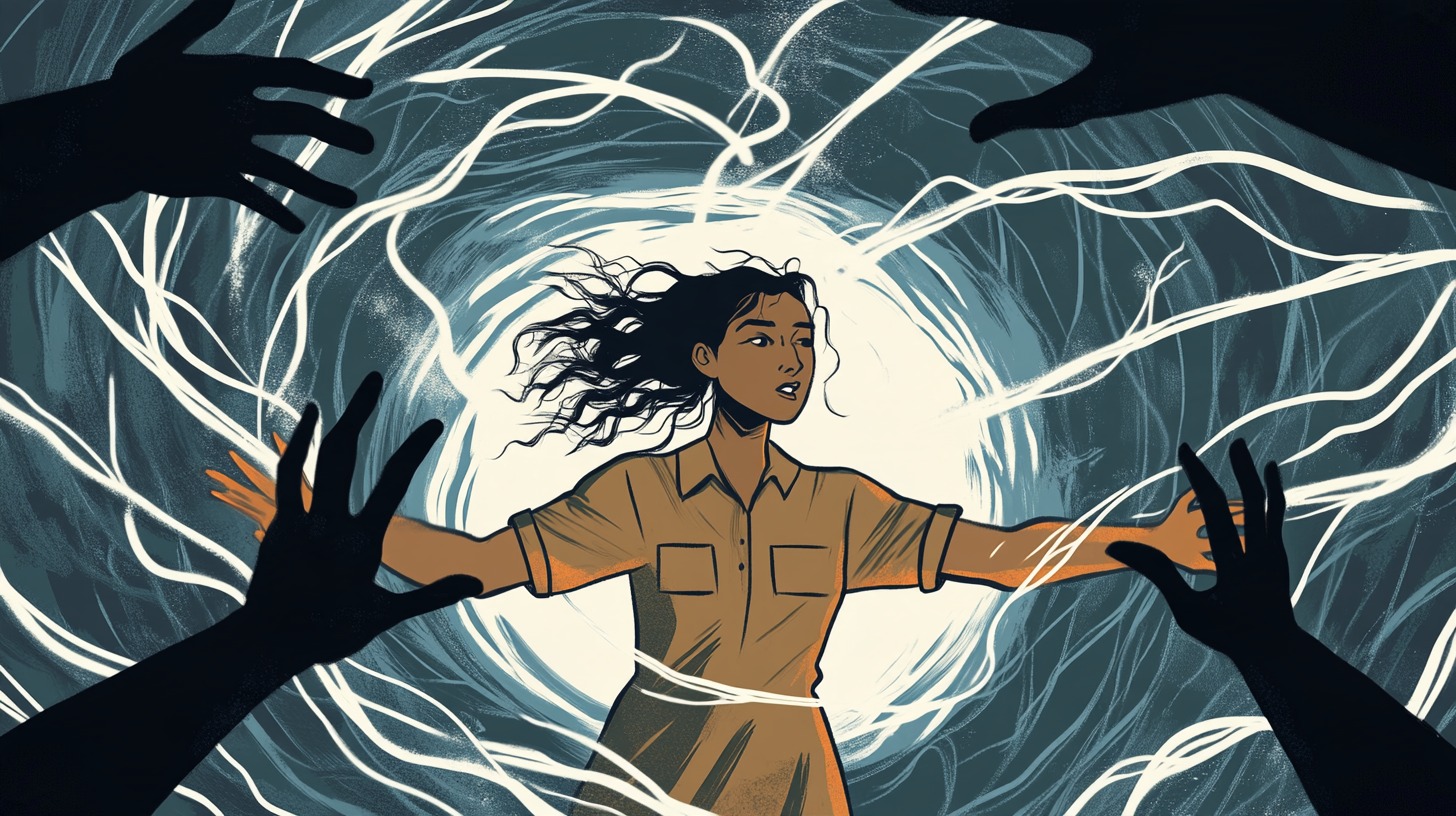
We’re circling the indoor track whenI hear birds for the first time in days.
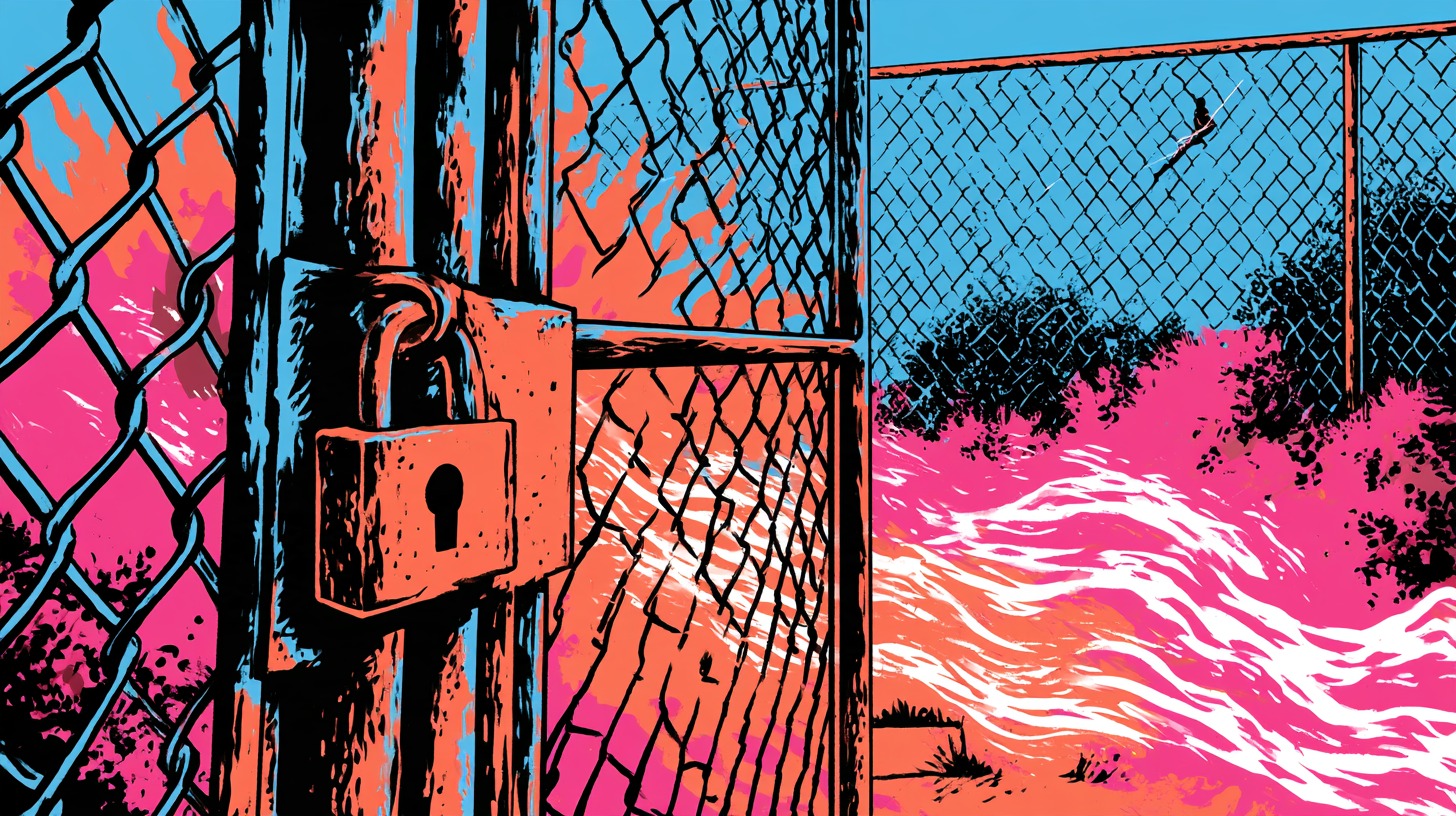
The rec deck is locked now becausesomeone had been “fishing”—dropping lines downto someone outside and pulling contraband up onto the deck—
butI can still catch a strip of skythrough the wired window.
In my head I’m humming a Bob Marley song, “Won’t you help to sing these songs of freedom,” andthe birds feel like backup singers.
We were up early, like usual. Butthis morning has an unusual buzz.
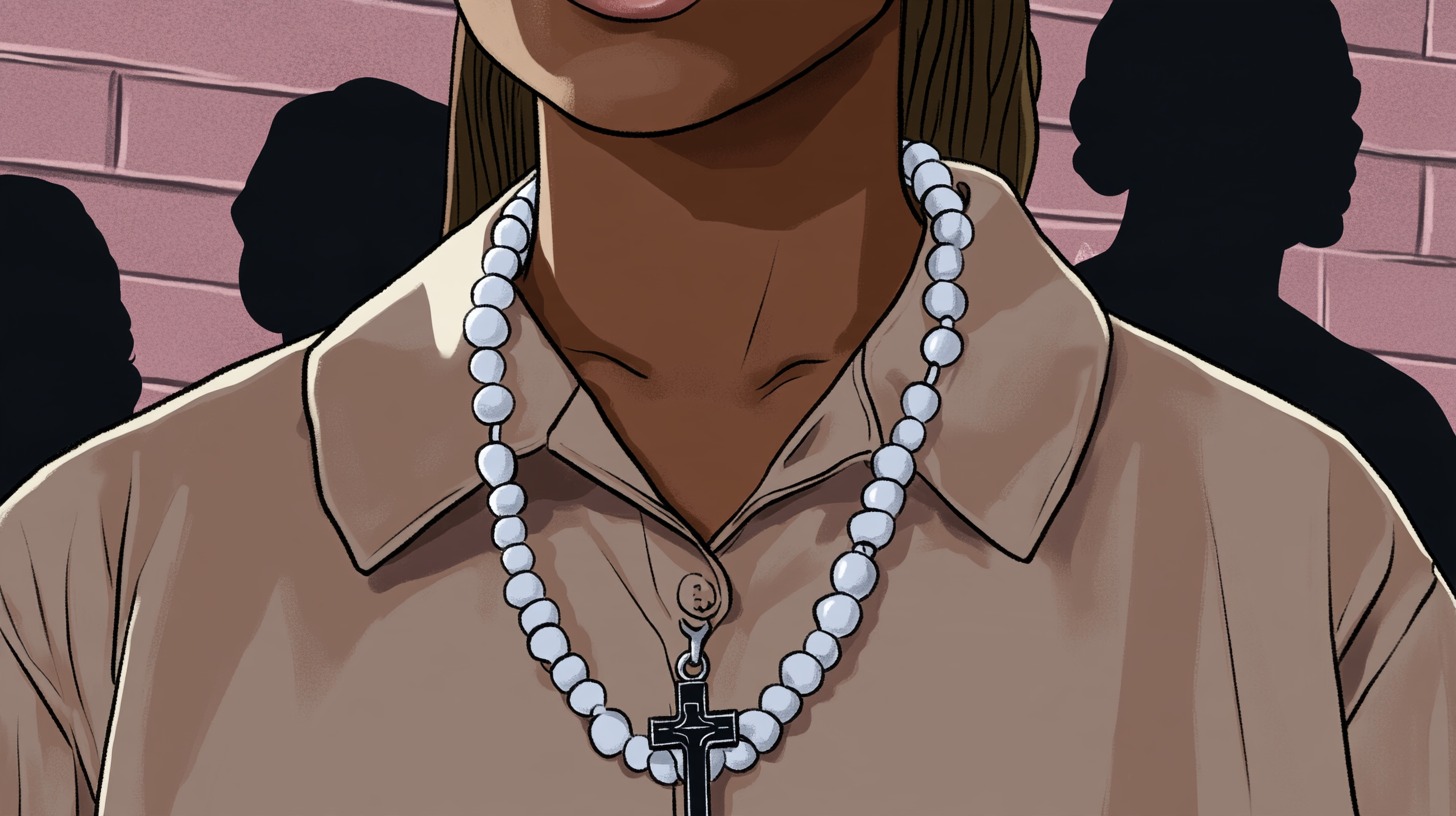
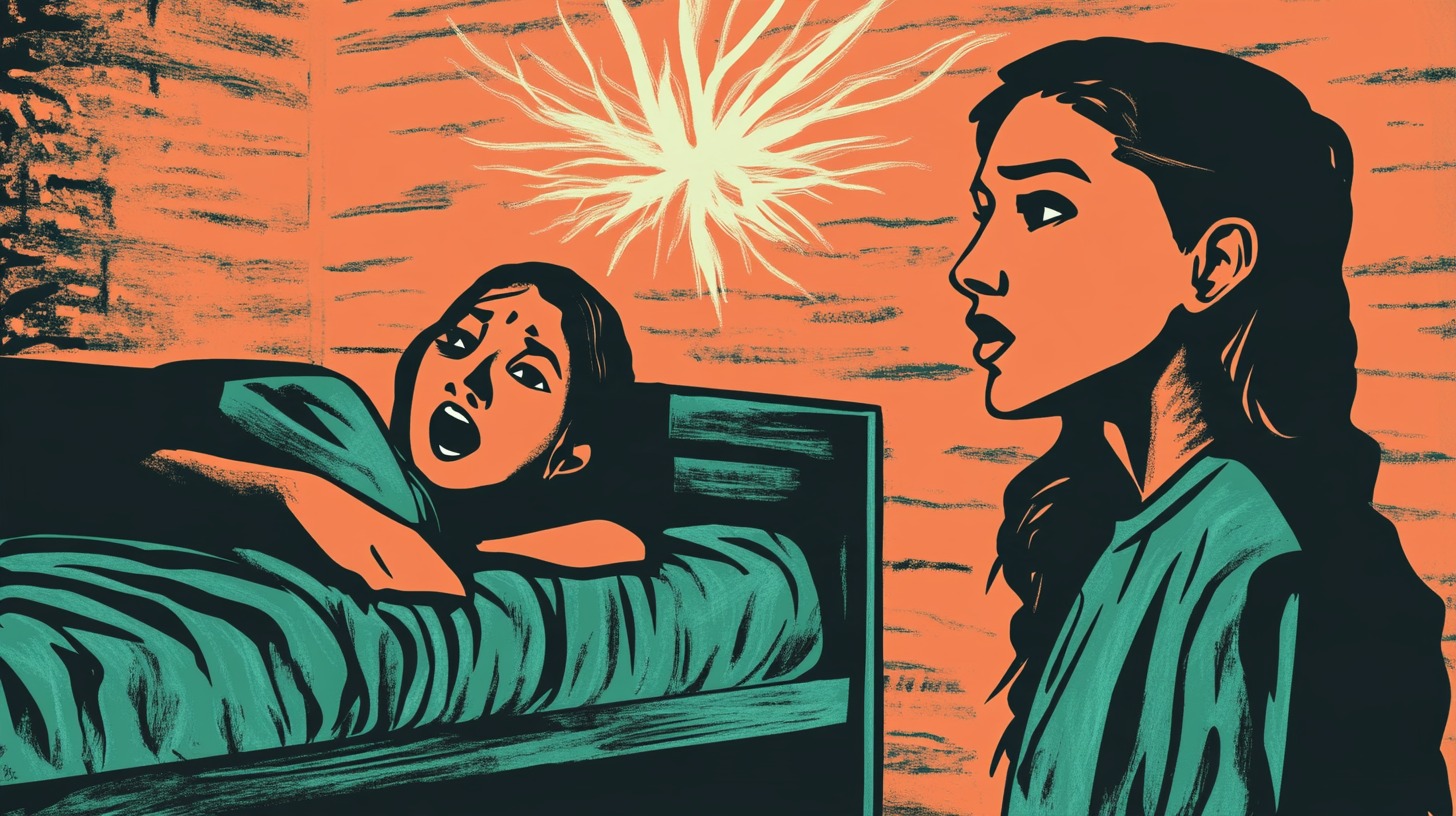
Nevaeh waves us over, rosary flashing white against her shirt. “Did you hear?Dakina was speaking Hebrew all over the dorm last night,”she whispers. “I think it was an exorcism.
Dakina doesn’t know Hebrew.We took turns praying throughout the night.” “It’s our minds playing tricks,” I say gently. “Fear does that.”
She’s not really listening to me, butit’s 4:30 a.m., so I let it rest.
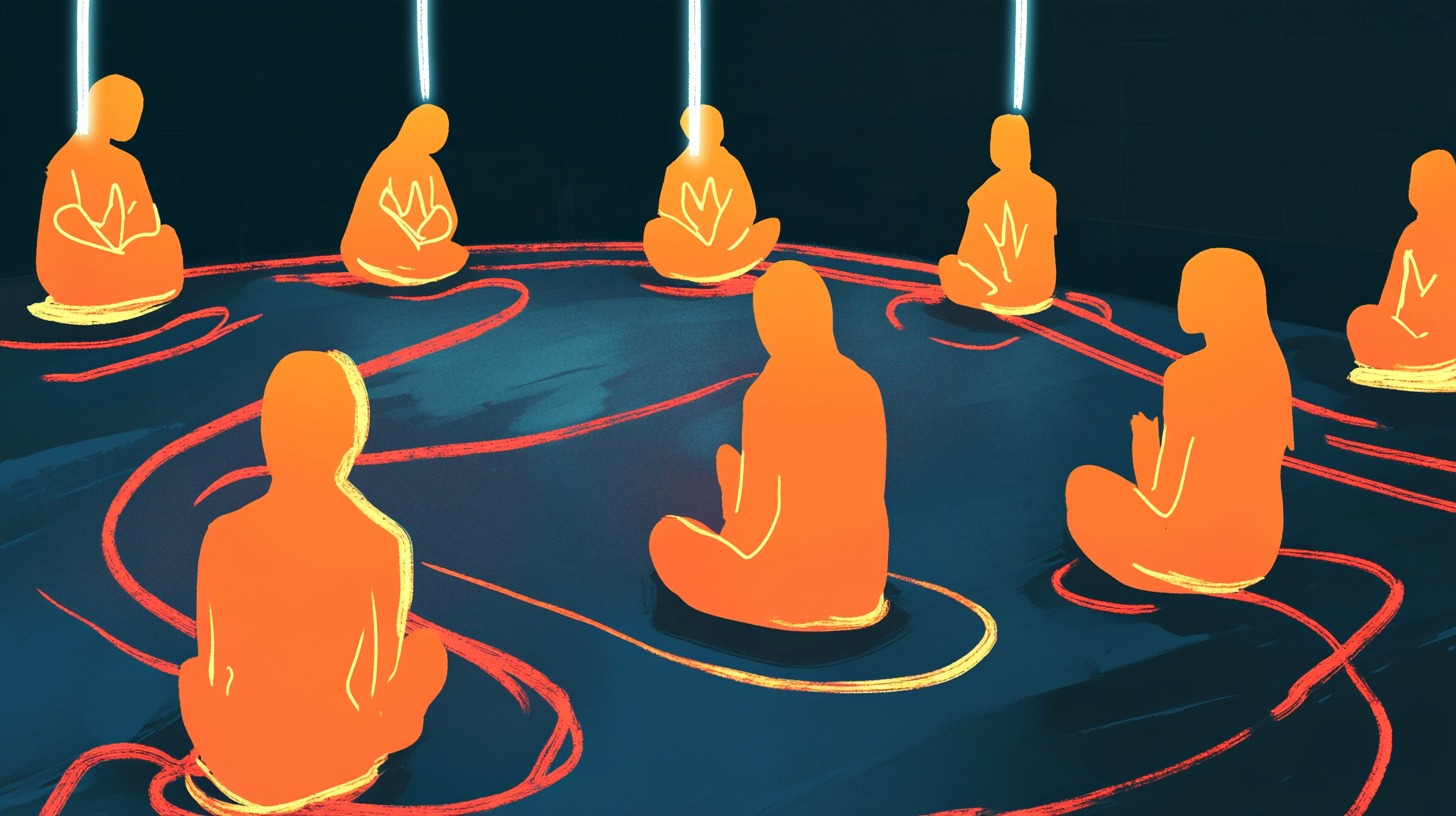
The women here take dark spirits seriously. There’s a line from a teaching I love: Even when you’re not sitting in meditation,treat every sound as part of the practice.
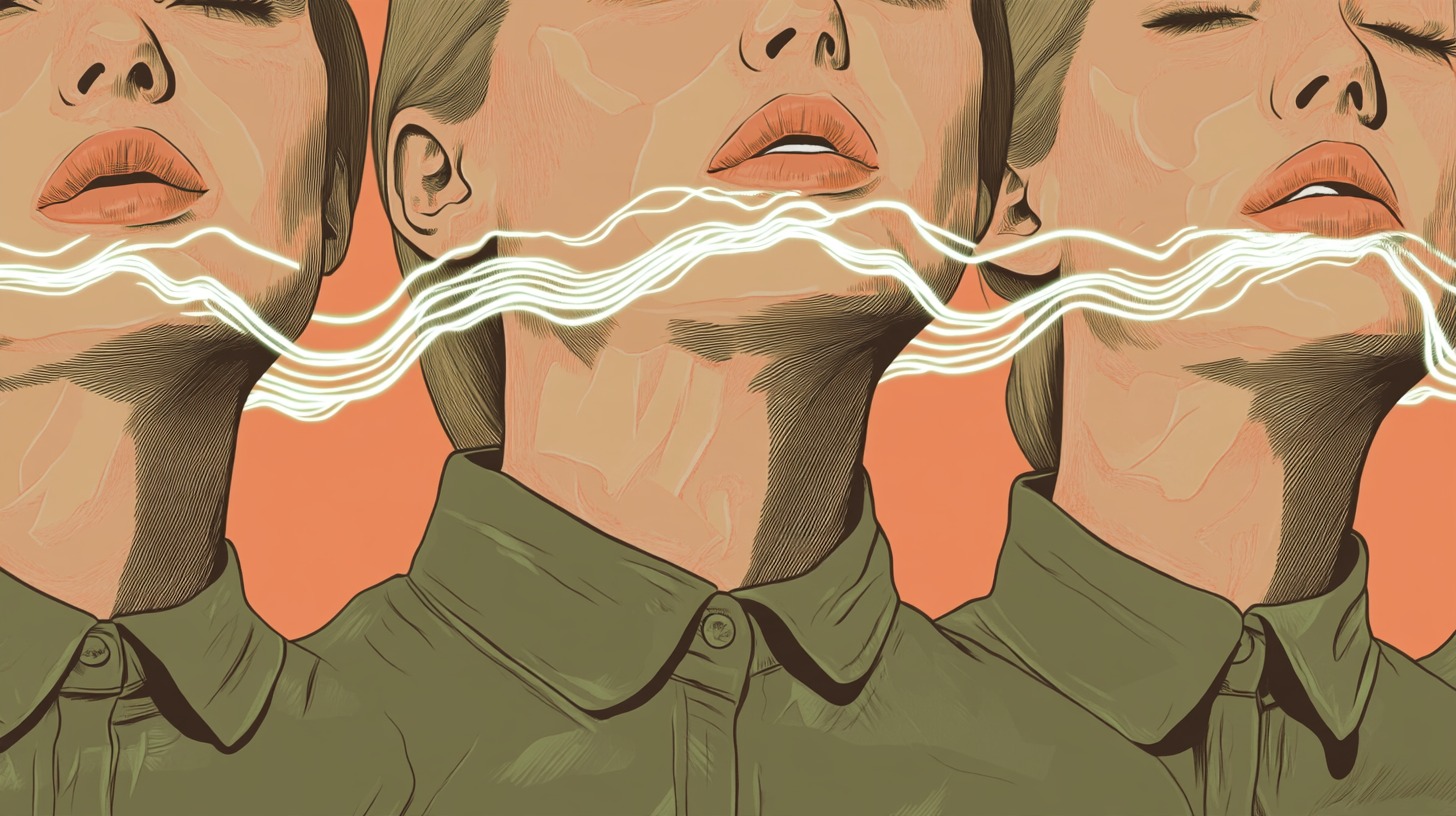
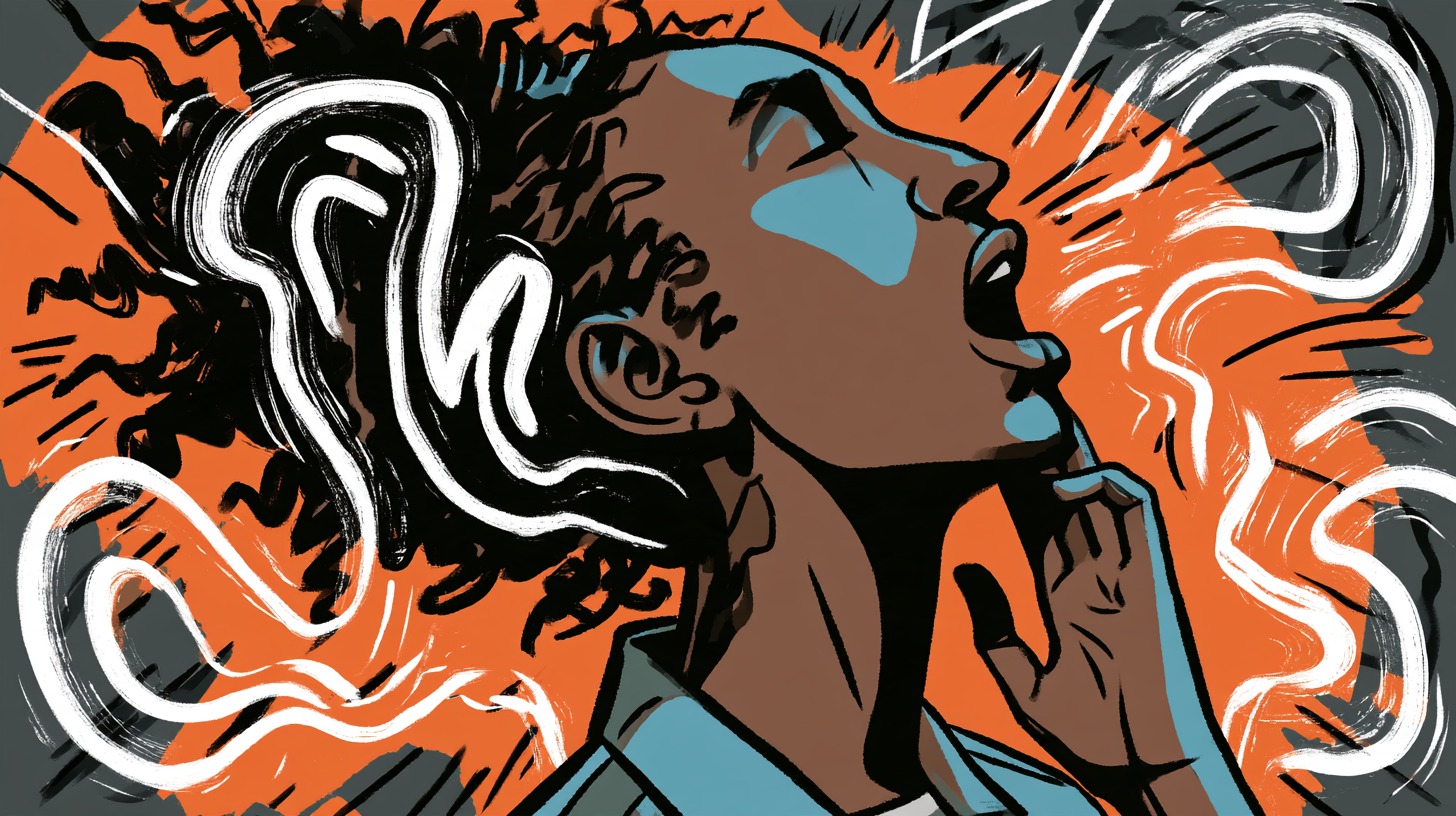
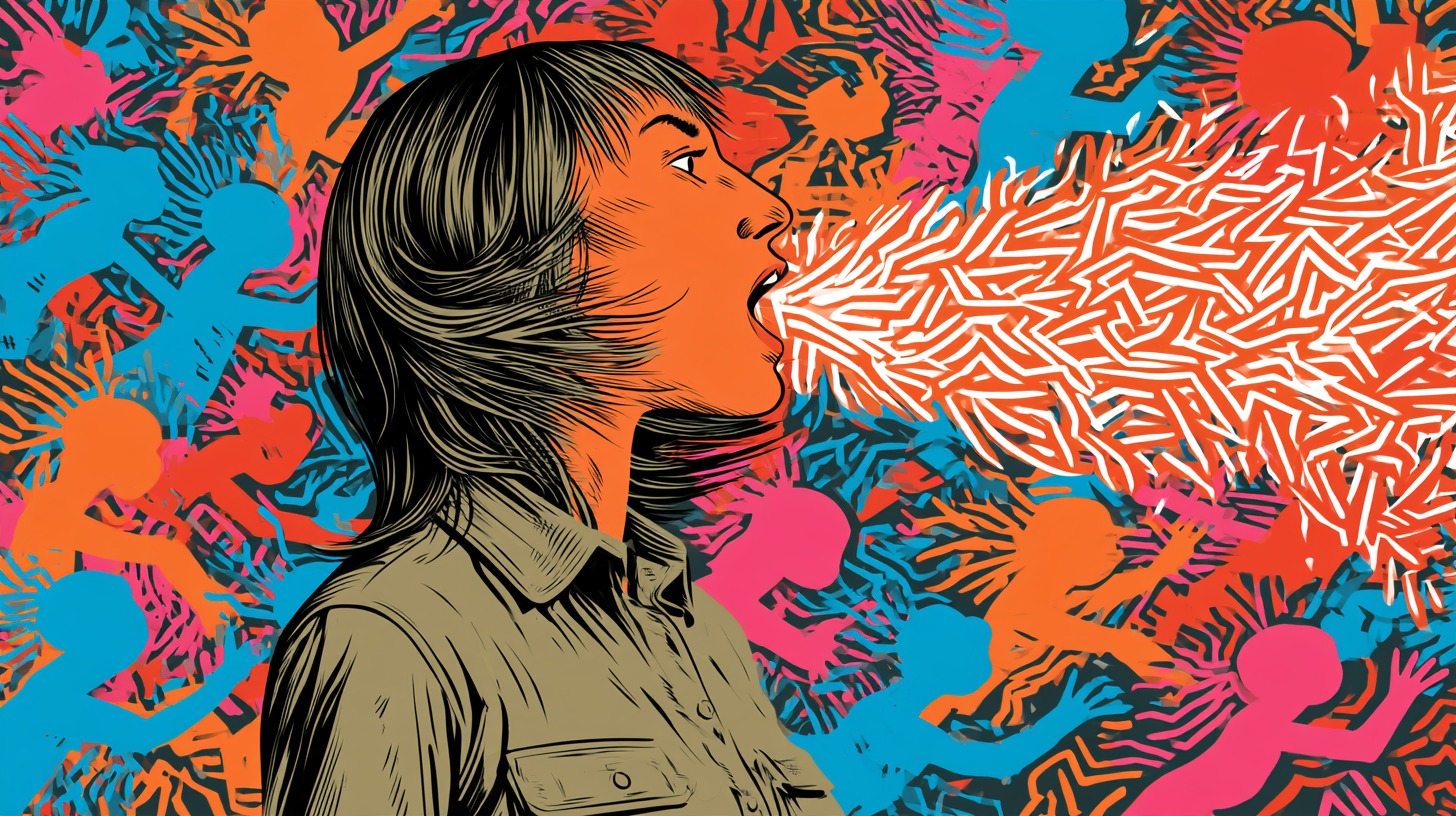
Dakina’s cries aren’t random; they have cadence.I noticed it in the first few days after she arrived.
She howls after disruptions,when the officers sweep through, when the dorm’s fear spikes.
If you listen,it’s like a drumline calling our nervous systems to attention.As the weeks passed, the blue half-moons under the women’s eyes deepened.
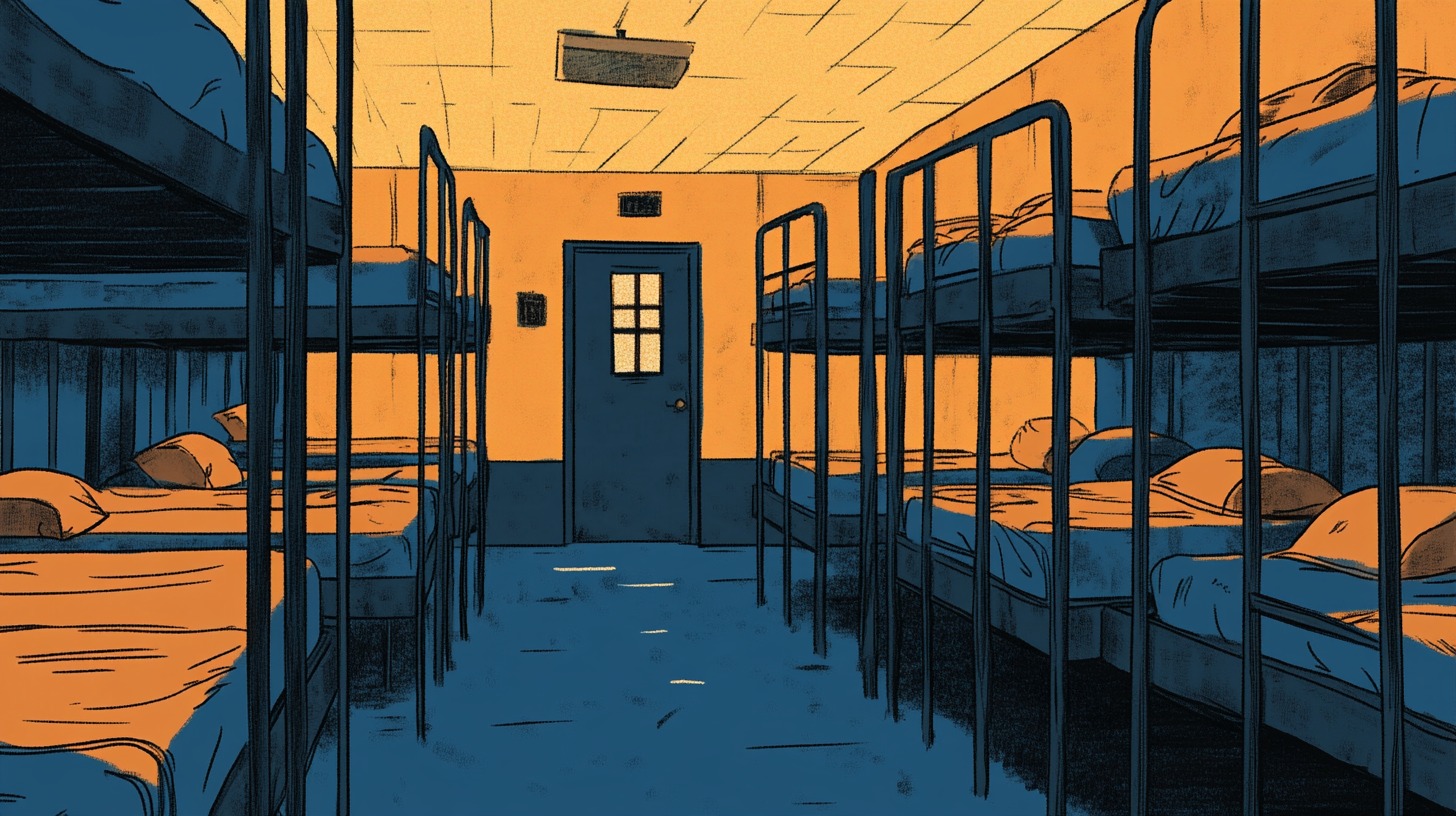
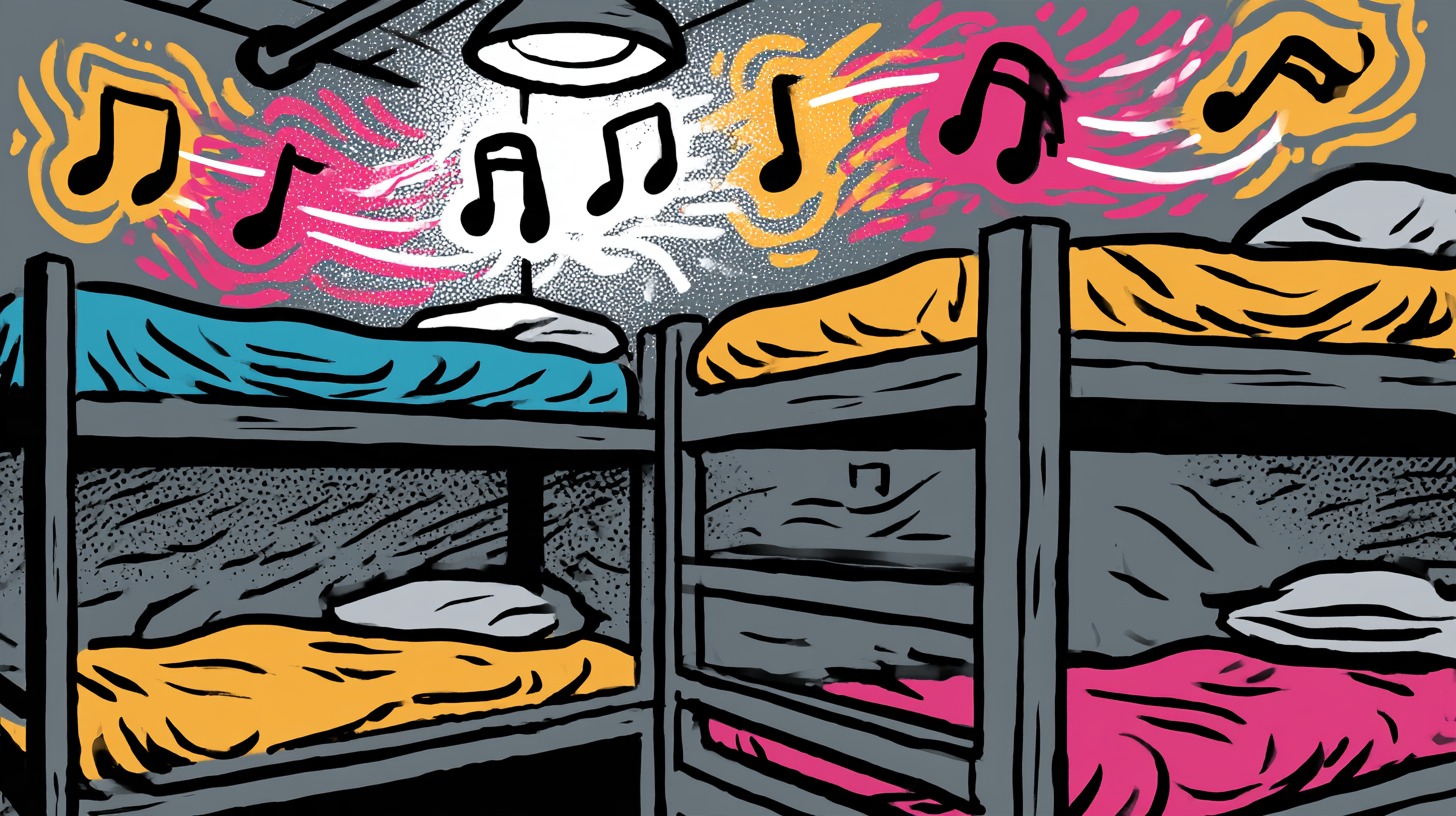
No one was sleeping.Dakina spent most nights running and howling on her top bunk.The women snapped: “Shut up!” “Enough!” Their voices mimic her sound.
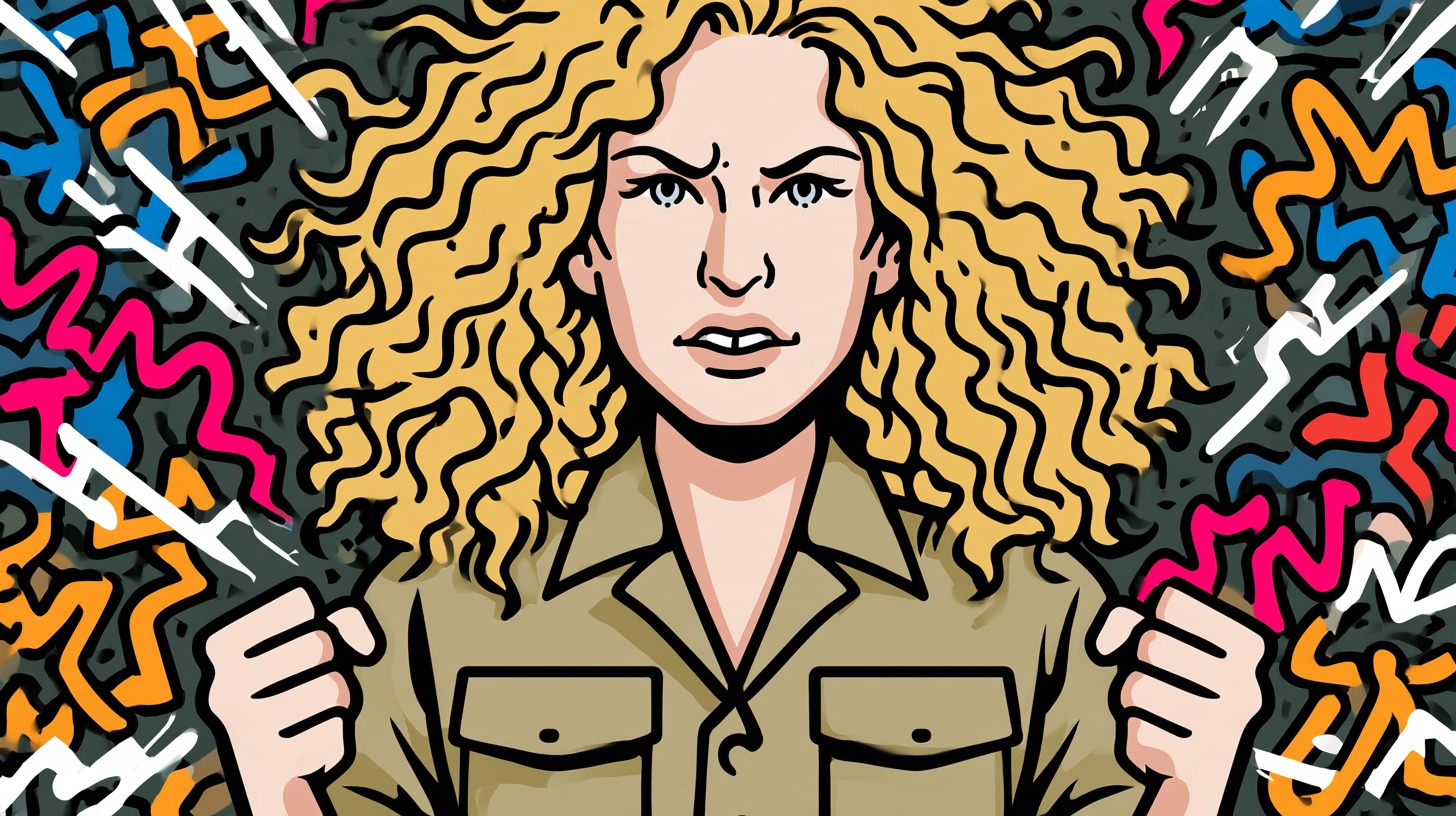
One morning, Claire stood by my bed with Luciana.“I’m done with this,” she said through gritted teeth.Claire is not known for tenderness.
“Oh, you haven’t figured out how it works?” I teased one morning.Claire rolled her eyes—then paused, listening.
The next time Dakina called out, I pointed it out. “Hear the rhythm?”Claire’s head tilted despite herself.
“Notice when it starts.Always after the energy turns.”“Didn’t clock that,” she admitted, softening. She’s tough, but she listens.
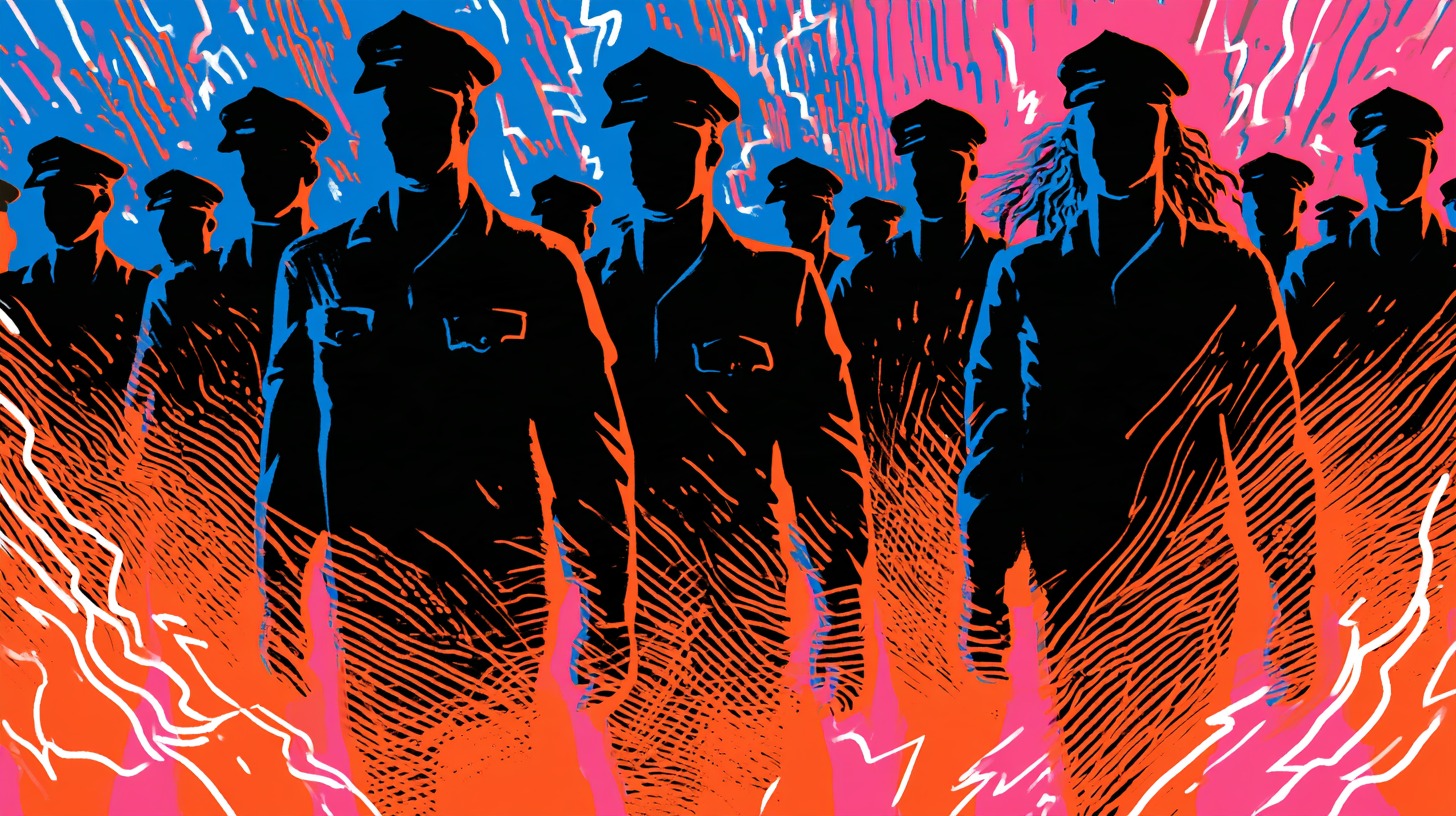
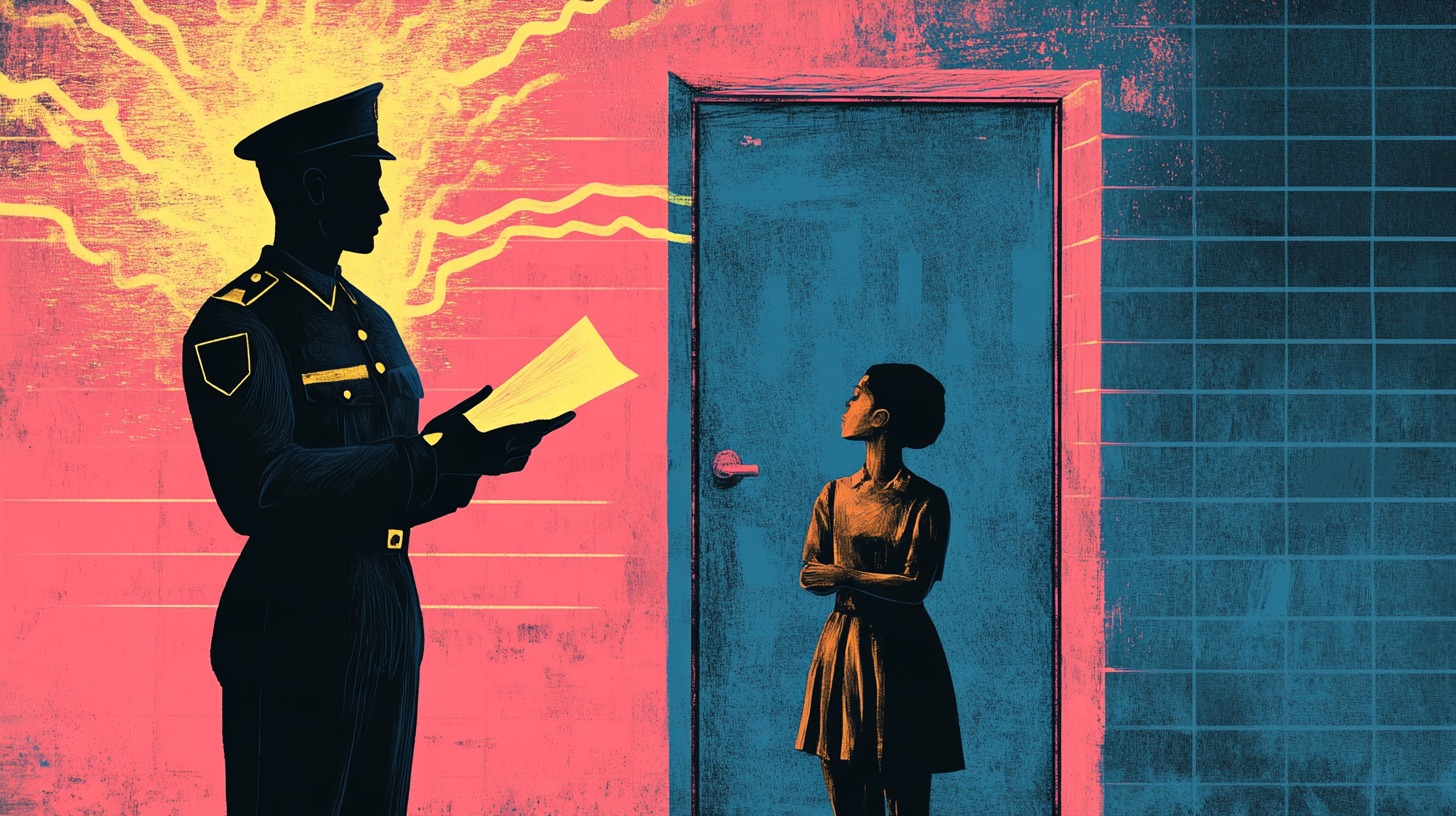
When officers file in for the weekly inspection—uniforms, bunks, corners—the dorm’s atmosphere hardens like cooling glass.
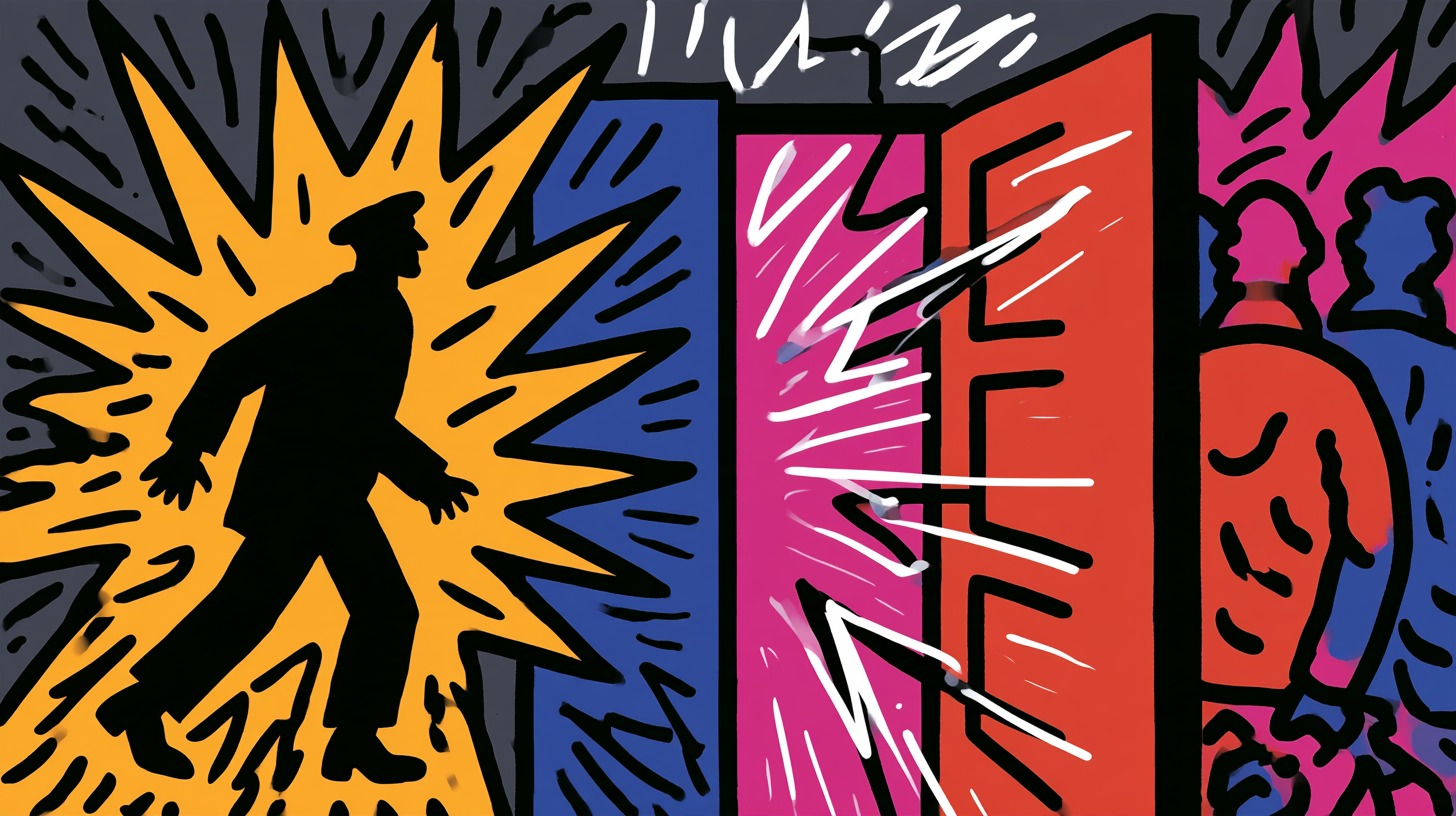
Dakina’s cries get clipped, canine,as if she is a guard dog and a perimeter has been breached.The second the officers leave, she goes quiet.
“Maybe she’s our barometer,”I say to Luciana. “Maybe she’s sounding what we can’t say.”
But the tension kept climbing.The women who hover by the gate began to stake out turf. “Something’s going down,” Janiya warned.
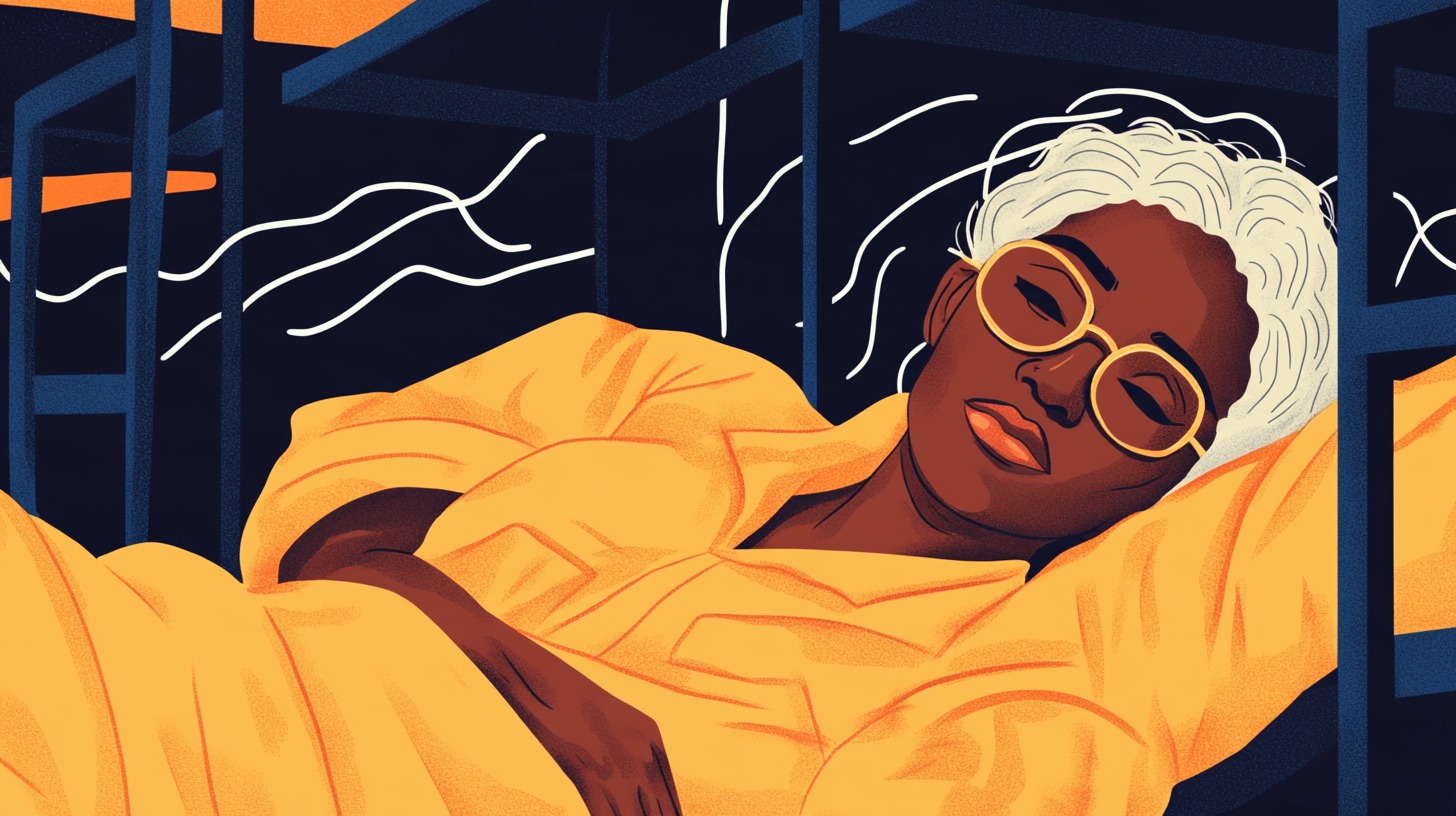
One night at 3 a.m., I woke with a start.Dakina was standing by my bunk, staring.
When it registered that I’m not Luciana, she drifted to Luci’s bed.“You got a Snickers?” she asked.“No, Dakina. No Snickers.”
“Any candy then?” Luci got up, handed her a Hershey’s bar. “Can I trade this for a Snickers?”“I don’t have a Snickers,” Luci said, and Dakina vanished.
Sometimes it takes some sweetness to soothe the ghosts.The next day I ask Miss Wu for a Snickers and leave it for Dakina. She takes it without a word.
An hour later she pokes a finger into Rachel’s back and says,“This is a stickup. Hand over all your candy,”then grins. Playful, just for a second.
But the pressure in the dorm kept increasing. Dakina was loud in the night.Royal, despite all her pure-hearted love, couldn’t sleep.
“Back in the dayyou knew better than to mess with Royal,”Nevaeh would remind us.
I heard Royal’s voice in the night, shaking with control.“Tamara, I gave her all my food. I asked polite. I’m gonna lose it.”
When Royal, of all people, walks to the officer’s desk like she’s turning herself in before something snaps,I know the wave has crested.
They took Dakina out on count. Four officers, one flaring body, a collective gasp.Then a few women clapped and whistled, and my breath stuck.How can you applaud?
Over the noise, Miriam’s gravelly voice rose up, clean and brave: “Y’all who be clapping, stop.That woman is no different than you.
You are one break, one trauma away from being her.Or your mama. Or your sister.”
Before I could think, I called out—loud enough to startle myself—“I’m with her.” The room stilled.
Maybe I don’t have Miriam’s street cred, butI can lend my voice to the truth under hers.
My heart breaks at the way we treat our own pain.Weeks later, Dakina returned from her time in SHU.
The escorting officer told us she apologized for the noise. “Sometimes she’s just in so much pain.”Dakina was softer, a little.
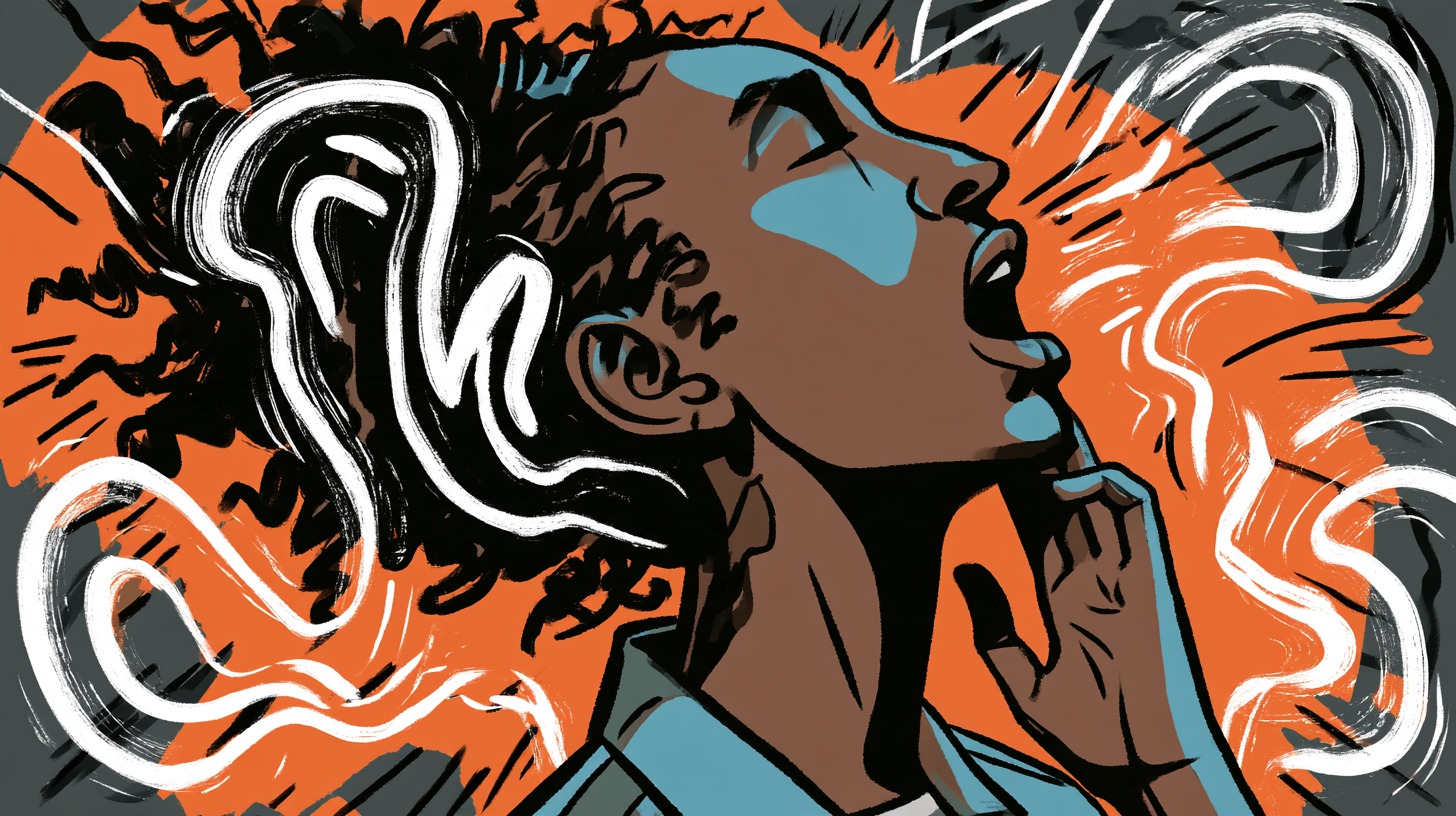
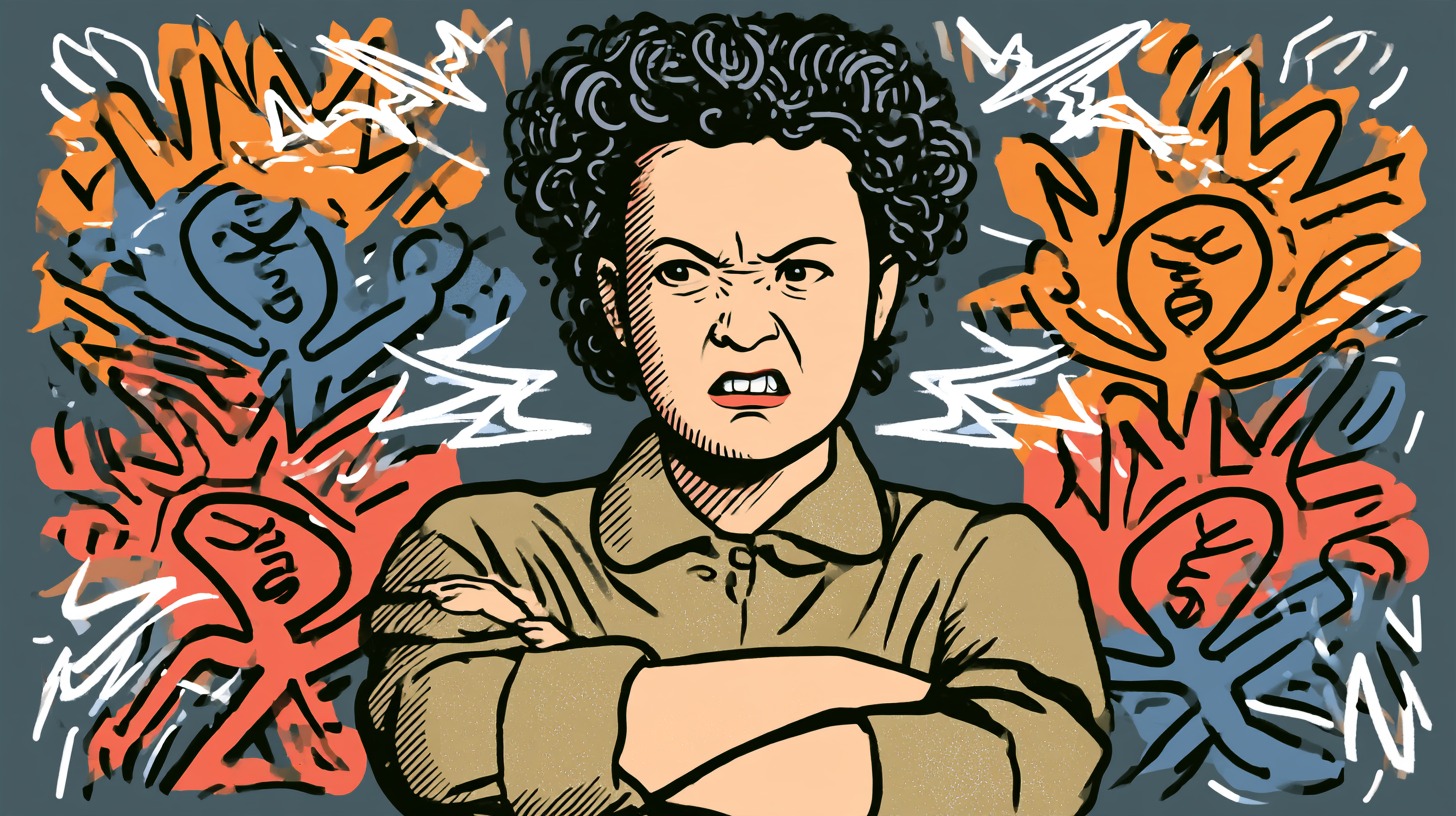
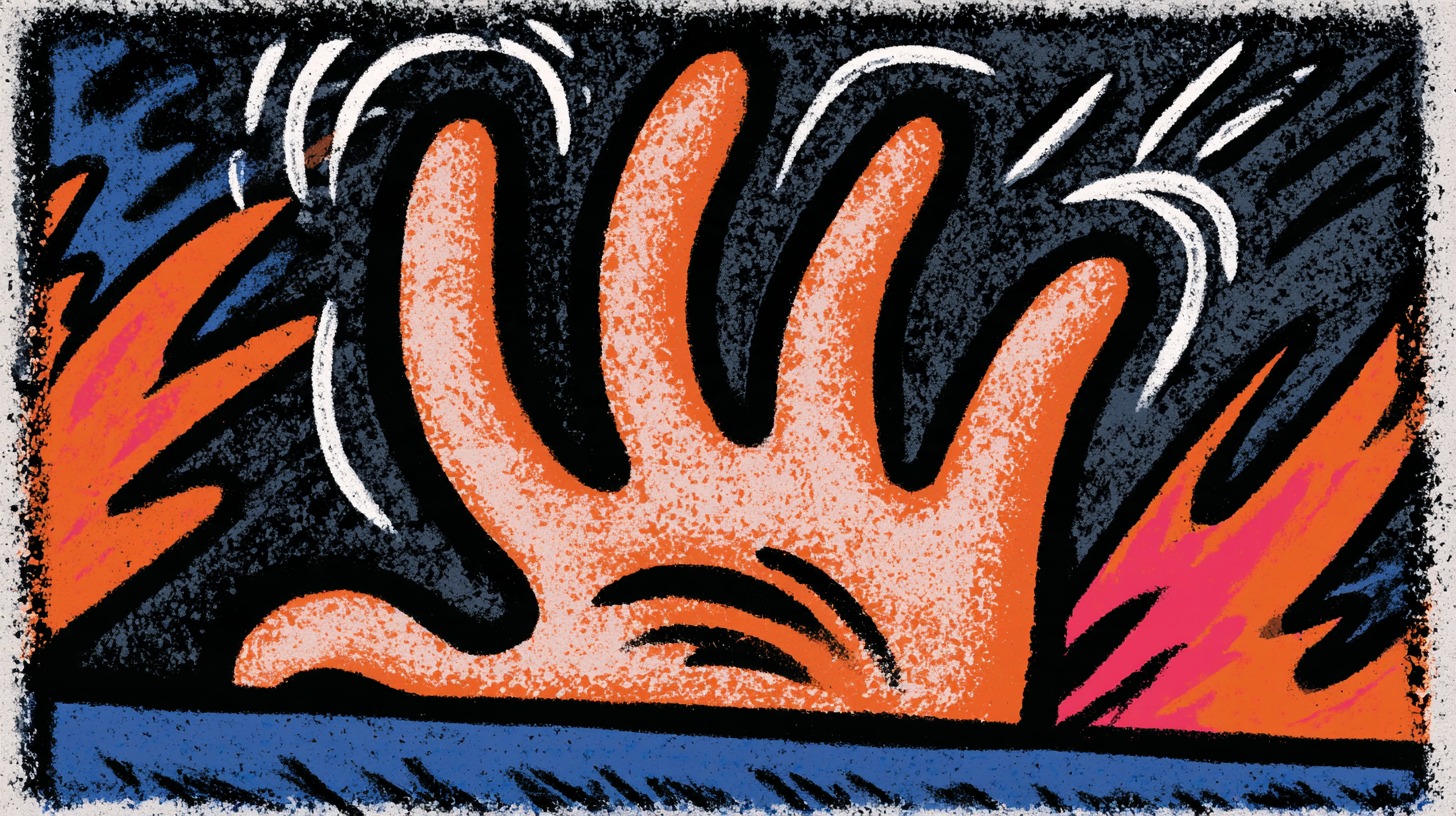
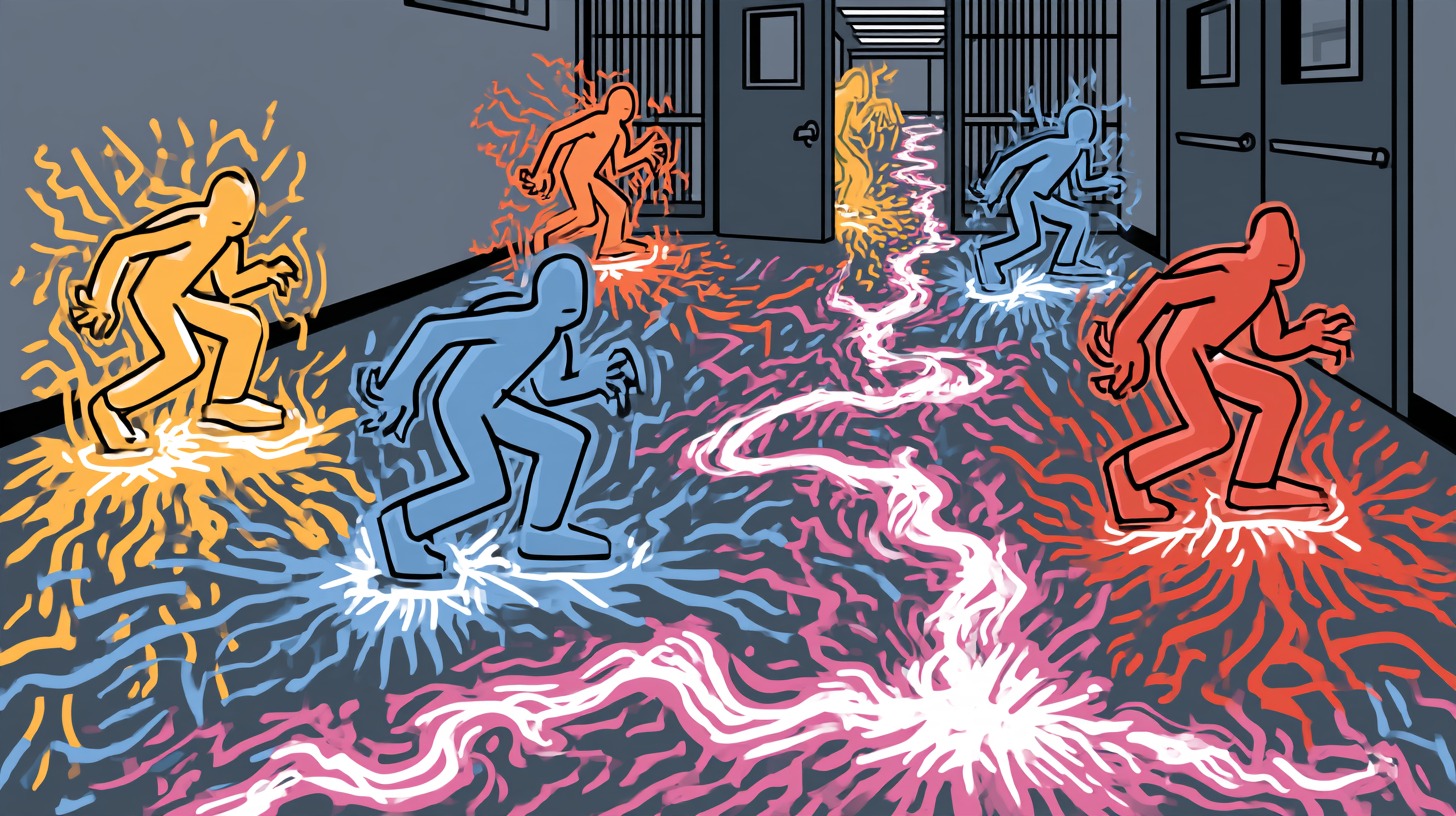
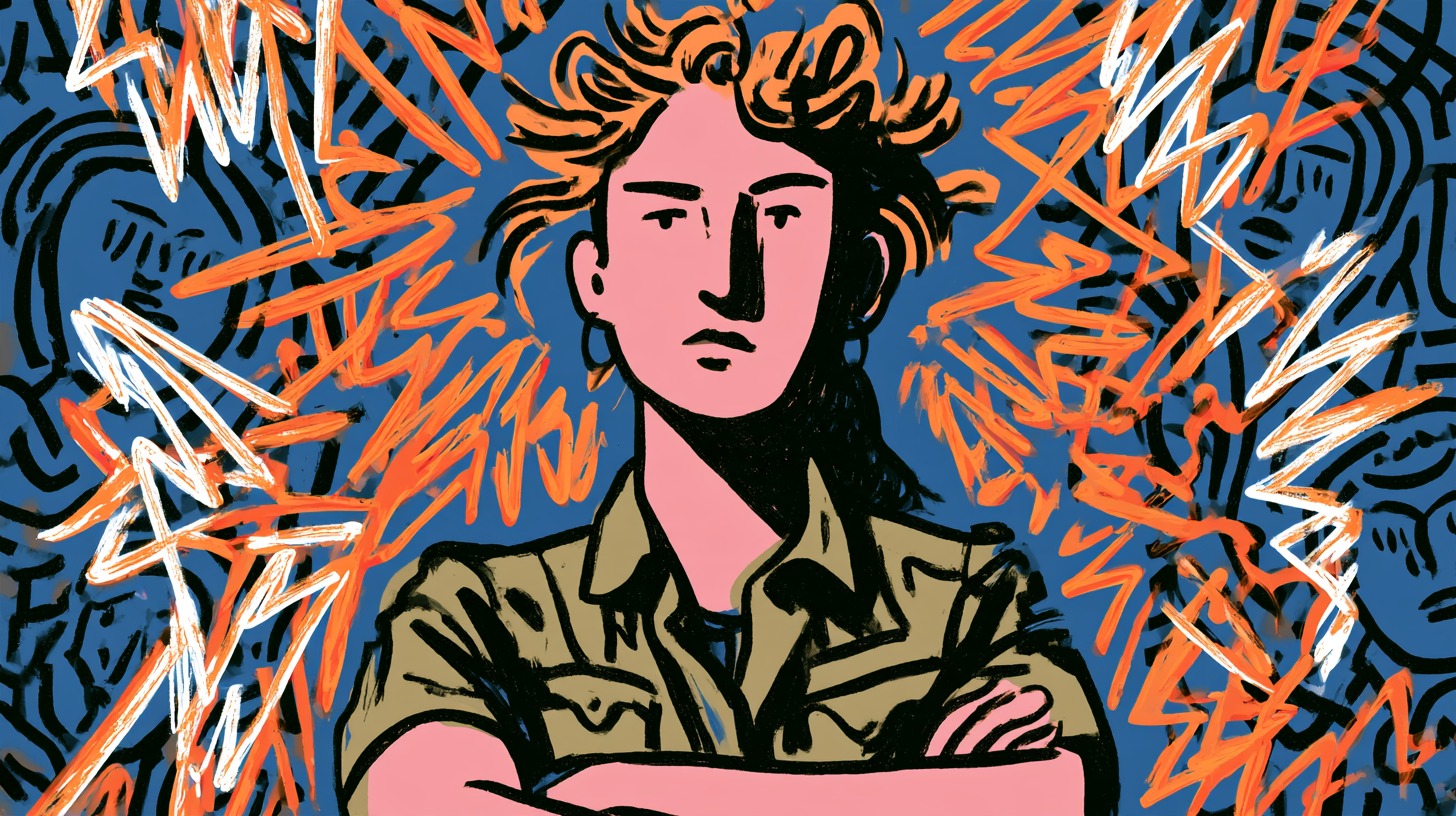
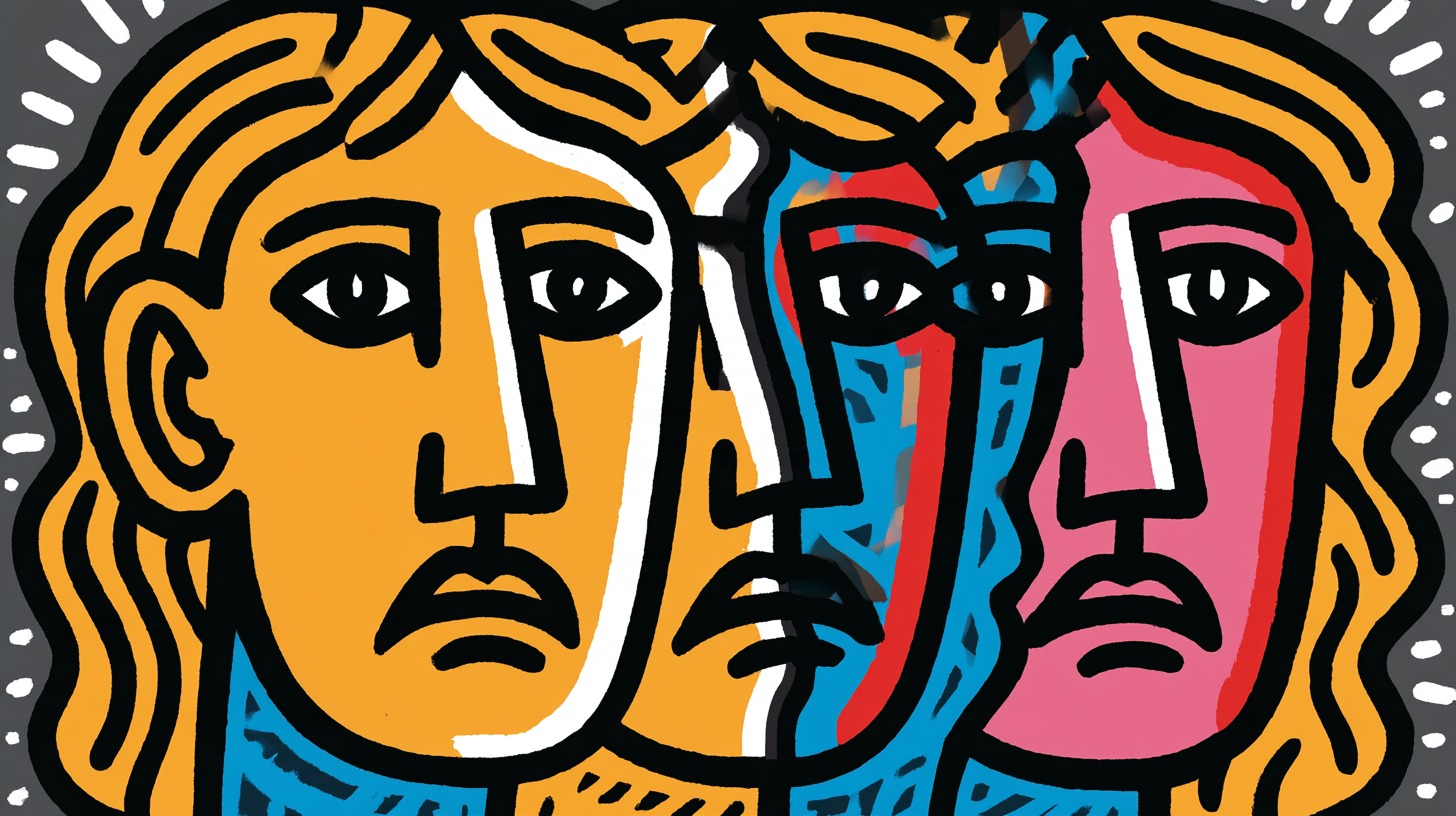
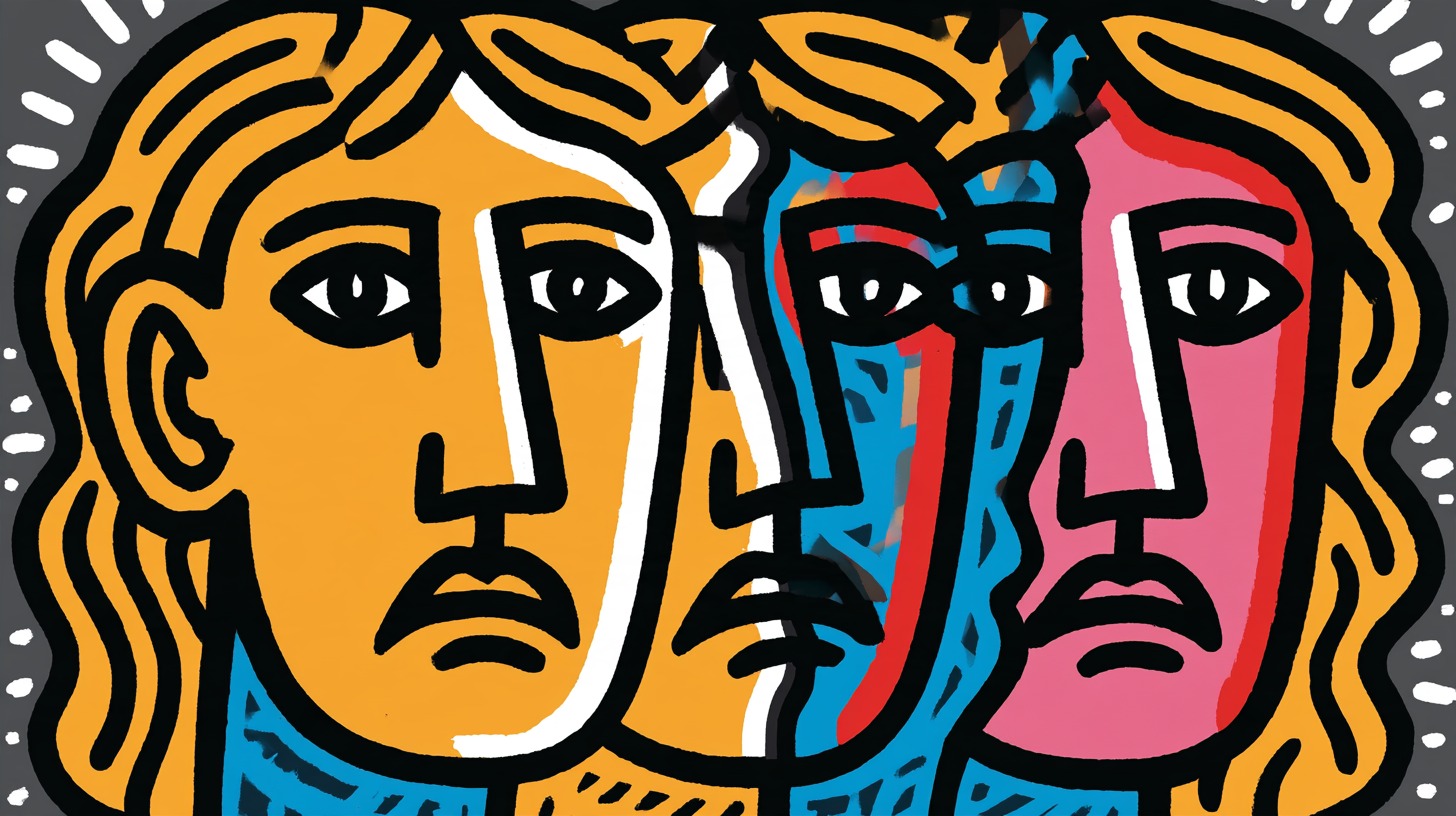
She shows us drawings—bold figures like Keith Haring’s, alive with motion.Fewer women yell now. Miriam’s words did something. When asked why she screamed, Dakina shrugs. “The pain.”
On her bunk were three notes in a childlike hand: If your back hurts, rub it. If your legs hurt, rub them.You do not have to yell.
So while I don’t know thatDakina’s episode last night was due to demonic possession,
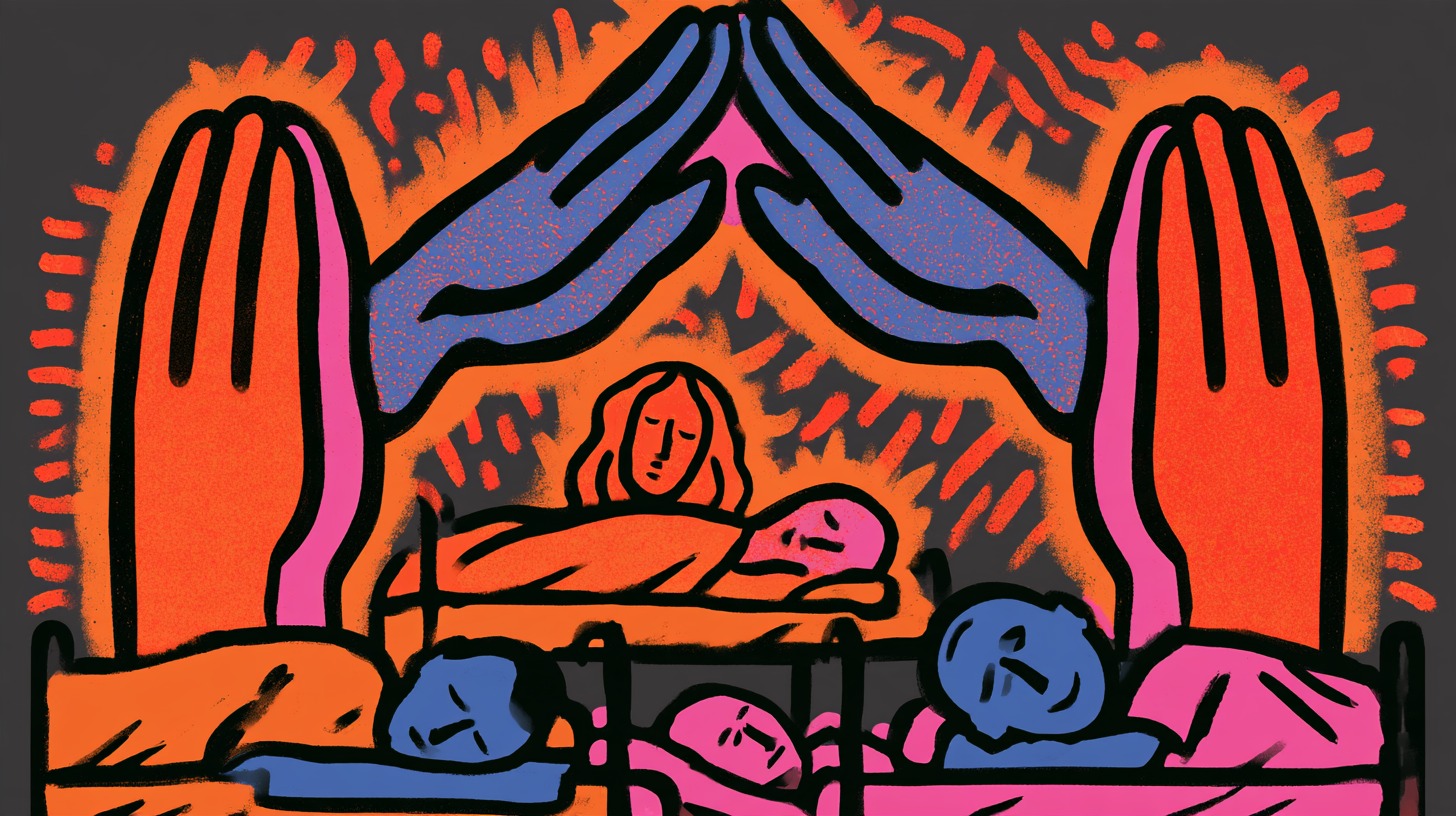
I can recognize thatthe women’s extra prayers were an act of carefor her as much as it was for their own sanity.
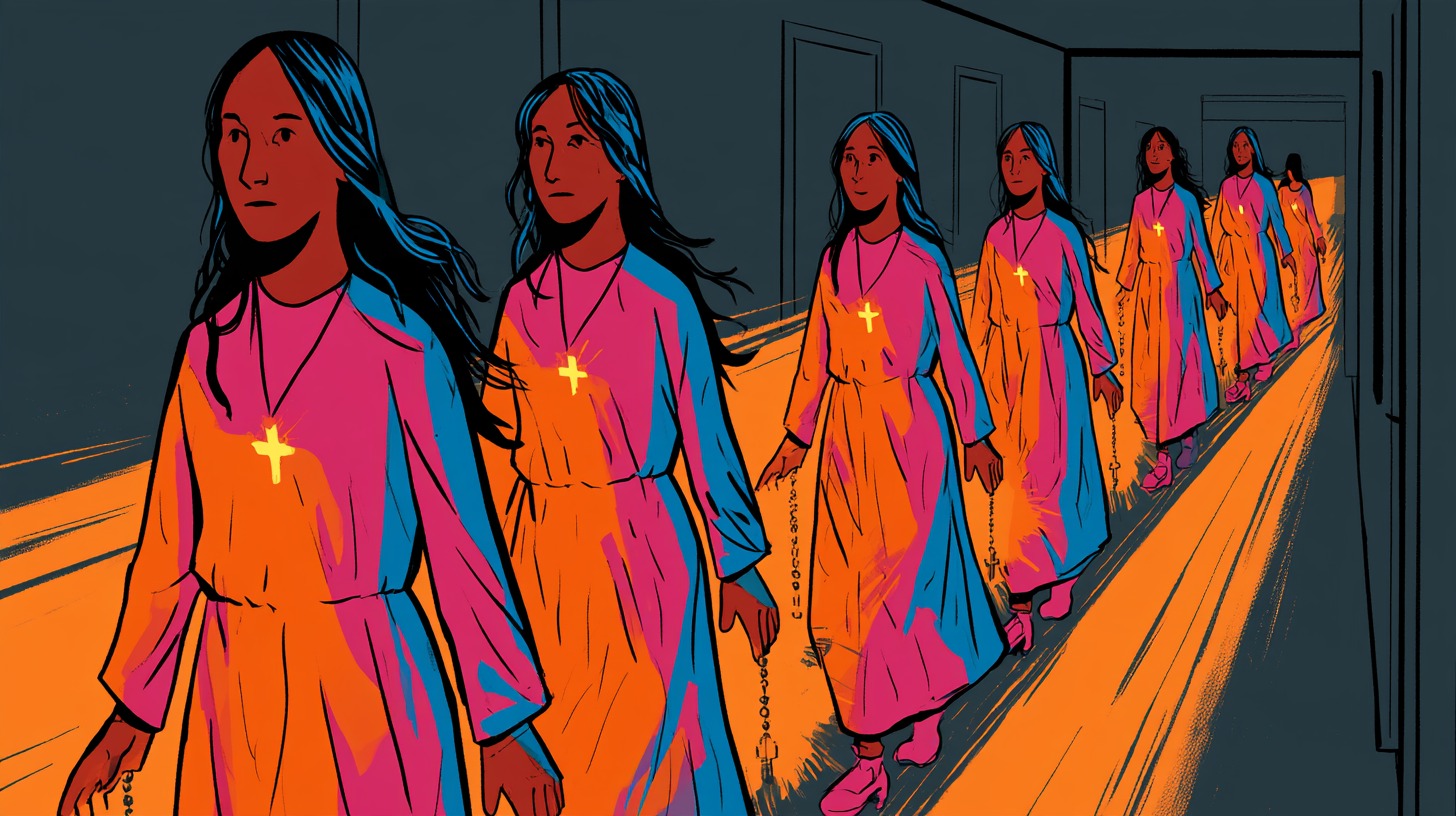
And in the morning,they walk the dorm wearing their rosariesand saying their prayers.
I teased Nevaeh thatDakina was more powerful than all of us at getting these women to actually practice religion.Nevaeh looked at me as if I did not understand the gravity of the problem.
Oh, I understand all right. I understand pain, andI understand the pain of confinement.
I think to ask Nevaeh ifperhaps we are the ones that Dakina is casting out rather than us her.
And still I hear her over in the corner, now a bit quieter,her voice across the dorm, singing her song,
running on her bunk as fast as she can,as if she might take flight, singing this song of freedom.