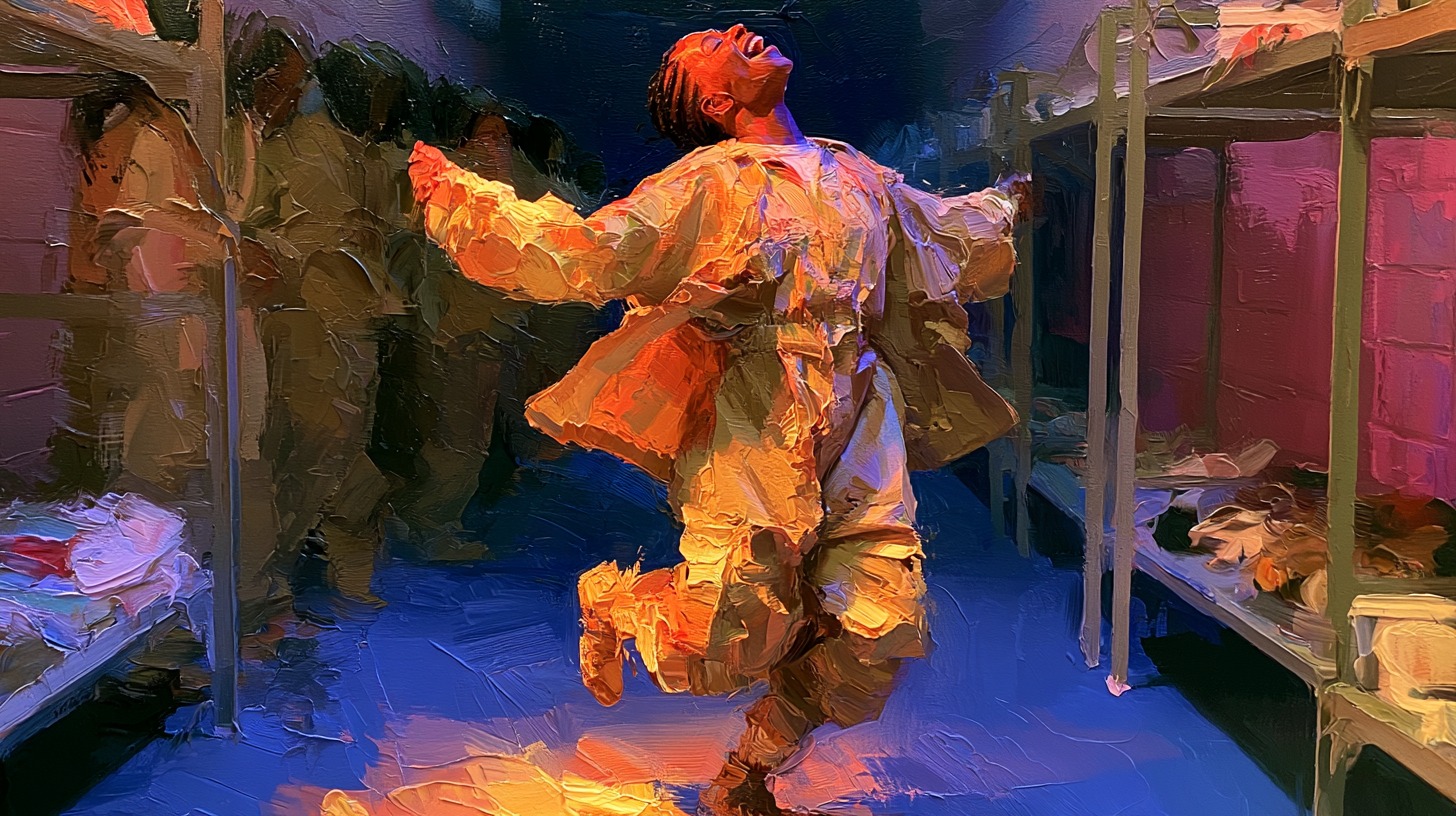
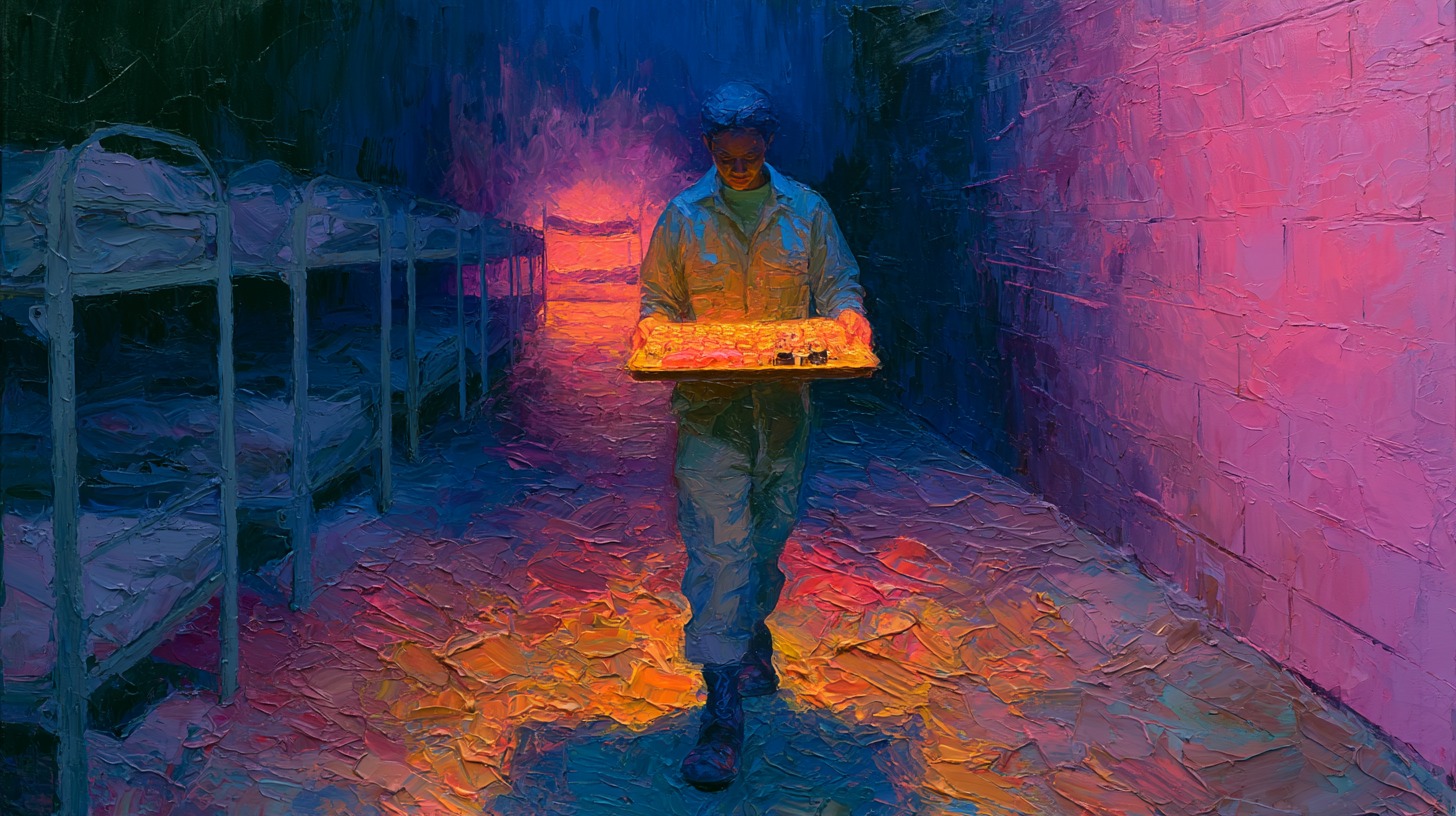
I was at the computers when I heard it again—the women’s frustration pointed at Janiya for “being annoying,” as she belted her favorite Tina Turner,dancing her way from one end of the dorm to the other.
“You’ve got a big aura,” I offered as she sauntered past me. Janiya shrugged.“I’m just from the projects.That’s just being me.” “Well, I like it.” I smiled. And she smiled back.
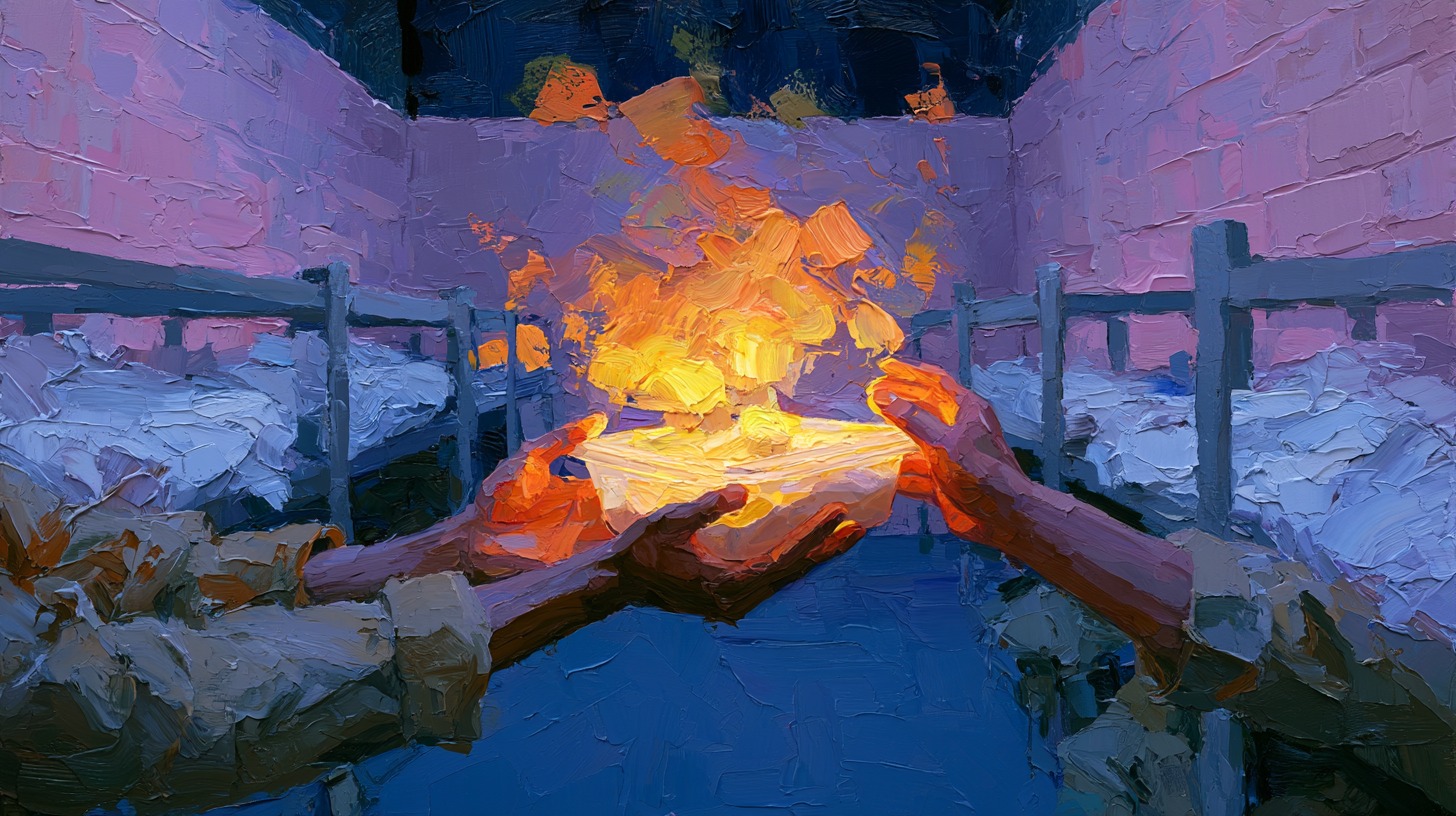
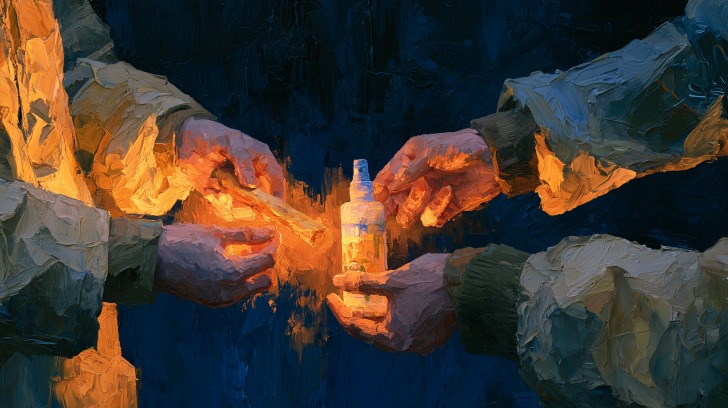
That same sweetness echoed later when she showed up at my bunk with a Tupperware of prison-made banana pudding,the good kind: confetti-cookie insides, powdered milk, real bananas,a shake of cinnamon, and regular cookies from commissary.
It was a gift, communication. That’s how it works in here, andoften through the medium of food.
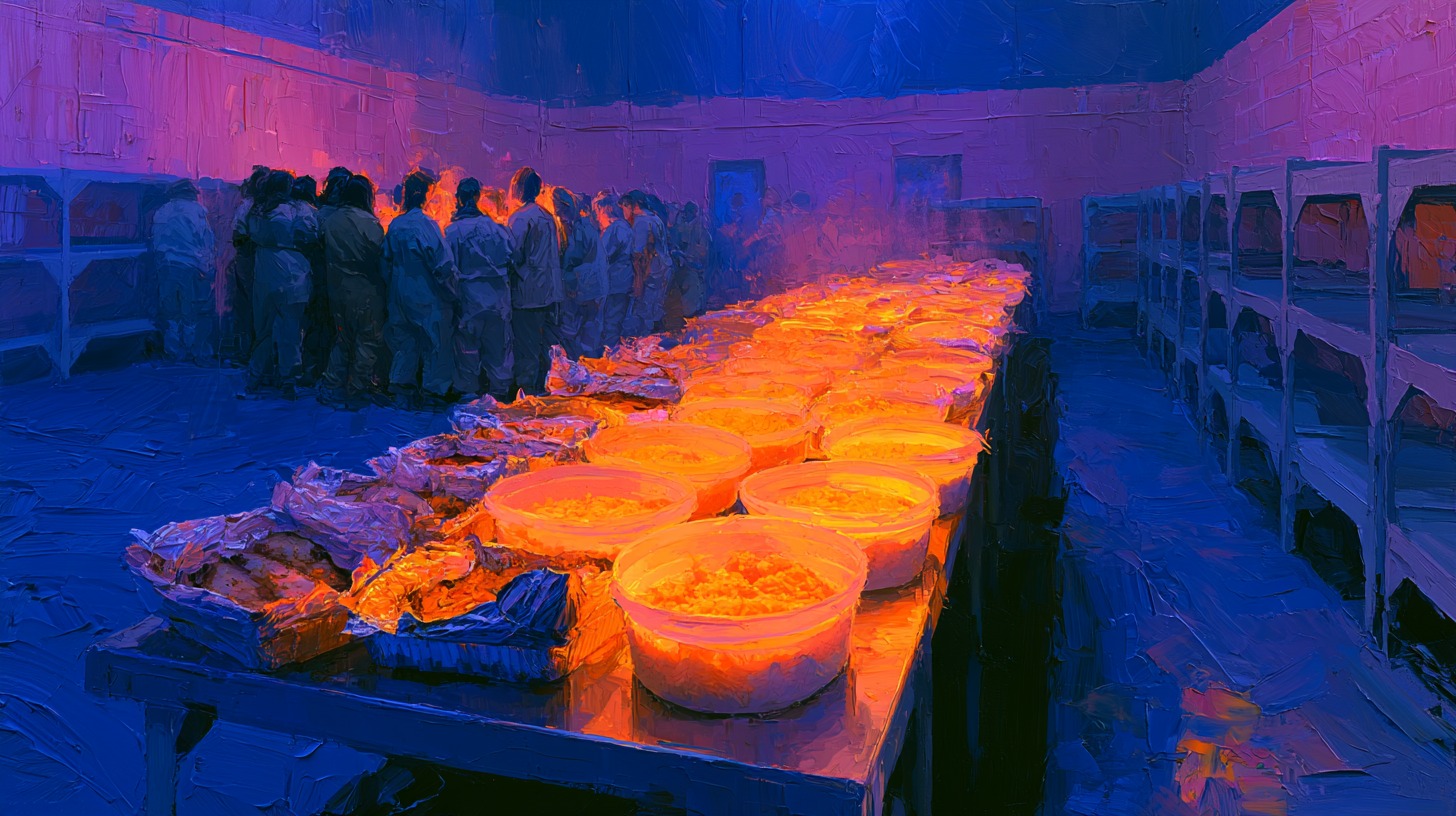
Food also defines the cliques:Am I sharing with you, or not? It was the Fourth of July. Janiya was not alone in displaying her MDC culinary talents.
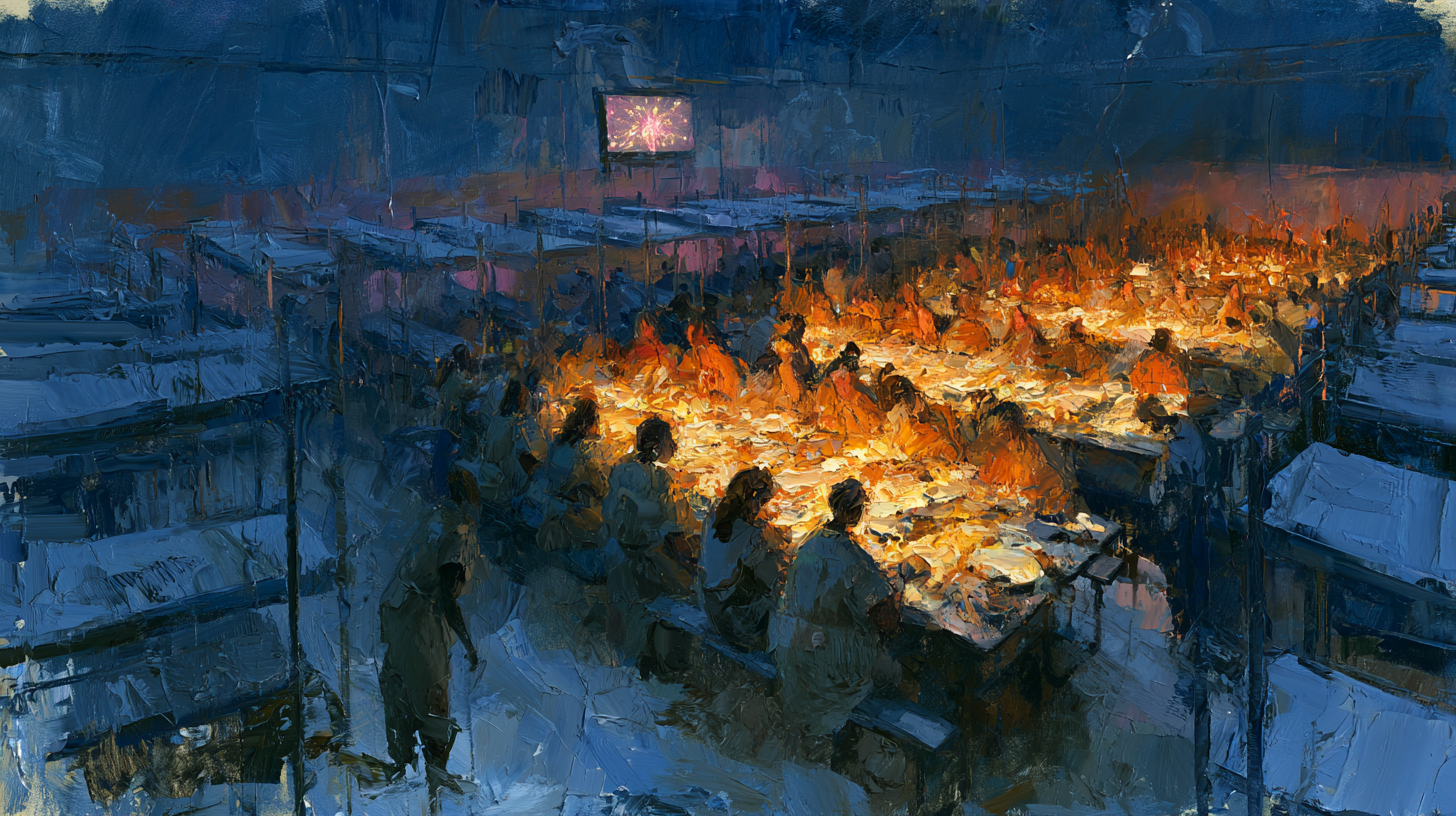
Food piled high at every table,made from whatever the women had gathered together from their commissary supplies and what had come off the main line that day.
The tilapia seemed like a bit of a gamble. I figured I’d skip and get to bed early. Luciana: “You’re not staying up to watch the fireworks???” Me:“Where would we see them?”
Luciana:“On TV! They’re my favorite.”Me (silently): I’ll pass.
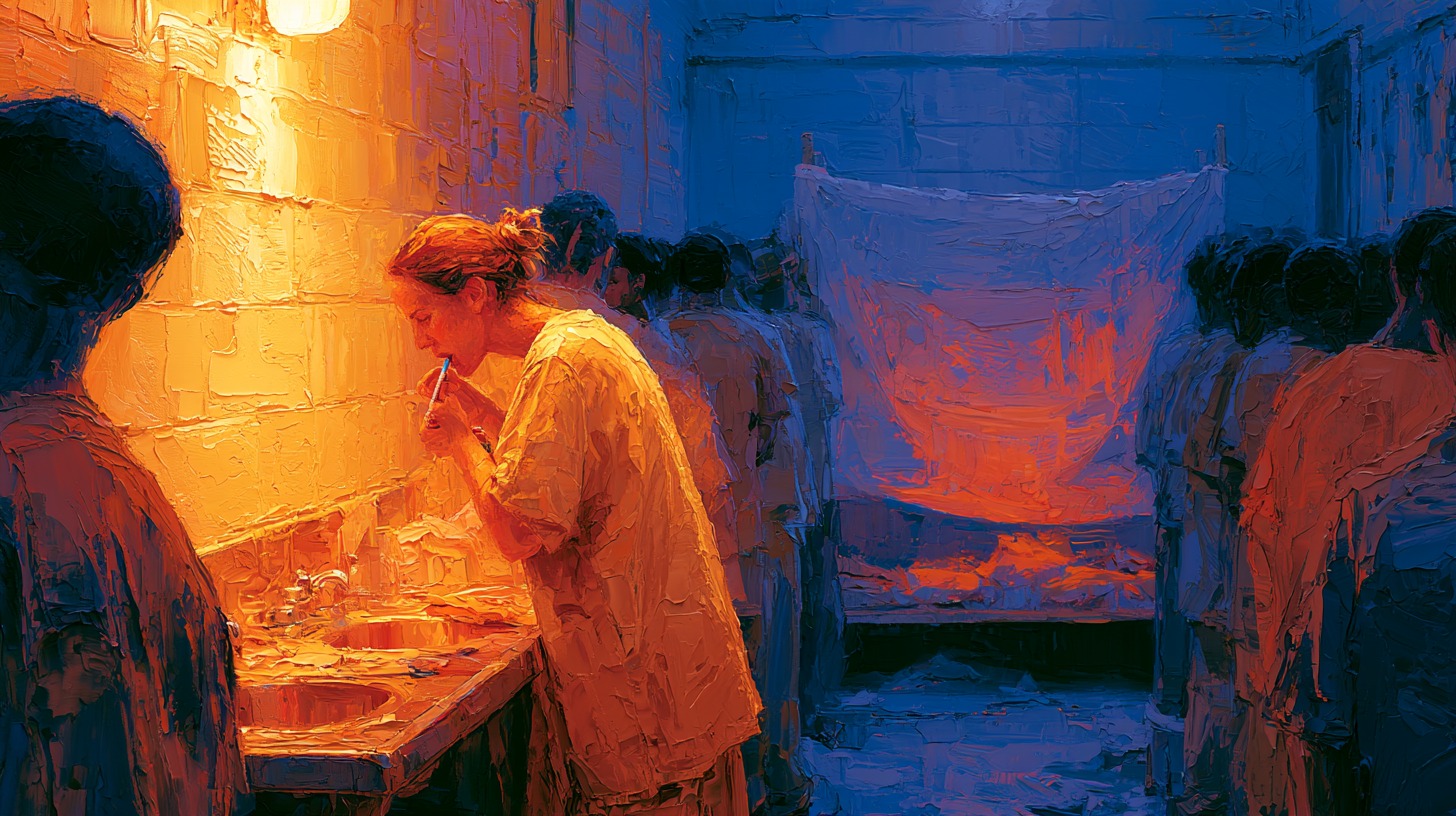
I was about to start my nightly regimen: flossing and brushing in the crowded bathroom, building a pillow out of my pants and top,rigging a sheet around my bunk like a tent.
Miss Wu spotted me. “Enthusiasm” is too small a word.Her eyes were lit like sparklers.
“I make you sushi! You want sushi?” she said. I’d seen people beg her for it. She always waved them off:“Too much work, too much work.”I knew this was an honor. I said yes.
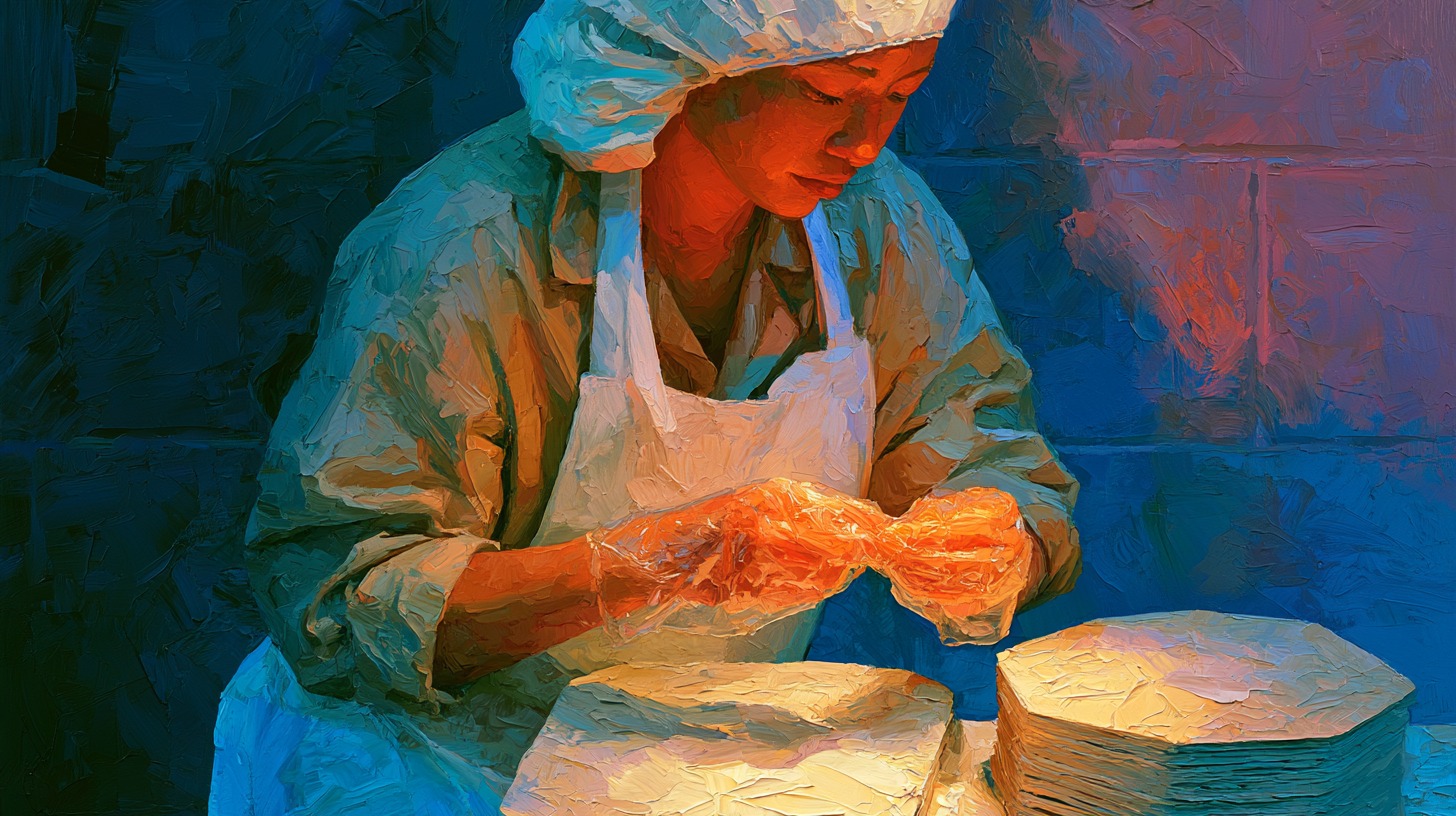
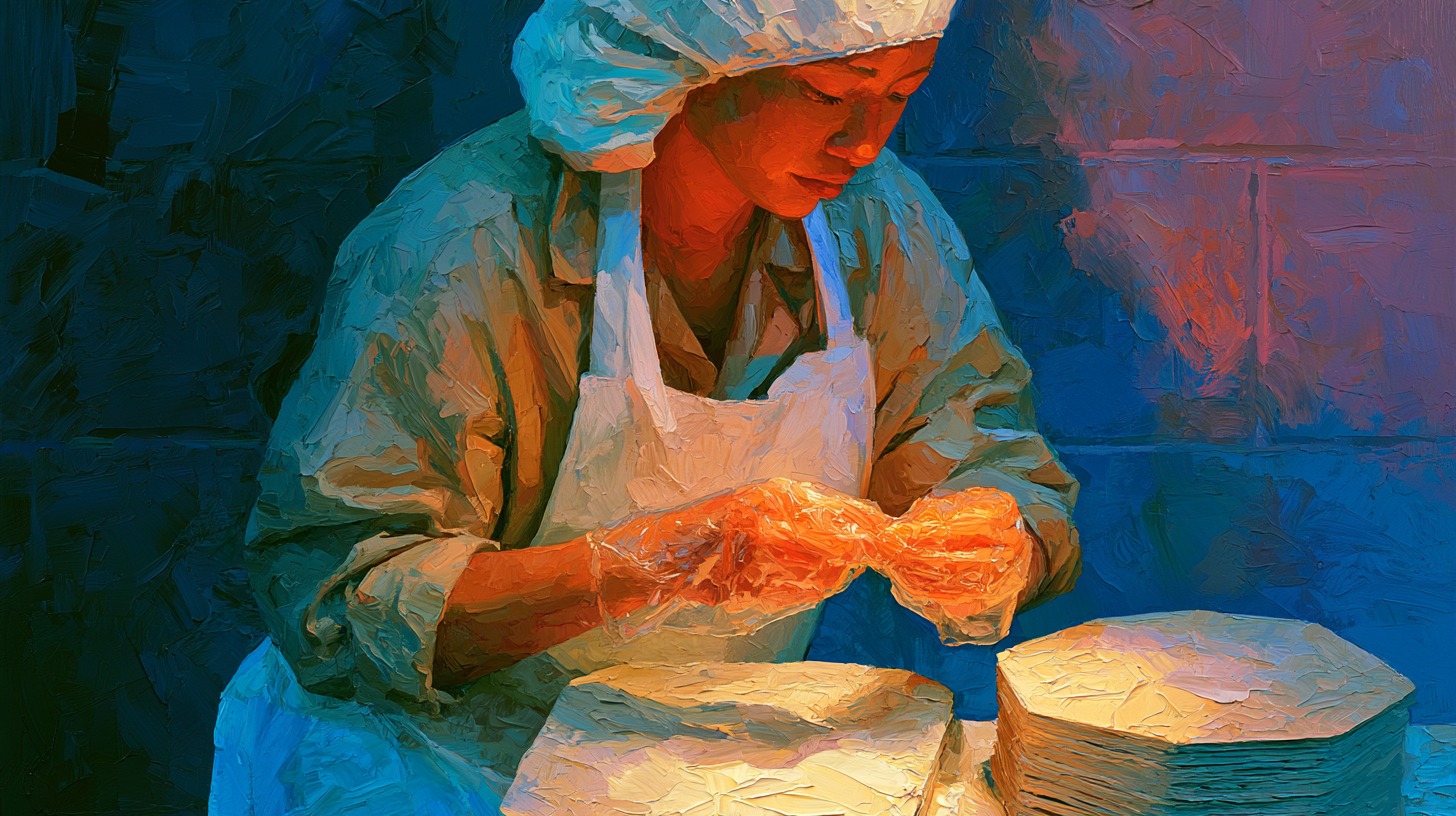
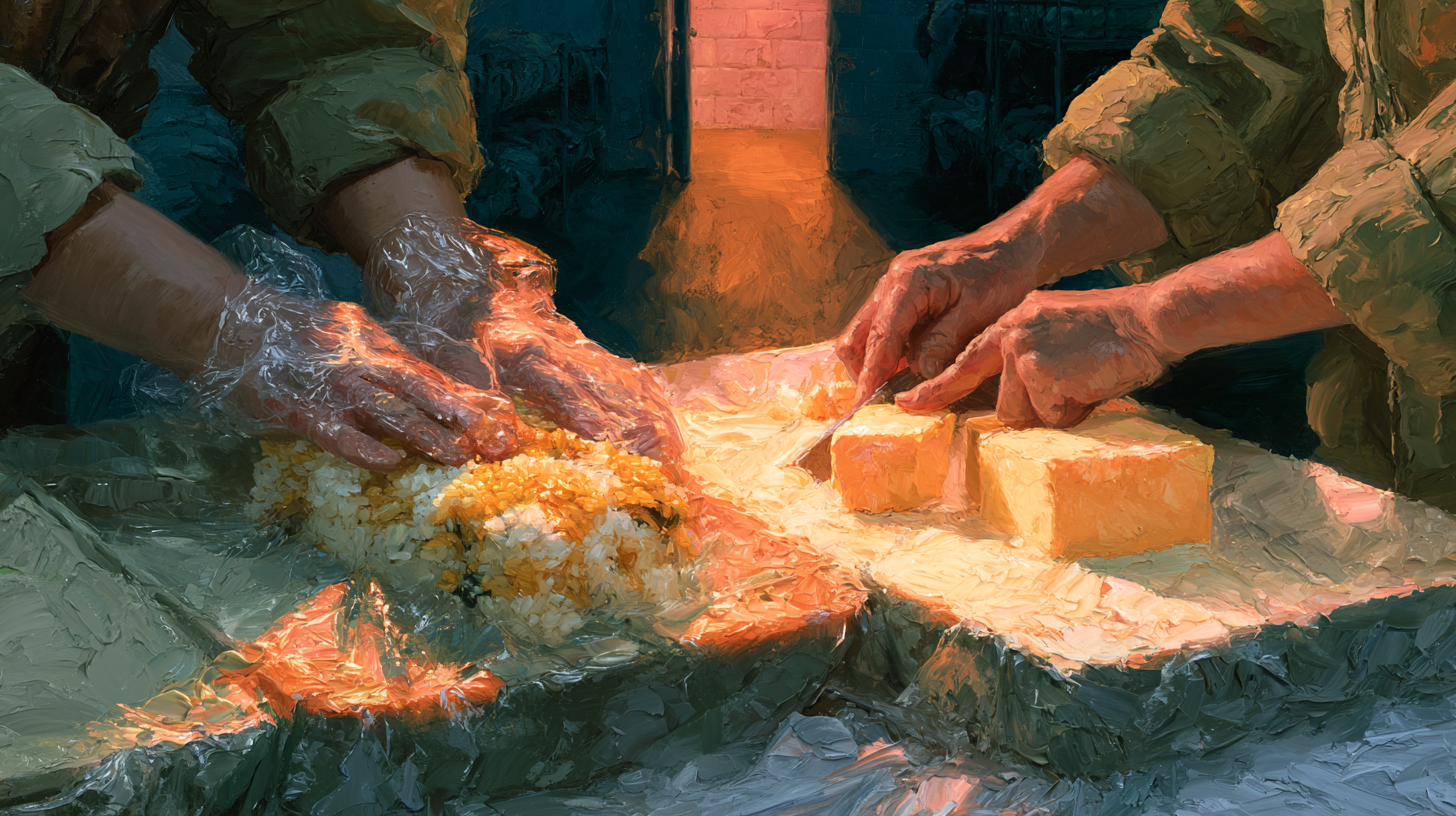
She sprinted to her area and returned with plastic gloves and a hairnet. “I am sushi chef!” And oh, was she.Plates don’t exist in prison,so she used tray lids.
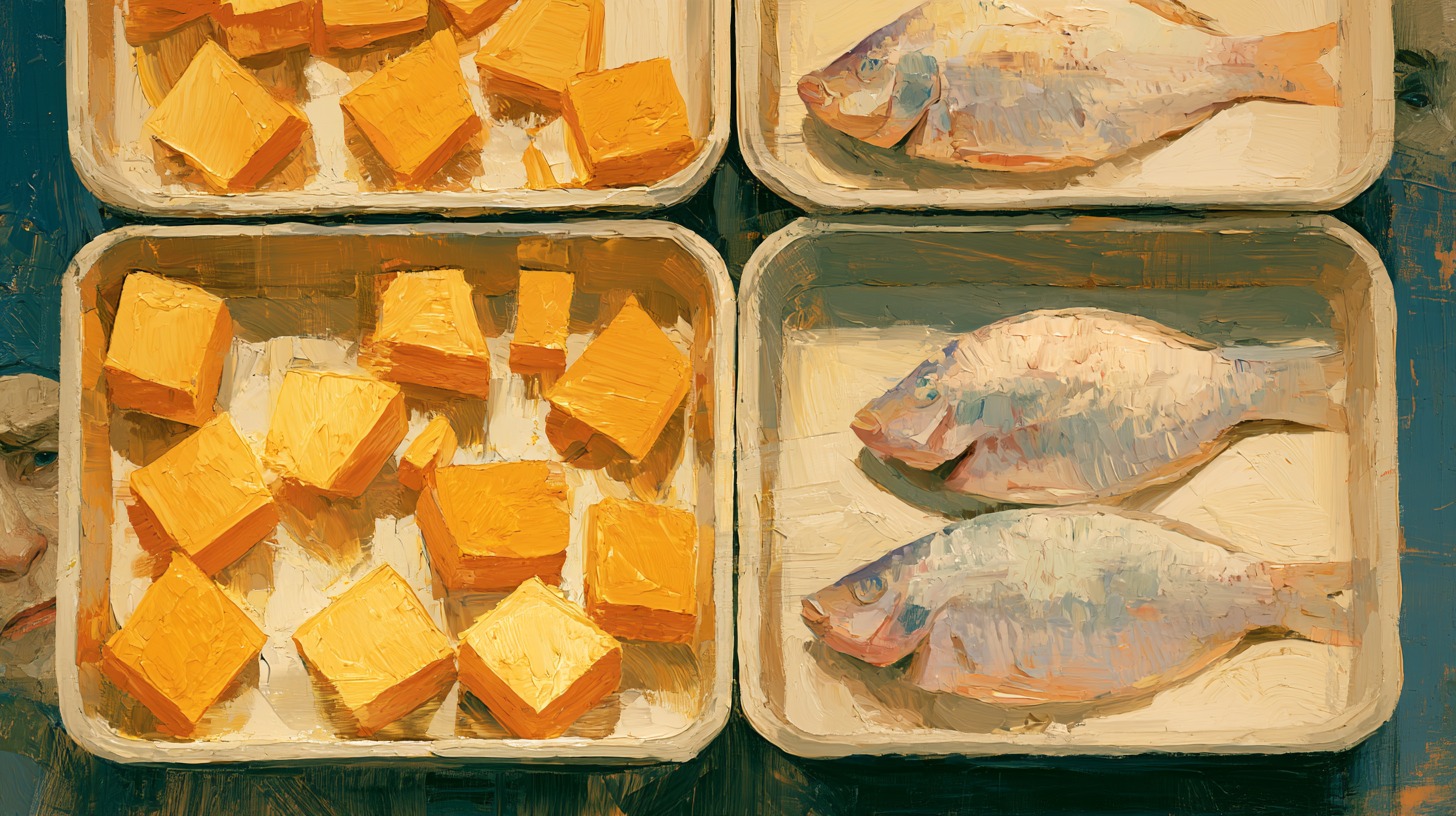
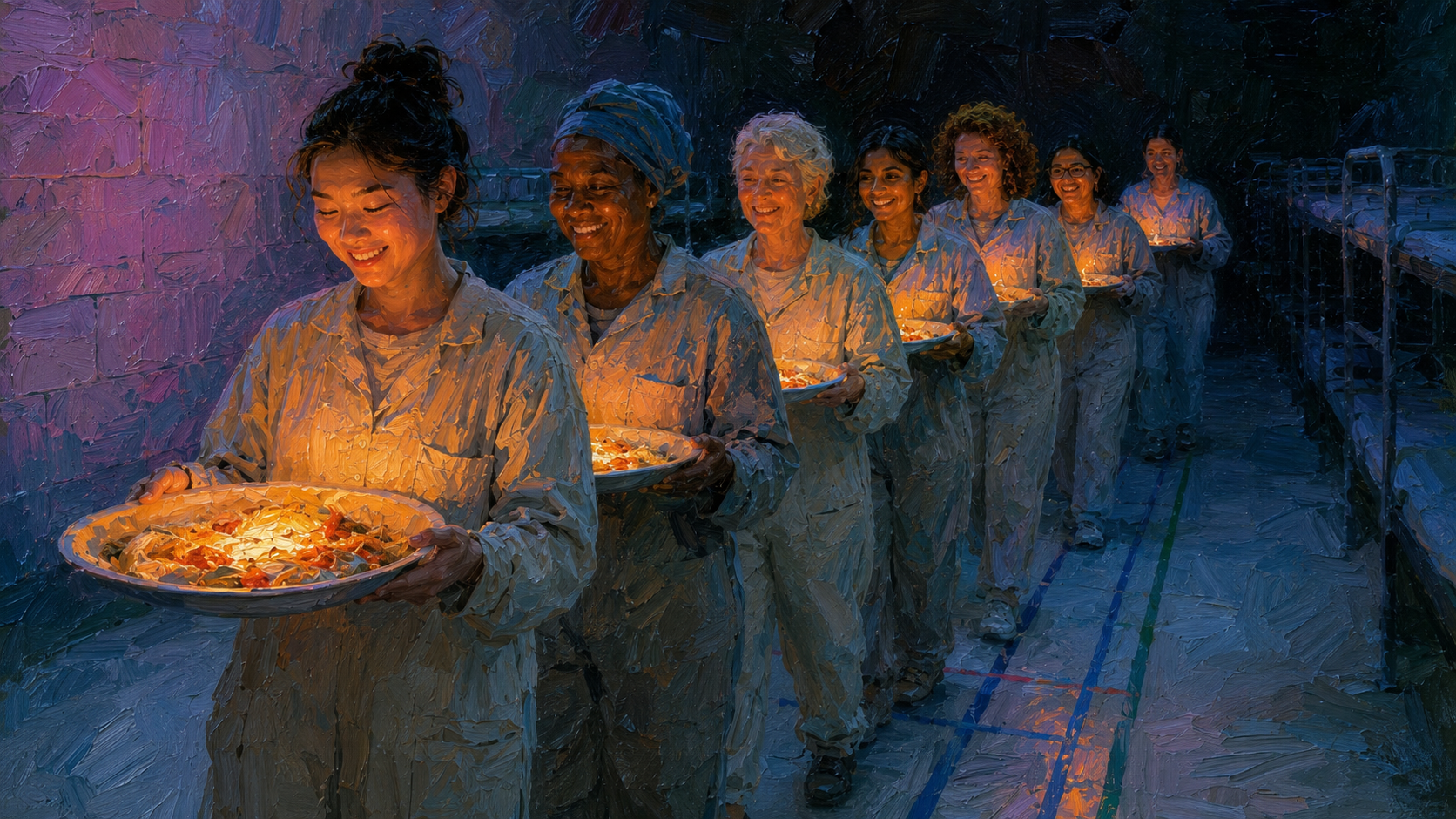
Seeing her in a hairnet was like a bat signal;women drifted over with offerings—tilapia trays and a side that was technically green beans but closer to green-bean mash.
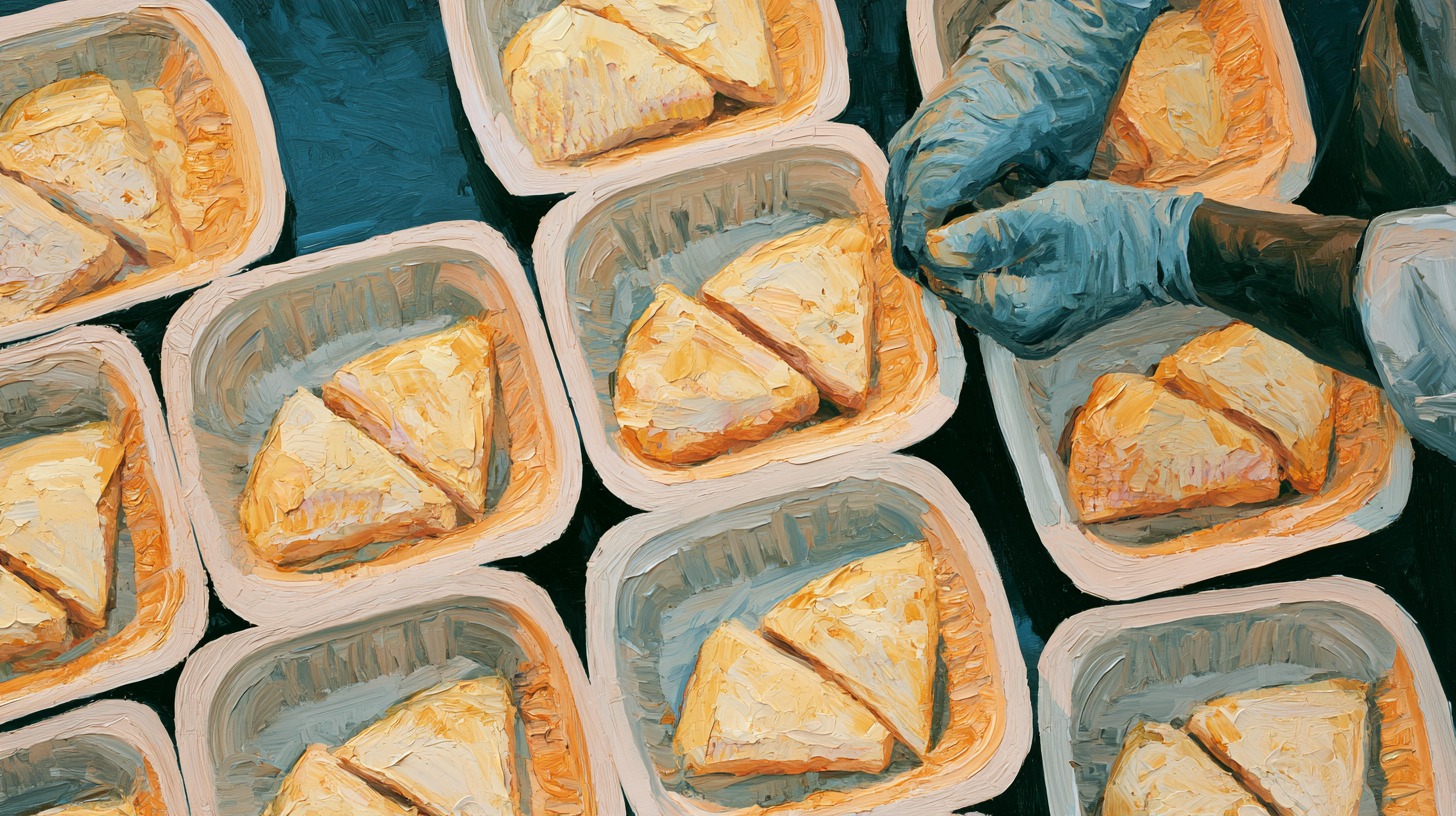
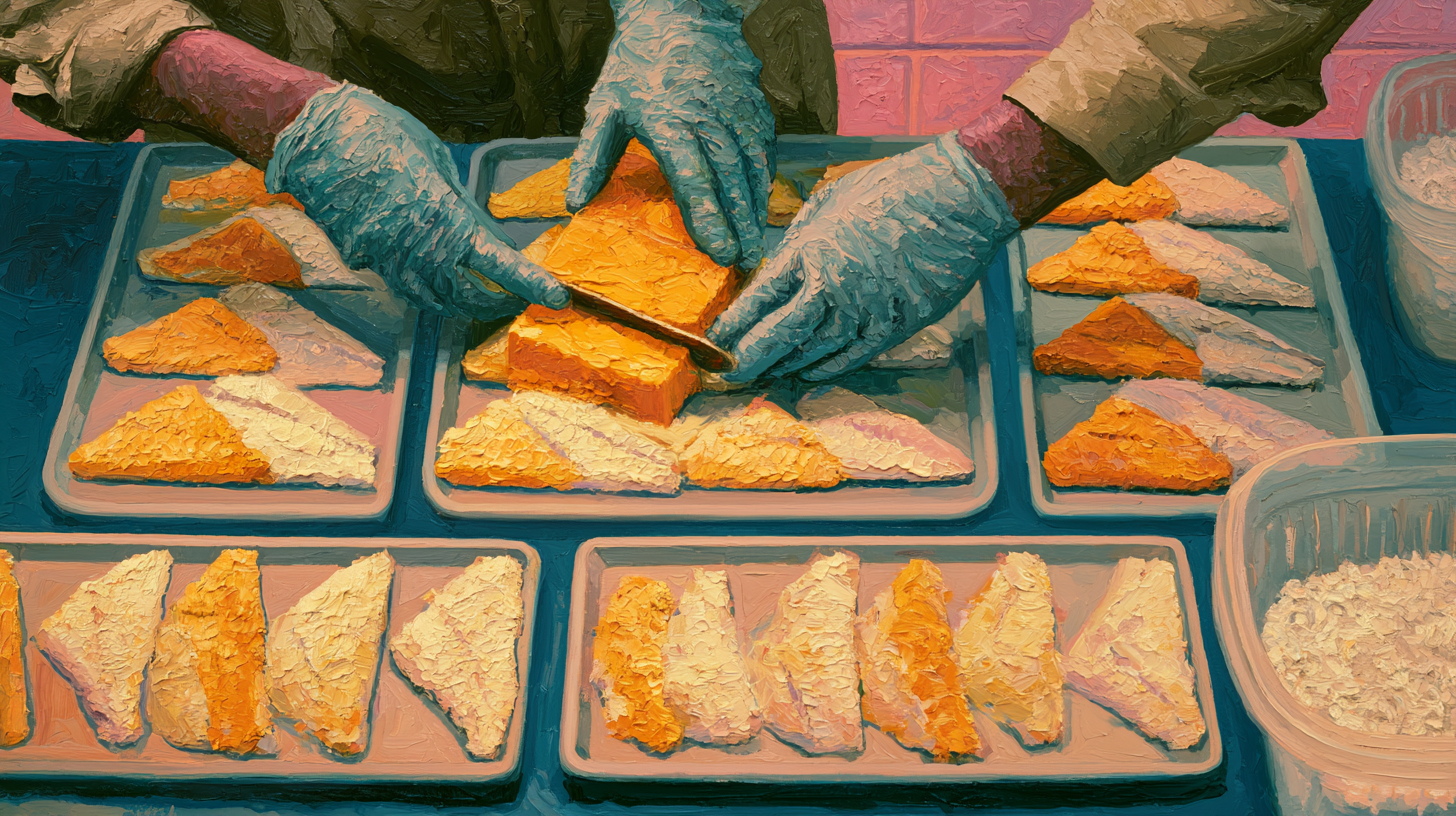
Ten, maybe twelve trays.She arranged the fish into neat triangles on three lids.
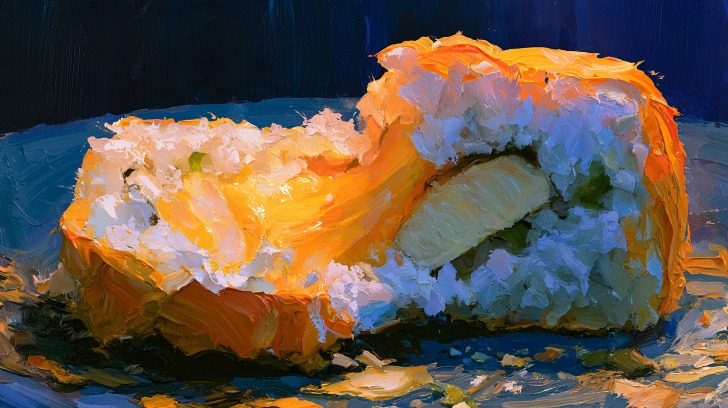
In a Tupperware bowl, she mixed rice with jalapeño juice to fake vinegar, then talked to the rice—looked up at me, delighted—as if telling me,This is going to be very good.
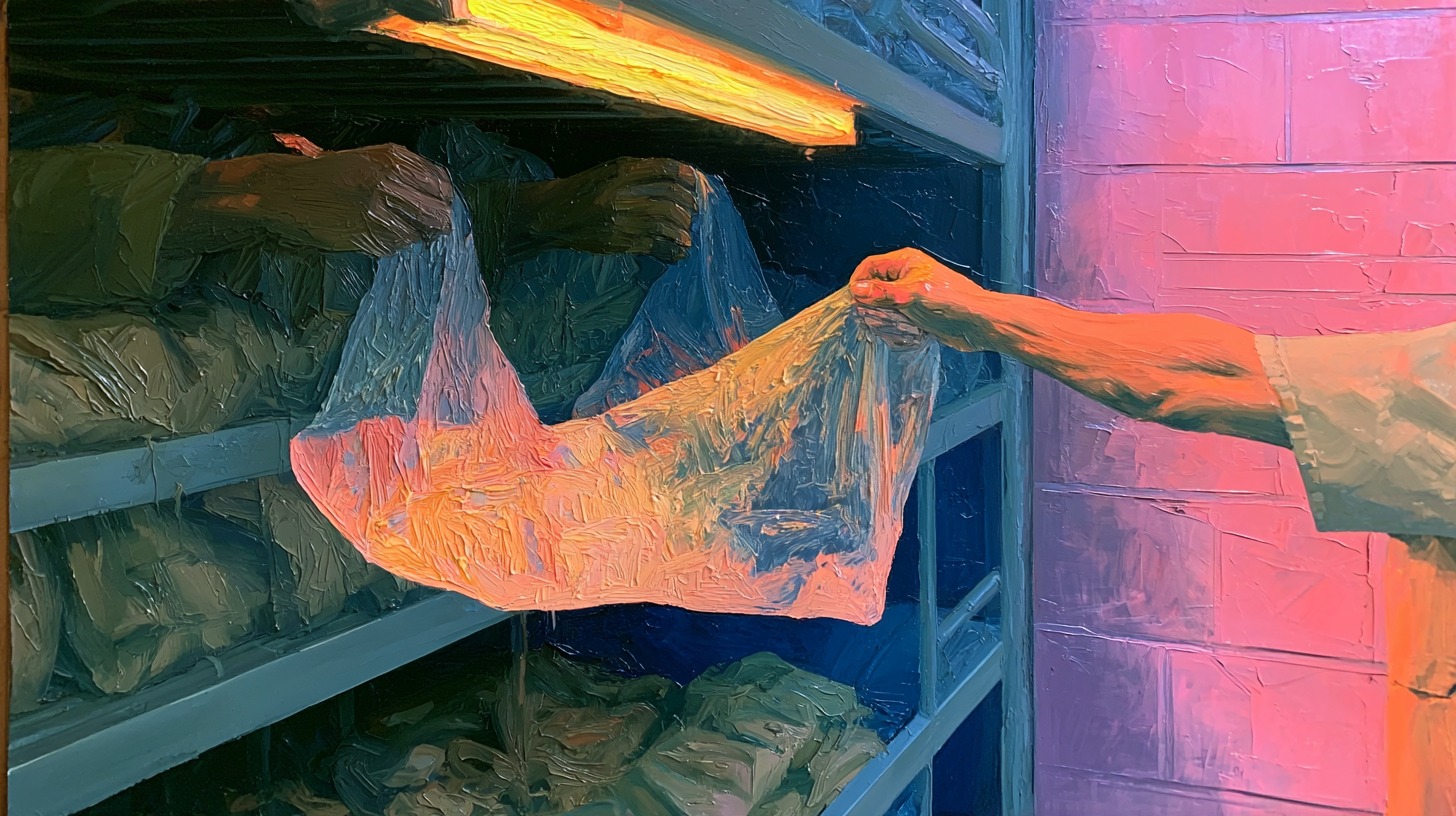
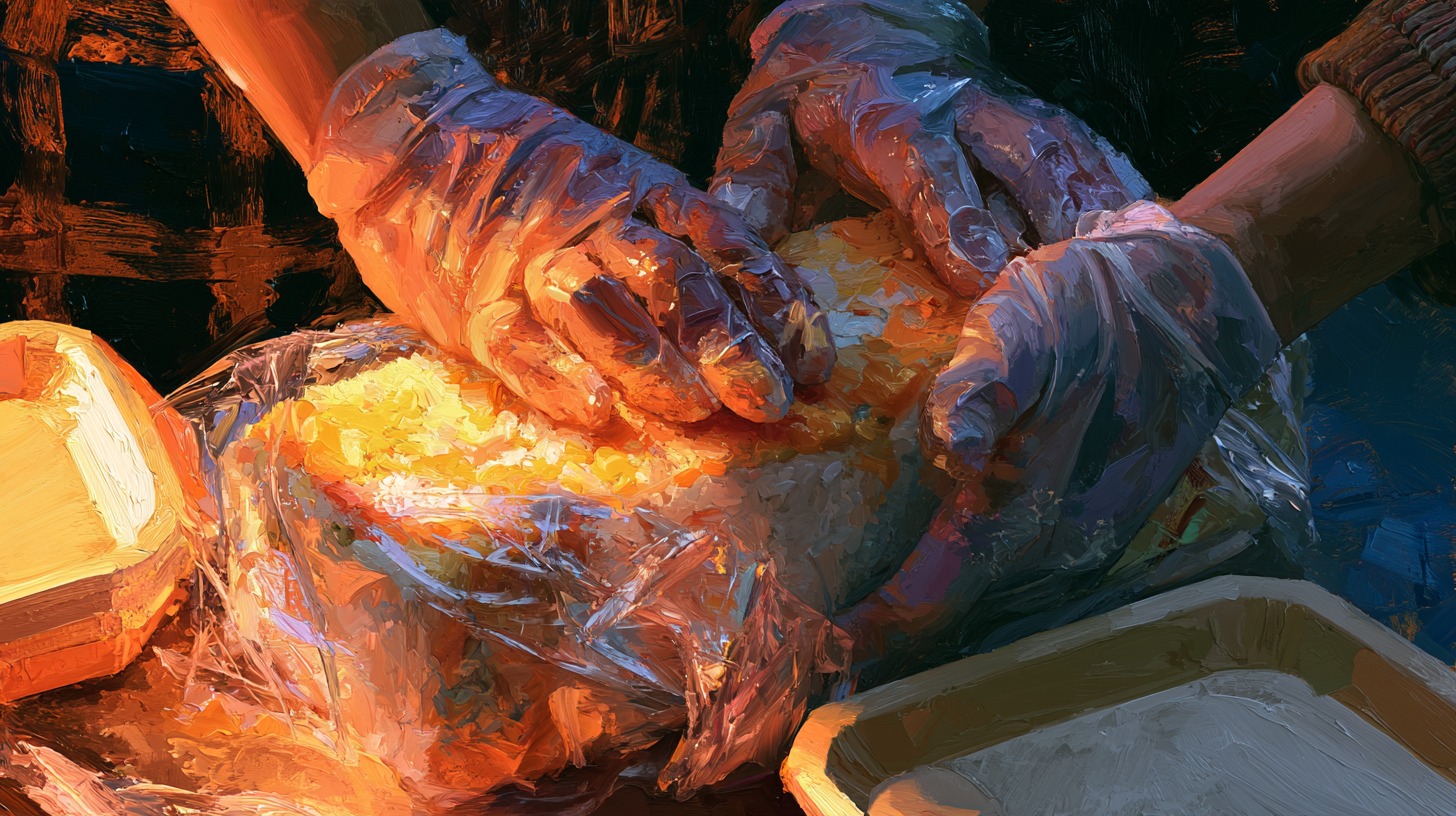
“No sushi roller, no problem!”She pulled out a clear garbage bag.
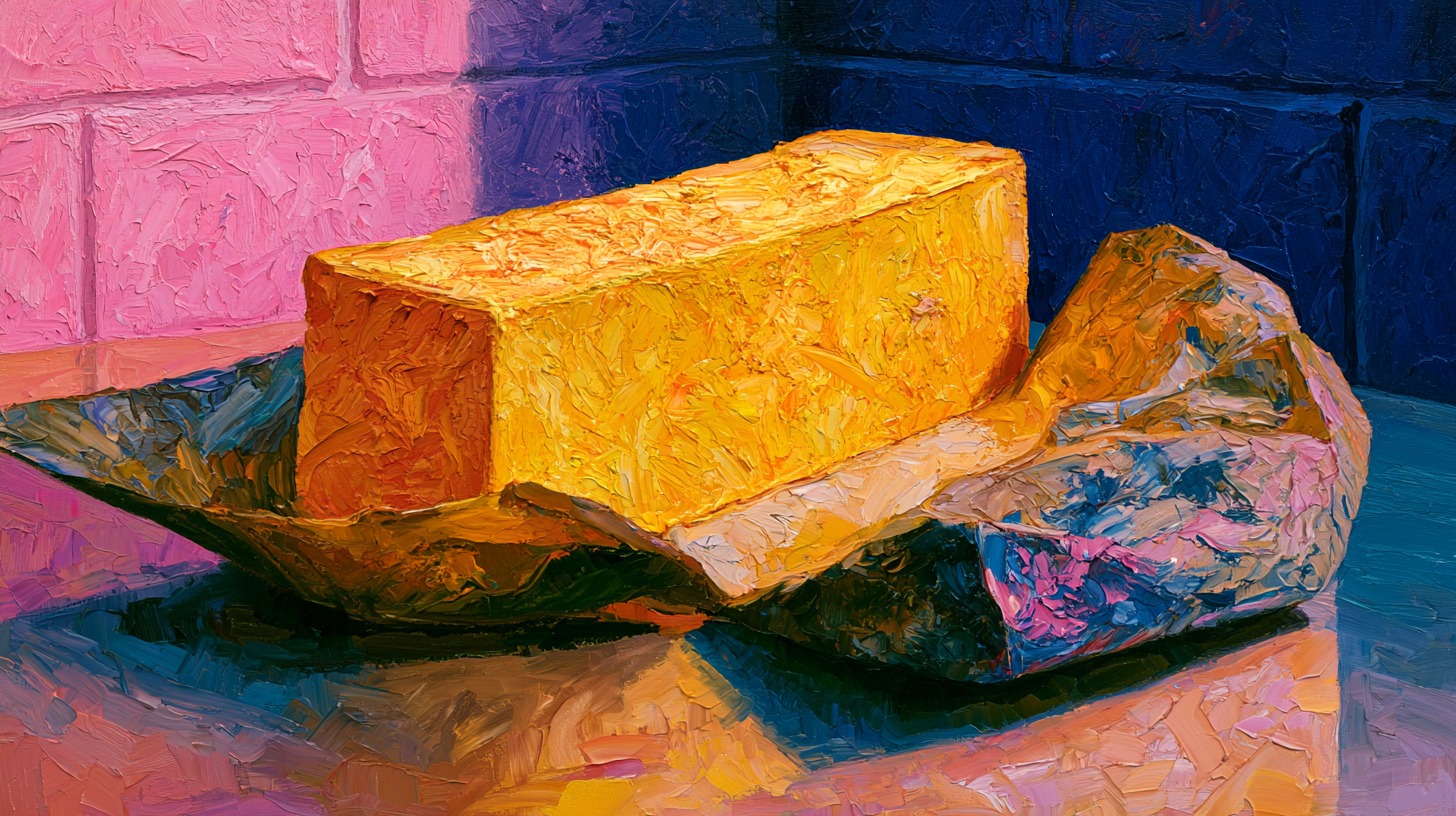
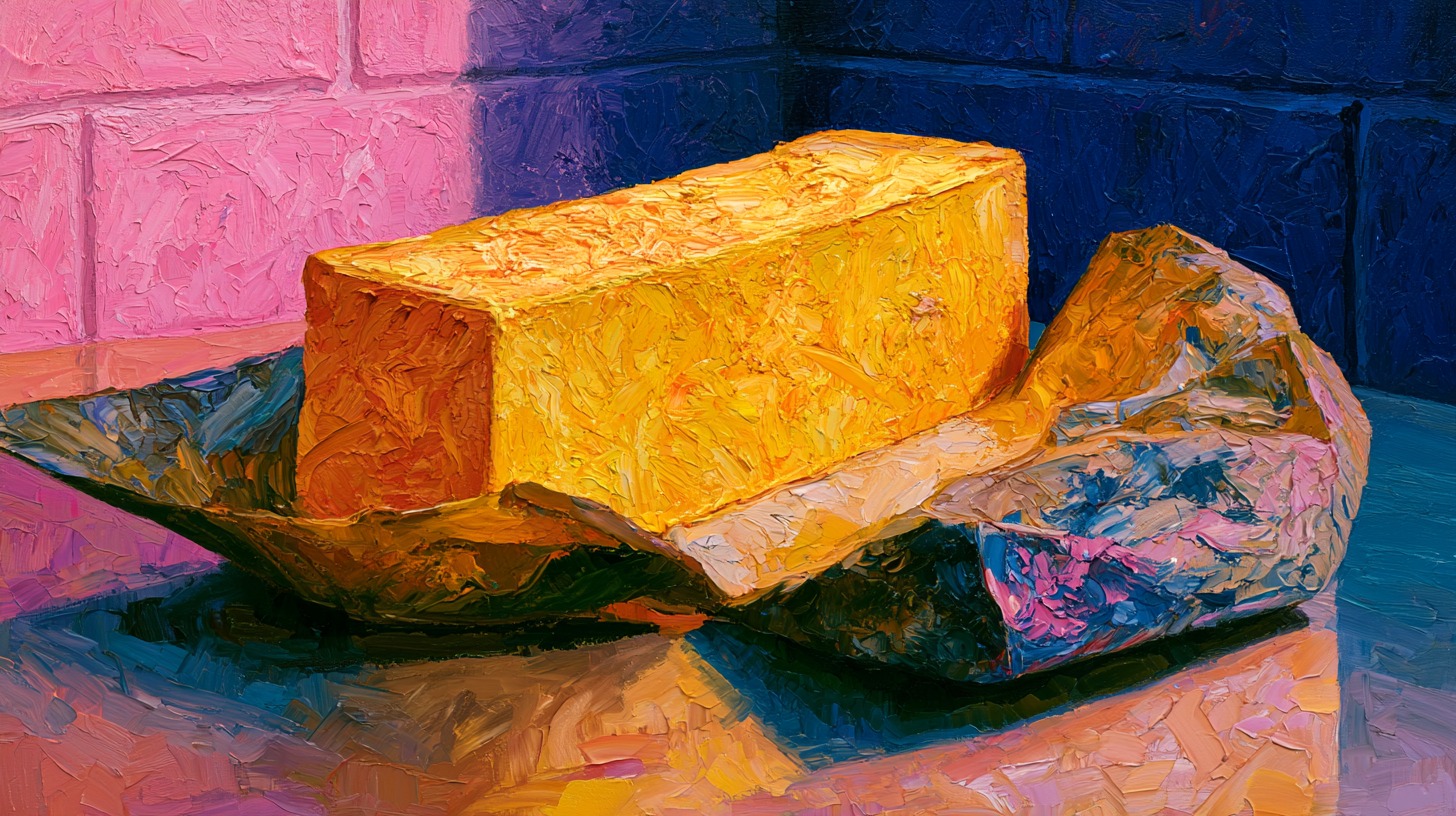
As is the case with many things in prison,the excitement in her eyes with what she pulled out nextdid not compute immediately. Velveeta cheese.
But, I’ve begun to realize that here things have their own logic. She cut it into precise shapes to match the fish—accountant-level precision.The books must balance; the cheese must mirror the fish.
It was like a concentration game—find the perfect pair.When her face clouded, which seemed to be due to there being too many shapes and not enough time, I offered to help.
She flashed me a look that felt likea secret door sliding open.I’d stumbled onto the rule: Fill the need even if you don’t fully understand it. While I cut, she moved on to jalapeños. Now we were ready.
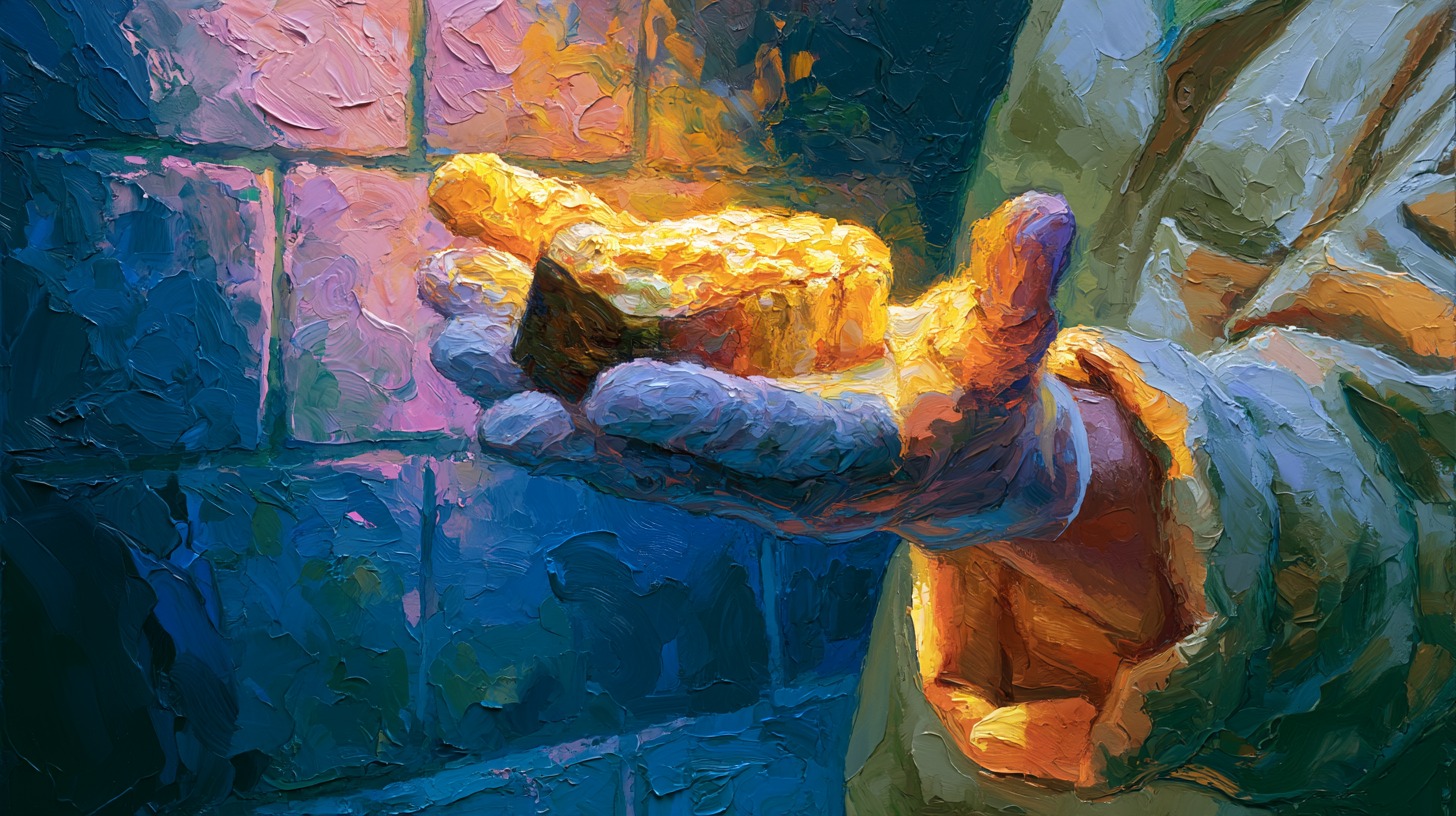
Rice, then fish, then cheese—all wrapped in plastic, pressed into compact bricks,each piece taking a full minute until it felt exactly right.
She’d lift a finished piece, eyes asking, Did you see that? At first I didn’t. I saw prison fish and melty cheese pressed into rice—edible, sure, but not exactly transcendent.
What I did see was the care.Michelin-star care, funneled through a hairnet.We were an hour in. We were past my usual 8 p.m. bedtime and I still had my evening meditation ahead of me.
But by then, word had spread. “Are you making sushi, Miss Wu?”Women clutched their offering bowls and hovered.
The question wasn’t about sushi. It was: Can I have some of that thing you do? That thing that leaves usheady and clear at the same time?
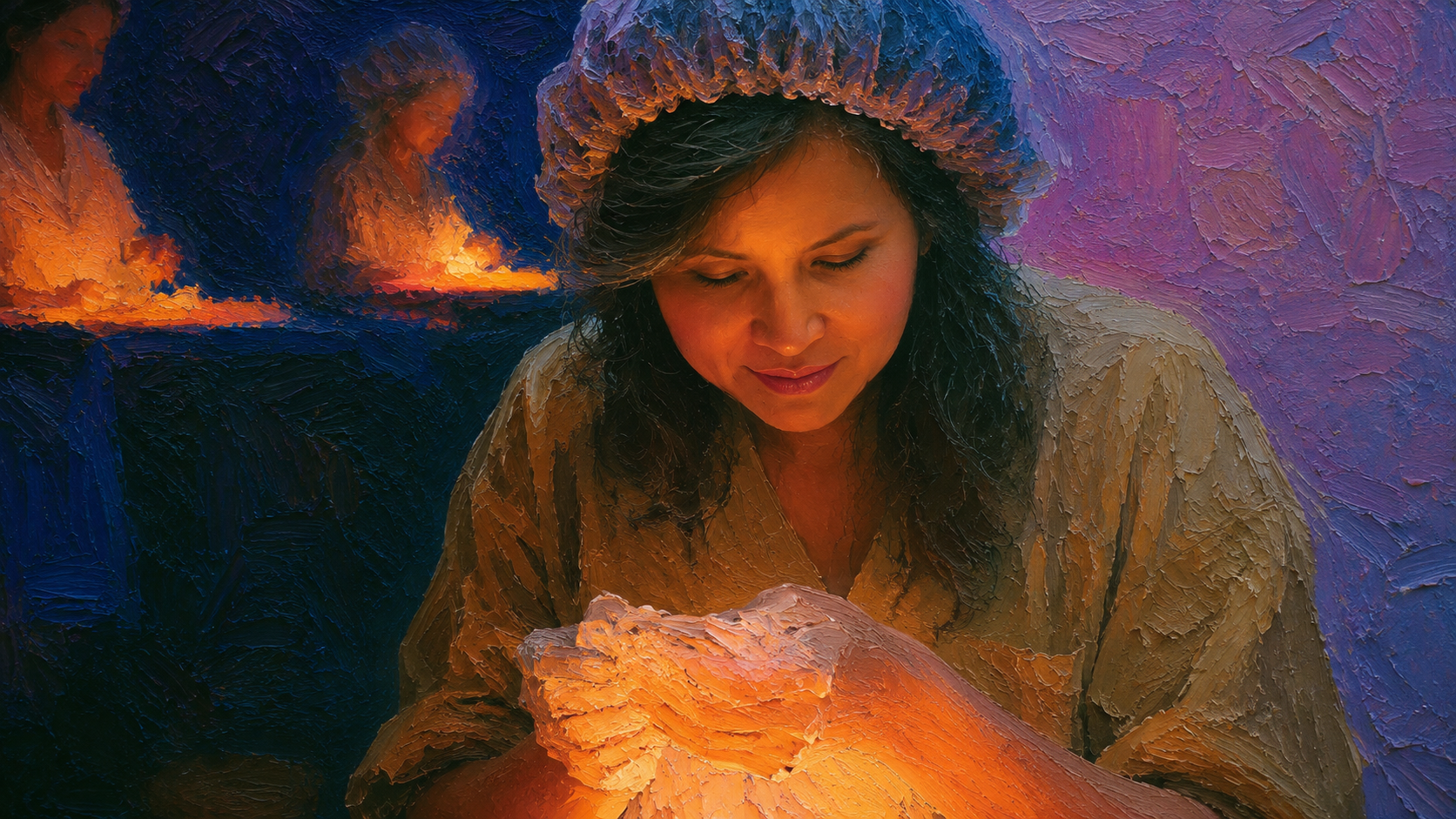
Rach and I were the excuse to open shop.Donations formed a constellation around us.Tamara brought tuna and more rice. Amara brought the house spice.
Two Latinas joined: one from Venezuela and one from Colombia who cried nonstop her first day until I handed her a turkey stick and some shampoo—the language that always translates.
Now every time she sees me, she says, “Hola, Nicole,” andI feel something in my chest unknot.
We built our circle. I contributed my terrible Spanish; they pretended it helped. Miss Wu showed us how to make “miso soup” without miso:mash the fish and green beans,add spice and bouillon, pour in hot water.
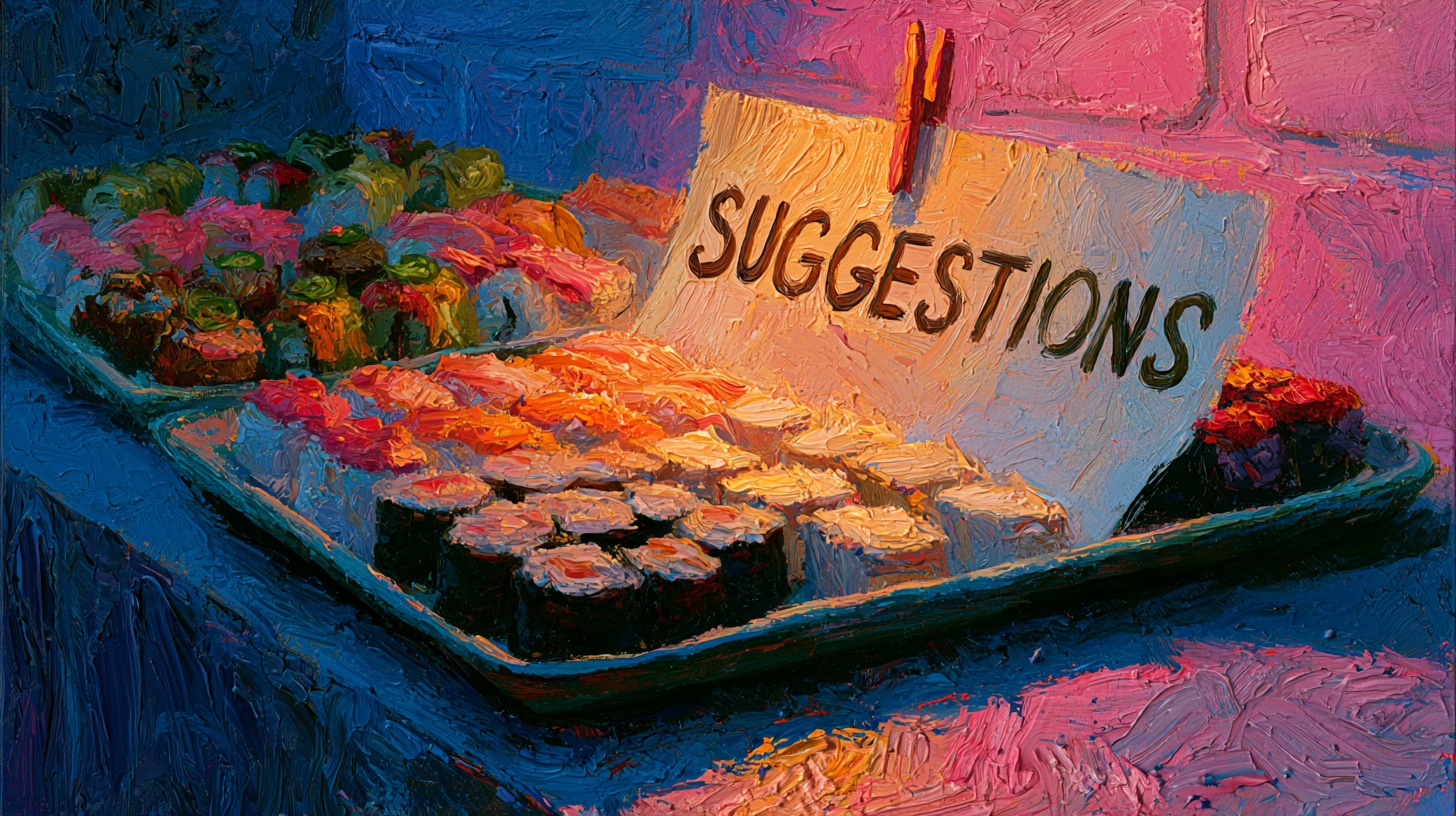
I couldn’t imagine it would taste like anything but fish, but that wasn’t the point.In here, cooking requires imagination.These dishes are “suggestions”—and somehow, that makes them more satisfying.
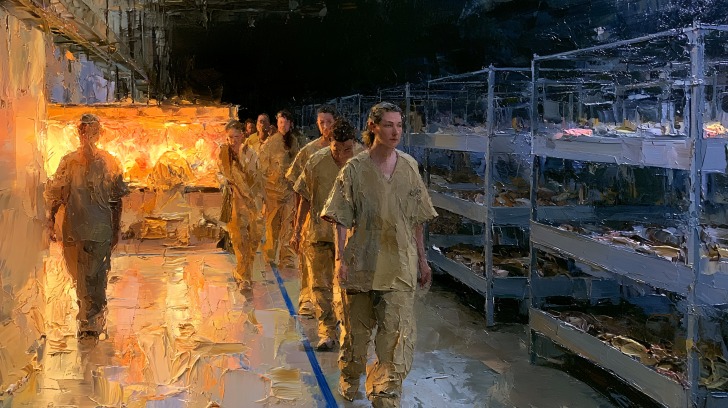
Then the call rang out: recall.Back to the bunk area behind the blue line.
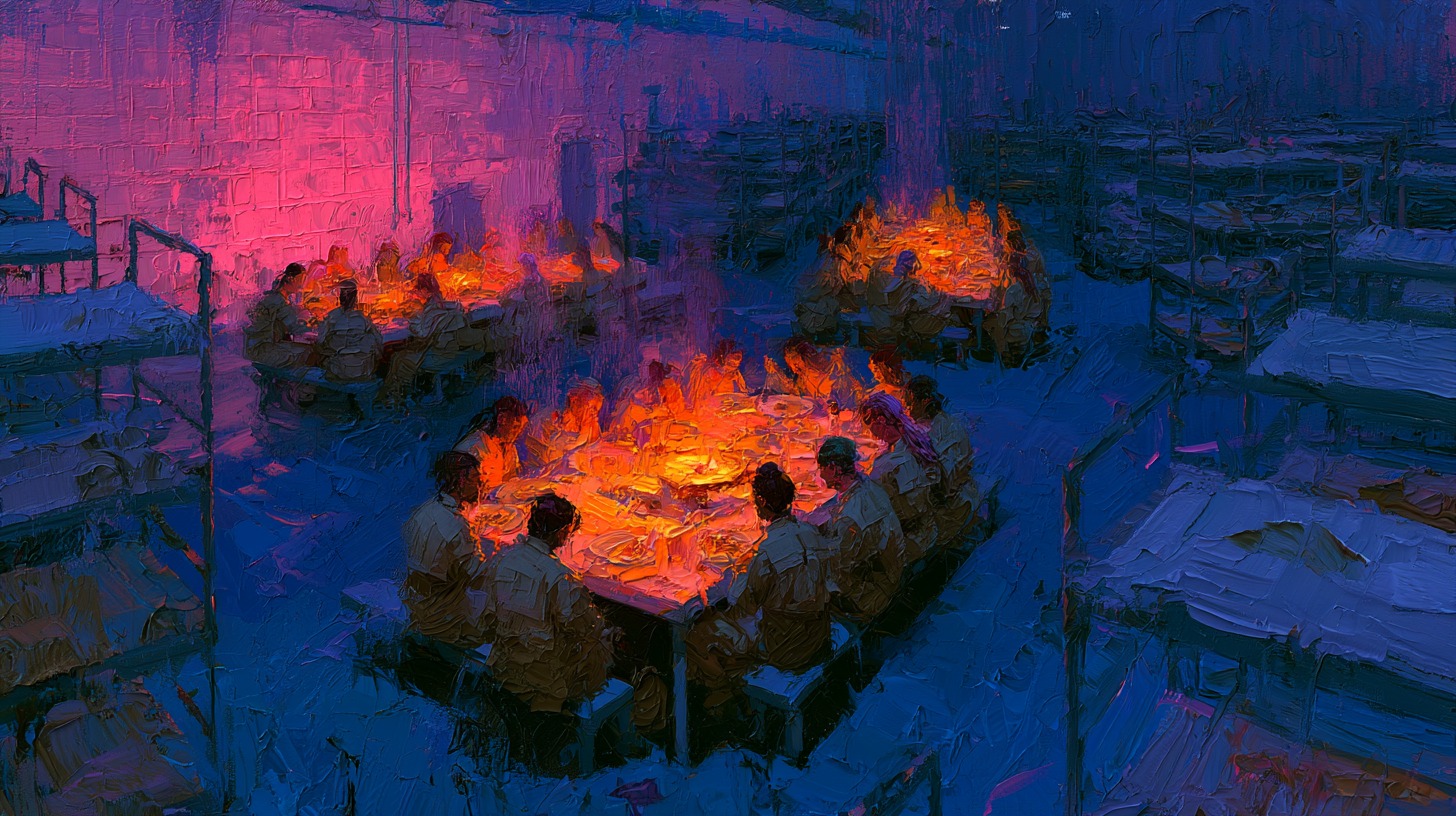
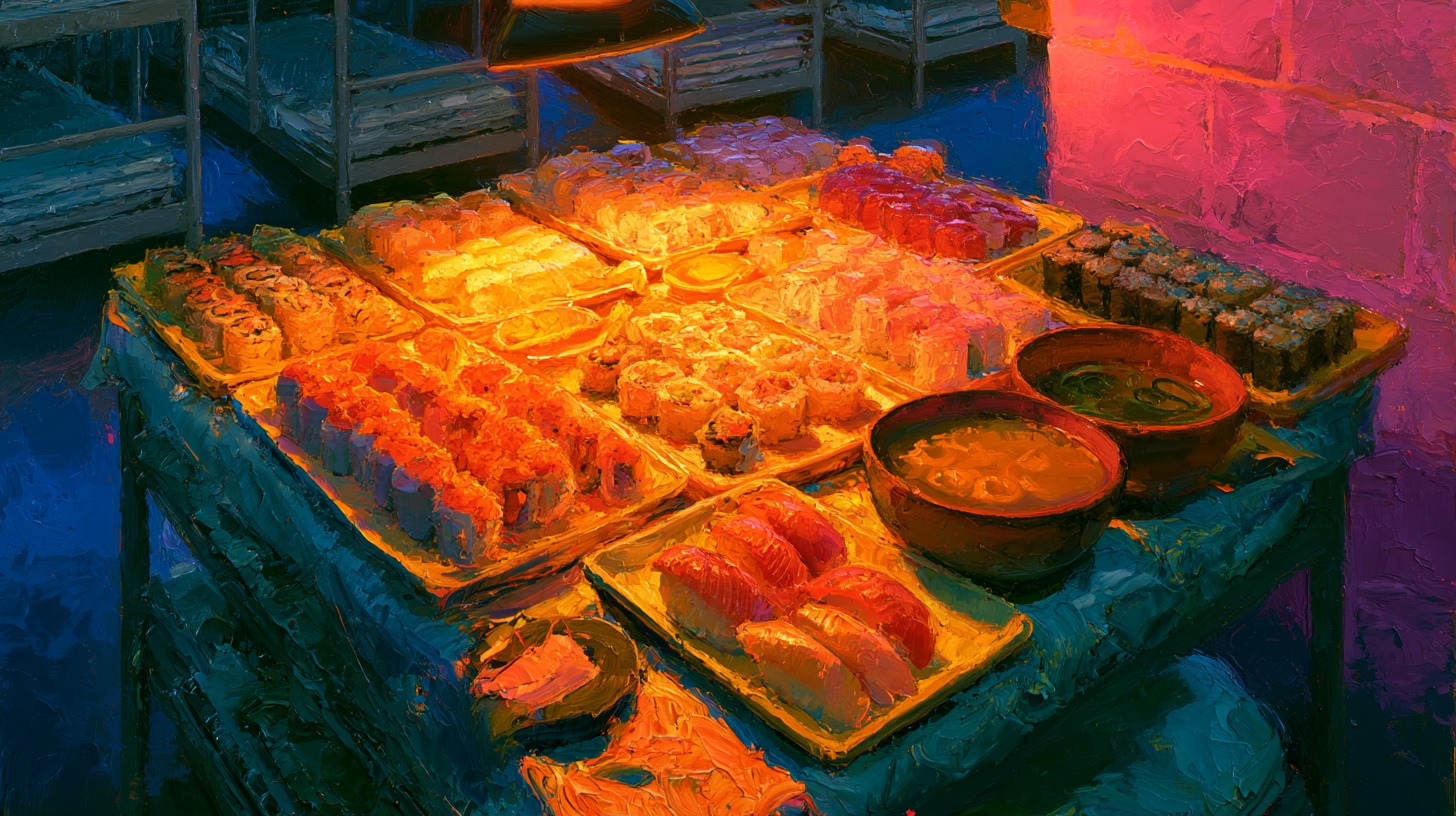
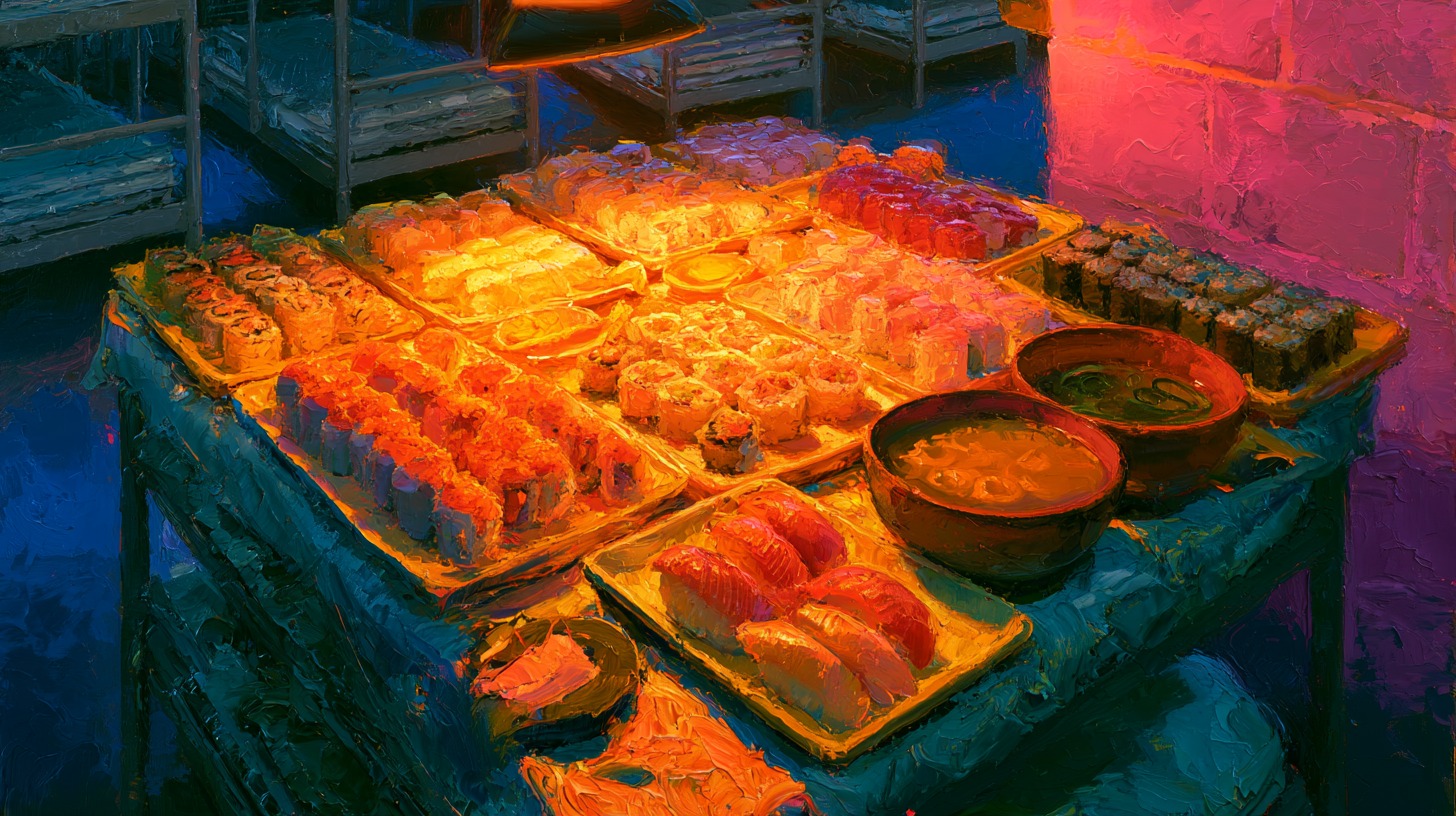
We migrated the whole sushi barto the empty bunk next to Miss Wu’s and turned it into a table.
Twenty minutes later, we had a feast:tilapia sushi, spicy tuna sushi, regular tuna for the spice-averse, and the “miso.” “Eat!”
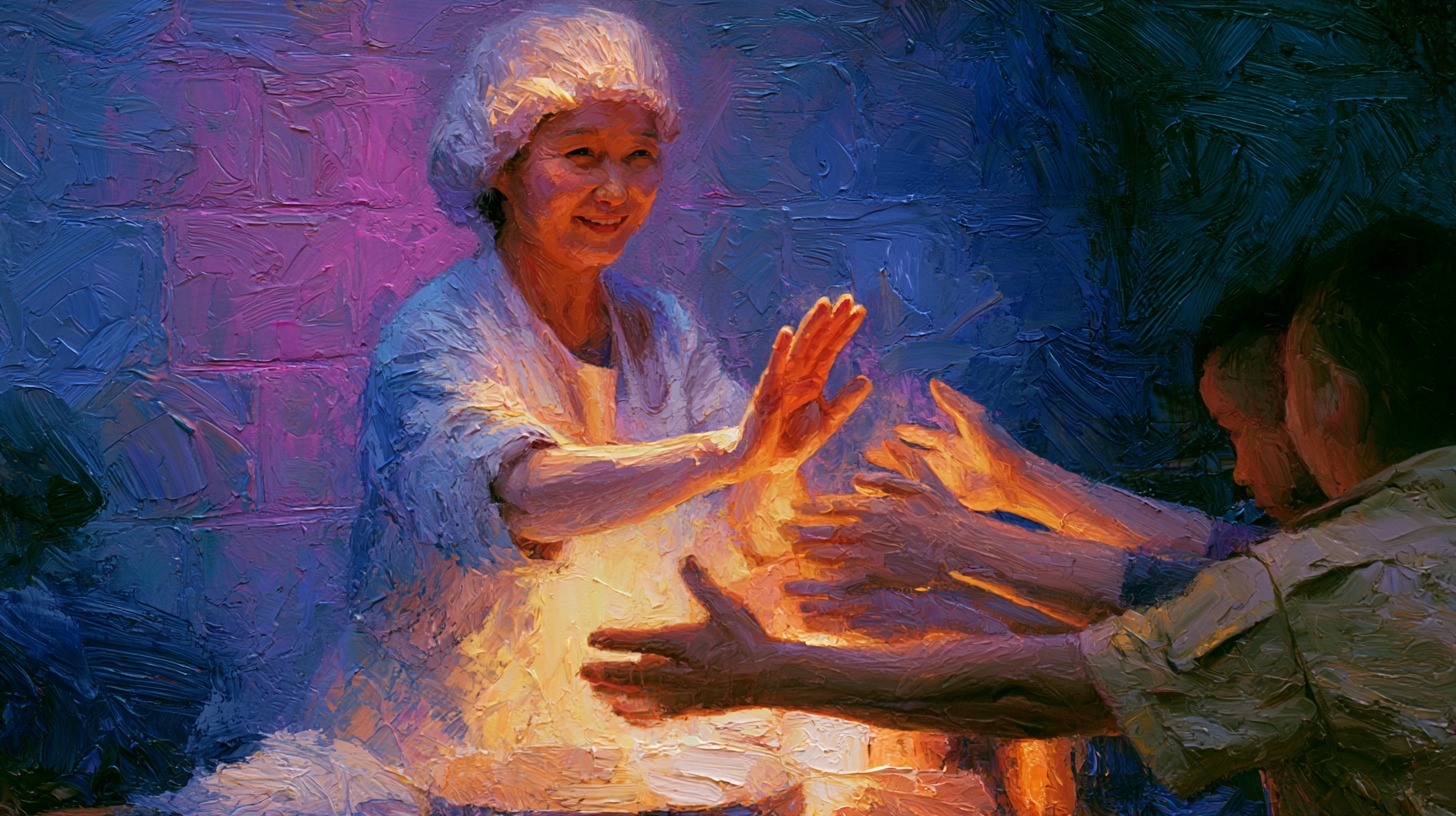
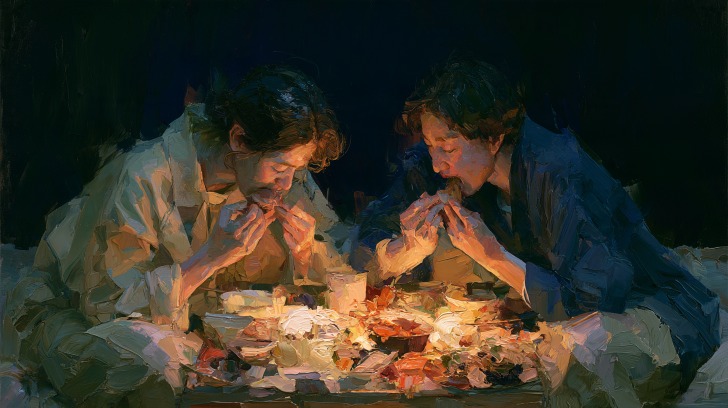
Miss Wu commanded like an Italian nonna. Amara, a veteran of Miss Wu’s sushi nights,was already halfway through a piece and moaninglike she’d remembered joy. I glanced at Rach: Here goes. We bit down together.
The Velveeta turned the bite buttery and warm. The cooled fish was firm. The rice melted witha clean tang of jalapeño.
I remembered my Lama once telling me that when you glimpse what all this is for,the only sane response is delight.
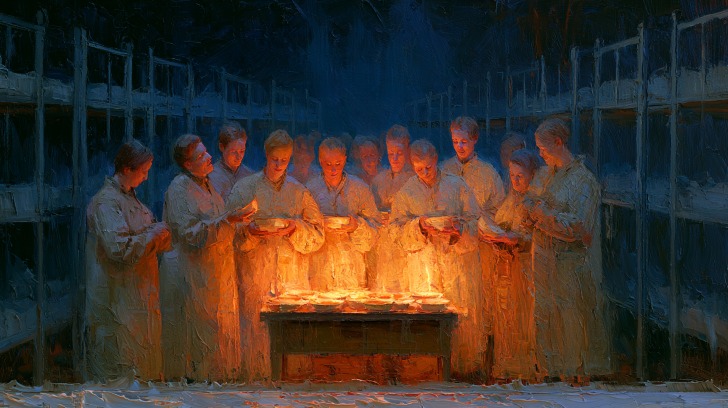
And now, here we were, seven women sitting around an empty grey bunk bed, eating cheese sushi ina place designed to starve the spirit.Miss Wu passed pieces down the row. Each woman looked chosen. One piece remained.
I asked if I could take it to Janiya. Miss Wu gave me that quick, shining look again. I understood, finally:The food was a ritual.
Not holy words or incense—just a delivery system for love.It needed to go where love was needed most.
So there we were on Independence Day, a guard making sure we didn’t cross a painted line on the floor, and inside the line we were celebrating a different kind of freedom—the kind that doesn’t wait for permission.